"You Are The Wind Through My Leaves©"
Lyrics by M. S. McKenzie (Unless Otherwise Noted) | Music Performed by Songs Across America or American Storyteller Music, All Songs Are Protected by Copyright


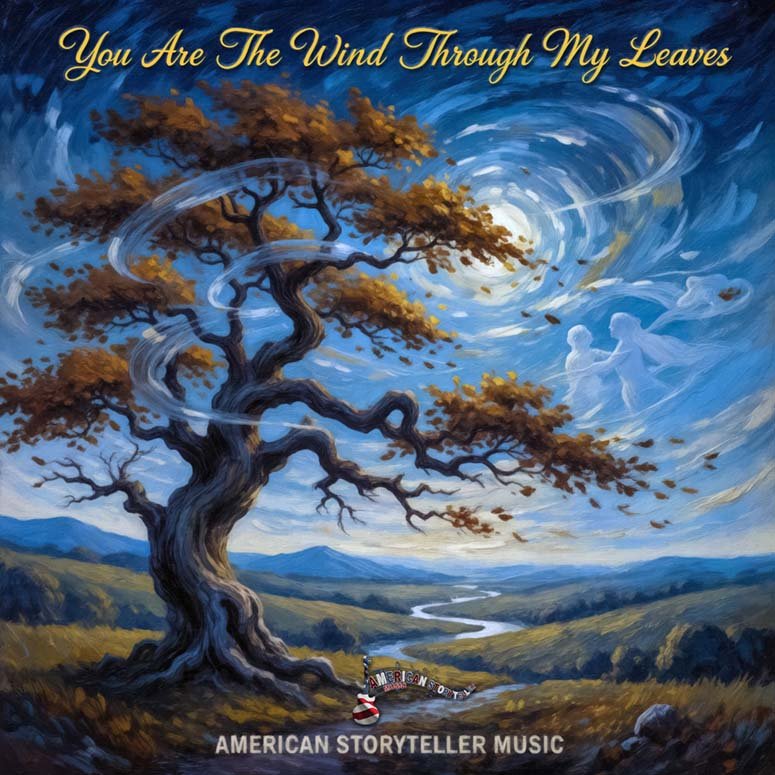
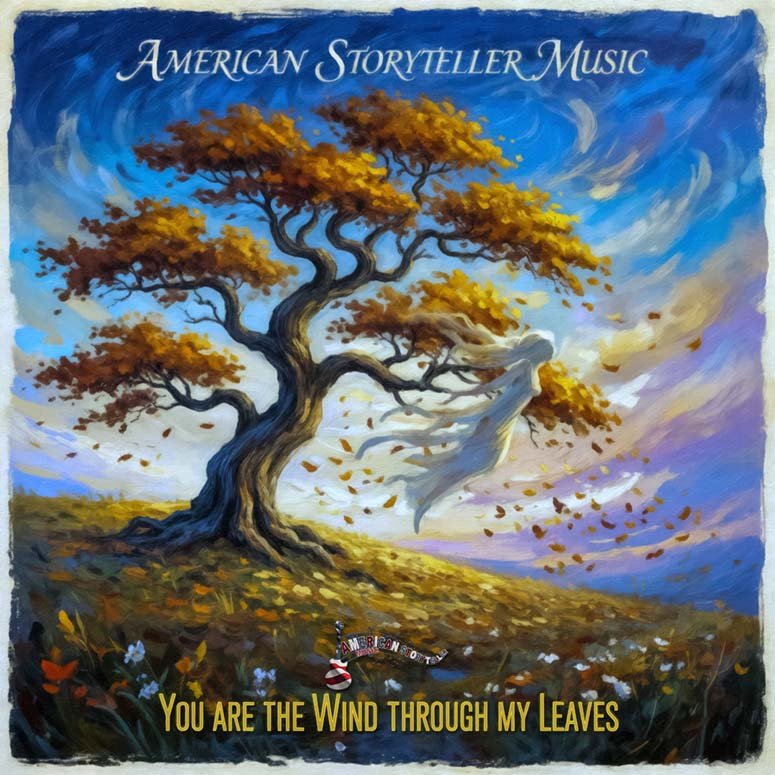
"You Are The Wind Through My Leaves"
The story behind the song is a love song told entirely through one image: a tree and the wind. The singer is the tree, rooted and still, counting the years pass in the quiet shade, until the wind comes through singing and suddenly there's movement, bending and swaying, life. The person you love is the wind through your leaves, the thing that stirs you and reminds you that you're alive.
I wanted the metaphor to carry the whole arc of a relationship, not just the first rush of it. So it moves through the seasons, summer's heat and autumn's gold, winter when the branches are bare and you still feel that presence in the air, and spring returning with the gentlest rain. Love, like the wind, keeps moving through even when things look empty.
The bridge is the promise at the center of it. If storms rise and shadows fall, the tree stands tall and endures it all, as long as that love keeps bending and weaving through the branches. It ends asking to be carried onward, wild and free, made as strong as an oak. That's really what the song is about for me, the way the right love doesn't uproot you. It makes you stronger and more alive right where you stand.
Tender acoustic folk / singer-songwriter love ballad.
Love as a life-giving force, endurance through seasons and storms, rootedness and growth, and devotion.
Primary Subject:
A love song told through the metaphor of a tree moved and strengthened by the wind.
Mood:
Tender, devoted, hopeful, and quietly strong.
The right love is like wind through a tree. It doesn't uproot you but stirs you to life and makes you strong enough to endure every season and storm.
[Intro]
Soft as a whisper through branches on high
You touch my soul as the seasons fly on by
[Verse 1]
I was rooted, I was still; all was quiet in life’s shade
I counted the years pass by, I watched time’s parade
Then you came singing, a melody so free
Now I bend and sway where you carry me
[Chorus]
You are the wind through my leaves
A breath of life, a song I can believe
Every tremble, every sigh a true release
With you by my side my pain will cease
[Verse 2]
Through summer’s heat and autumn’s gold
You dance with me—a love story unfolds
Even in winter when the branches are bare
I feel your presence moving through the air
[Chorus]
You are the wind through my leaves
A breath of life, a song I can believe
Every tremble, every sigh a true release
With you by my side my pain will cease
[Bridge]
If storms should rise and if shadows fall
I will stand tall, with you I’ll endure it all
For as long as your love bends and weaves
You’ll be the wind through my leaves
[Verse 3]
Spring returns with the gentlest of rain
I hear your voice calling out my name
From root to crown, my soul can perceive
A deep, deep love that my mind can believe
[Outro]
Carry me onward, wild and free
Make me as strong as an oak tree
"You Are the Wind Through My Leaves" is a majestic environmental anthem celebrating the power, beauty, history, and enduring significance of Niagara Falls. Through images of thundering cataracts, trembling mist, rainbows, glacial waters, Indigenous memory, international unity, and environmental stewardship, the song presents the Falls as far more than a scenic attraction. They become a living presence, a natural monument, and a shared inheritance that must be protected for generations to come.
Although the title suggests a gentle and intimate relationship with nature, the lyrics themselves are centered on one of North America's most powerful natural spectacles. This contrast can give the song an interesting emotional dimension. The title evokes movement, connection, and nature speaking through the individual, while the lyrics expand that idea into the immense voice of Niagara's rushing waters.
The short introduction immediately establishes the song's grand scale. "The thunder calls where the rivers meet" introduces Niagara through sound before the Falls are fully described. The word "calls" makes the water seem alive, as though it is summoning travelers, nations, and generations to witness its power.
The phrase "a crown of waters, fierce and sweet" combines strength with beauty. A crown traditionally represents majesty, distinction, and authority, making the Falls appear like a sovereign presence within the landscape. "Fierce" captures their tremendous force, while "sweet" acknowledges the emotional wonder and visual beauty they inspire.
Verse one brings the listener directly to the best-known sections of Niagara Falls. Horseshoe Falls is introduced through its roar, while the American Falls appears through its rising spray. Together, these references acknowledge that Niagara is not one single curtain of water but a connected system of waterfalls spanning the international boundary between Canada and the United States.
The cataracts thunder continuously, both night and day. This sense of uninterrupted motion is central to the song. Human visitors arrive and leave, seasons change, and generations pass, but the water continues its descent. The Falls become symbols of endurance and natural continuity.
Rainbows arching through the trembling mist provide a vivid contrast to the violence of the falling water. The mist trembles beneath the tremendous impact, yet sunlight transforms it into color. This combination of force and delicacy captures much of Niagara's emotional appeal. The Falls can appear overwhelming and ethereal at the same time.
Calling Niagara "a timeless wonder our Earth has kissed" gives the landscape a tender, almost sacred quality. The Earth is personified as having placed a mark of affection upon the region. This image softens the immense physical power of the waterfalls and portrays them as one of the planet's most treasured creations.
The chorus becomes a direct appeal for conservation. "Guard these wild waters" turns admiration into responsibility. The song does not merely celebrate what exists; it asks listeners to ensure that the Falls and surrounding environment remain healthy, powerful, and accessible to the future.
Allowing the waters to "sing" continues the personification established in the introduction. Niagara's roar becomes a voice, song, or natural language. The waterfall communicates through vibration, mist, current, and sound rather than through human words.
The phrase "majestic torrents born of eternal spring" presents the water as though it flows from an inexhaustible natural source. "Eternal spring" may refer poetically to renewal, abundance, and the continuing hydrological cycle. The image gives the waters a feeling of ancient origin and perpetual rebirth.
The chorus also connects present-day Niagara with its geological past. "From ancient ice to the border's shore" refers to the glacial forces that helped shape the Great Lakes region and the Niagara landscape. The waters reaching the international border carry the legacy of ice sheets, erosion, and thousands of years of geological change.
The final request that Niagara's "thundering beauty forever endure" summarizes the song's environmental message. The Falls should remain powerful not only as a visual landmark but as a functioning natural system. Endurance requires respect, stewardship, and continued cooperation between the communities and nations that share the region.
Verse two focuses on the physical sensations of standing near Niagara. The air is described as charged with endless might, suggesting electricity, atmospheric energy, and the bodily effect of the Falls' vibration. Visitors do not simply see Niagara. They feel it in the air, ground, lungs, and skin.
The "veil of diamonds" in the morning light transforms water droplets into countless points of brilliance. A veil partially conceals what lies behind it, while diamonds suggest rarity and value. The mist therefore becomes both a curtain and a field of jewels suspended in sunlight.
"Every breath taken tastes of storm and stone" is one of the song's most sensory lines. It captures the wet air, mineral scent, and stormlike conditions produced by the crashing water. The listener is invited to experience Niagara through taste and breath as well as through sight and hearing.
The phrase also unites water with geology. The storm represents the Falls' movement and atmospheric force, while stone represents the ancient riverbed and gorge through which the water travels. Niagara is presented as a living encounter between liquid power and resistant rock.
The river claiming its "mighty throne" extends the regal imagery introduced by the crown of waters. The Niagara River is not merely a channel feeding the Falls. It becomes a ruler asserting its place within the landscape.
Yet the throne is not stationary in the usual sense. The river's authority comes from movement. It claims its place by flowing, falling, eroding, reshaping, and continuing onward.
Verse three turns toward the human stories surrounding Niagara. The references to barrels, tightropes, and bold daredevils recall the long history of people attempting dangerous feats near or over the Falls. These stories became part of Niagara's popular legend and contributed to its reputation as a place of spectacle, risk, and human daring.
The lyrics do not glorify these figures uncritically. Instead, they place the daredevil stories within a broader historical context. They are memorable, but they are not the deepest meaning of Niagara.
The line "But deeper still is the native song" shifts attention toward the Indigenous peoples whose histories and cultural relationships with the region extend far beyond modern tourism and stunt performances. The use of "deeper" suggests both greater historical depth and more profound spiritual significance.
The river is described as sacred and ancient, emphasizing that its meaning existed long before modern borders, commercial attractions, or written publicity. This recognition adds cultural depth to the song and acknowledges that the Falls belong within a much older human and natural history.
The "native song" can be understood as the enduring presence of Indigenous knowledge, memory, oral tradition, and spiritual connection to land and water. It also parallels the song of the Falls themselves. Human culture and natural sound become intertwined.
The bridge intensifies the song's plea for preservation. The listener is asked to hear the waters below, turning attention away from visual spectacle and toward sound. The Falls are described as a "hymn unbroken," implying continuity, reverence, and a song that has endured across generations.
The word "hymn" gives the water spiritual gravity without requiring a specific religious interpretation. The roar becomes an expression of awe, humility, and gratitude. Niagara itself performs the hymn through its ceaseless movement.
The "ceaseless flow" reinforces the perception of permanence, but the following lines remind listeners that even great natural wonders are vulnerable. The command to "hold fast this wonder" suggests that admiration alone is not enough. Protection requires deliberate action.
The song broadens its environmental message through the phrase "protect these lands." Niagara cannot be preserved as an isolated curtain of water. Its health depends upon surrounding shorelines, river systems, habitats, water quality, public lands, and the greater Great Lakes watershed.
"For our world has but a few such strands" emphasizes rarity. Although waterfalls exist throughout the world, few possess Niagara's combination of water volume, scale, accessibility, geological history, and cultural significance. The word "strands" may evoke separate curtains of falling water, threads within a larger ecological tapestry, or the limited number of extraordinary natural wonders remaining.
Verse four moves into twilight and moonlight, showing that Niagara's grandeur continues beyond daytime. The shifting light changes the appearance of the mist and falling water but does not diminish their power.
The "roaring veil" continues to cry beneath the night sky. The word "cries" can refer to the loud voice of the Falls, but it may also carry an emotional undertone. Nature appears to be calling upon humanity to listen and respond.
The reference to "a bond between nations" highlights Niagara's unique position between the United States and Canada. The Falls are shared rather than possessed entirely by one country, making them a natural symbol of cooperation and common responsibility.
The phrase "both strong and free" gives the verse a quietly patriotic dimension while maintaining the broader message of unity. The song honors two neighboring countries without turning the Falls into a symbol of division or competition.
Calling the Falls "a covenant of eternity" gives the final verse its most solemn image. A covenant is more than a casual agreement. It implies a lasting promise and mutual obligation.
In this context, the covenant may exist between nations, between present and future generations, or between humanity and the natural world. People receive the beauty and benefits of Niagara, and in return they inherit a duty to protect it.
The repeated choruses strengthen this promise. Their return after the final verse makes the appeal to guard the waters feel like a public pledge. Repetition turns the chorus into something close to an environmental oath.
The layered vocals could give the chorus a communal quality, as though many people from different places and generations are joining the same appeal. This would reinforce the idea that Niagara's future depends upon collective stewardship rather than the actions of one individual.
Structurally, the song progresses from spectacle to responsibility. The introduction and first verse establish the Falls' beauty and power. The second verse immerses the listener in their physical atmosphere. The third adds human history and Indigenous significance. The bridge delivers the environmental plea, while the fourth presents Niagara as an enduring bond between nations.
This progression prevents the composition from becoming only a scenic tribute. It acknowledges beauty, geology, cultural memory, danger, international identity, and conservation as interconnected parts of Niagara's story.
Musically, the song would work particularly well as a cinematic adult contemporary anthem, orchestral soft-rock composition, environmental ballad, or majestic folk-rock piece. The production should convey enormous scale while retaining moments of delicacy and reverence.
The introduction could begin with low piano, distant drums, or sustained orchestral strings that resemble gathering thunder. A rising cymbal swell or deep percussion could introduce the image of converging rivers.
Verse one could feature piano, acoustic guitar, and a steady rhythm beneath a broad vocal melody. Strings or atmospheric keyboards could imitate the movement of mist while low percussion suggests the continuous roar of the Falls.
The first chorus should open substantially. Layered vocals, fuller drums, orchestral strings, and wide electric guitar could reinforce the call to guard the waters. The melody should rise on "let their voices sing" and remain expansive through "forever endure."
Verse two could introduce brighter instrumental details, such as piano arpeggios, glistening guitar, harp, or high strings, to reflect the diamondlike mist in morning light. A low bass pulse could preserve the sense of immense power beneath the beauty.
Verse three could adopt a more reflective tone. The arrangement might briefly pull back during the references to daredevils and Indigenous history, allowing the lyrics to receive greater attention. Hand percussion, flute-like textures, or restrained vocal harmonies could be used carefully, without reducing Indigenous culture to a decorative musical cliché.
The bridge should gradually build from reverence into urgency. It could begin with a sparse vocal over piano or strings on "hear the call of the waters below," then add drums and harmonies as the plea for protection becomes stronger.
Verse four could feel luminous and solemn, with sustained strings and atmospheric guitar evoking moonlight on the falling water. The line about the covenant of eternity should receive musical space and emphasis.
The repeated final choruses could grow through additional harmonies and orchestration. A choir-like vocal arrangement would give the preservation message the force of a collective promise.
The instrumental outro could revisit the opening melody while incorporating distant water ambience or deep, rolling percussion. Rather than ending abruptly, the arrangement could fade gradually, suggesting that Niagara's roar continues long after the song has ended.
At its heart, "You Are the Wind Through My Leaves" is a song about humanity's responsibility to listen to the natural world. Niagara Falls speaks through thunder, mist, current, light, geological memory, and cultural history.
The song recognizes that such places do more than provide beauty. They connect people with deep time, with one another, and with natural forces far larger than individual lives. They also remind society that wonder survives only when it is valued and protected.
The result is a majestic and environmentally conscious tribute to Niagara Falls as a shared natural inheritance. It celebrates the Falls' sensory power, acknowledges the people and stories connected to them, and closes with a lasting appeal: let these wild waters continue singing, and may their thundering beauty forever endure.





























.jpg)