"Oh Such Sweet Surrender / Sweet Surrender©"
Lyrics, Written by M.S. McKenzie & Are Protected by Copyright
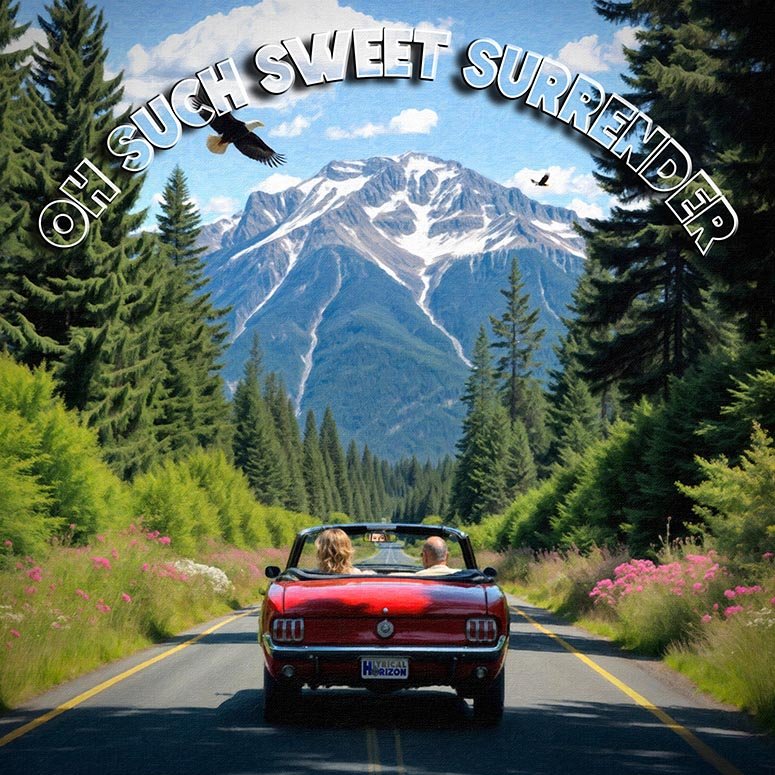
"Oh Such Sweet Surrender/ Sweet Surrender"
The story behind the song is the feeling of driving off into the desert night and letting everything else fall away. It opens at the edge of a forgotten canyon with the sunset going crimson, and the narrator deciding that nature is his sole companion for a while. The whole song is about that kind of surrender, the good kind, where you stop carrying your worries and let the southwest wind take them.
From there it travels the country's wild places, giant sequoias and ancient redwoods holding their old secrets, a dusty backroad at breaking dawn, the Rockies and the Appalachian trails calling like familiar friends. I wanted the surrender to feel like waking up rather than giving up. Time stands still in the mountain splendor, and the narrator's heart is full with no need for words.
The last verse is where the meaning widens. "There's freedom in our wild domains, where borders blur and fall away," and those treasured lands start calling us toward a better way. That's the quiet heart of it for me. Surrendering to the beauty of these places isn't escape, it's a kind of homecoming, and it leaves you wanting to protect the very ground that set you free.
Expansive cinematic Americana / folk-rock with layered vocals.
Freedom and surrender, the peace of wild places, letting go of worry, and a quiet love of the land.
Primary Subject:
A solitary drive through America's wild landscapes, from the southwestern desert to the redwoods, Rockies, and Appalachians.
Mood:
Serene, liberated, awestruck, and peaceful.
Surrendering to the beauty of the wild is not escape but a homecoming, one that clears away your worries and calls you toward a better, freer way of living.
[Intro: Instrumental]
[Verse 1:]
At the edge of a forgotten canyon
As the sunset casts its crimson light
I’ve decided nature’s my sole companion
As I drive off into the desert night
My worries fade like distant dreams
Carried away by a southwest wind
[Chorus: layered vocals]
Sweet..., oh such sweet surrender...
Live..., live my life without care...
Oh time stands still... in mountain splendor...
As dawn paints gold..., the morning air...
Oh sweet... such sweet surrender...
I want to live... live my life without care...
My soul finds peace... in wild grandeur...
As nature’s truth... lies everywhere...
[Verse 2:]
Giant sequoias and ancient redwoods
Hold ancient secrets of times long gone
I wonder at life on a dusty backroad
As I behold the beauty of a breaking dawn
My heart is full, no need for words
Swept away on the wings of eagles
[Verse 3:]
Rocky Mountains and Appalachian trails
They call to me like a familiar friend
I hear their whispers on the eastern gales
A melody that’s hard to comprehend
So I close my eyes and let it play
A subtle symphony I hear today
[Verse 4:]
There's freedom in our wild domains
Where borders blur and fall away
Leave your cares, and the day’s remains
For those of us who wish to stay
These treasured lands, this rich terrain
Are calling us toward a better way
[Chorus: layered vocals]
Sweet..., oh such sweet surrender...
Live..., live my life without care...
Oh time stands still... in mountain splendor...
As dawn paints gold..., the morning air...
Oh sweet... such sweet surrender...
I want to live... live my life without care...
My soul finds peace... in wild grandeur...
As nature’s truth... lies everywhere...
[Chorus: layered vocals]
Sweet..., oh such sweet surrender...
Live..., live my life without care...
Oh time stands still... in mountain splendor...
As dawn paints gold..., the morning air...
Oh sweet... such sweet surrender...
I want to live... live my life without care...
My soul finds peace... in wild grandeur...
As nature’s truth... lies everywhere...
[Outro: Instrumental]
"Oh Such Sweet Surrender" is a sweeping, restorative song about releasing anxiety, leaving behind the pressures of modern life, and rediscovering peace through the vast natural landscapes of America. Moving from desert canyons and Southwest winds to ancient forests, mountain ranges, trails, and open wildlands, the lyrics celebrate the emotional freedom that comes when a person stops resisting life and allows nature to become a source of companionship, perspective, and renewal.
The word "surrender" is central to the song, but it does not describe defeat. Instead, it represents the voluntary release of worry, control, obligation, and emotional burden. The narrator is not surrendering to despair. He is surrendering the need to manage every outcome, answer every demand, and carry every concern. The sweetness comes from discovering that letting go can feel less like losing and more like returning to a truer way of living.
The instrumental introduction provides an opportunity to establish a spacious and cinematic atmosphere before the journey begins. Gentle acoustic guitar, warm piano, atmospheric electric guitar, distant strings, or subtle sounds of wind could suggest an open landscape at sunset. The introduction should feel like the moment when the road leaves the familiar world behind and enters a quieter, more expansive place.
The first verse begins at the edge of a forgotten canyon under crimson evening light. The canyon immediately gives the song a sense of scale, solitude, and ancient permanence. Describing it as "forgotten" suggests a place beyond crowds, schedules, and ordinary distractions. It may not literally be unknown, but it feels removed from the noise of human life.
The crimson sunset creates a dramatic threshold between day and night. It also marks the narrator's transition from one state of mind to another. Daylight, with its responsibilities and unfinished concerns, is fading. The desert night lies ahead, representing uncertainty but also freedom.
The narrator's decision that nature will be his "sole companion" suggests a deliberate withdrawal from pressure rather than hostility toward other people. Solitude becomes restorative. The natural world does not make demands, offer judgment, or require explanation. It simply allows the narrator to exist.
Driving into the desert night adds movement and independence to the scene. The automobile becomes a means of escape, but the journey is not directed toward a specific city or destination. It is a movement away from confinement and toward openness. The dark highway, canyon walls, distant stars, and dry desert wind all contribute to the feeling that the narrator has entered a wider and less restrictive world.
His worries fade "like distant dreams," suggesting that concerns which once seemed immediate begin to lose their power when viewed against the scale of the landscape. Problems have not necessarily been solved, but they no longer occupy the entire horizon.
The Southwest wind carries those worries away. Wind is an especially effective symbol of release because it cannot be held or controlled. It moves across deserts, mesas, canyons, and open roads without regard for human boundaries. By allowing his burdens to be carried on that wind, the narrator accepts a temporary freedom from them.
The chorus expands this private moment into the emotional and philosophical center of the song. The elongated phrase "Sweet, oh such sweet surrender" invites a spacious vocal treatment. It should feel less like a hurried statement and more like a deep exhalation.
The repeated wish to "live my life without care" does not necessarily mean abandoning responsibility or becoming indifferent. Within the context of the song, it expresses the desire to live without constant fear, tension, and overthinking. The narrator longs for a life in which concern does not overshadow wonder.
Time appears to stand still within mountain splendor. This reflects a common experience in grand natural settings, where ordinary schedules and deadlines seem temporarily irrelevant. Mountains operate on a scale of centuries and geological ages, making human urgency feel small.
The dawn painting the morning air in gold introduces rebirth. After the desert night, the arrival of morning suggests that surrender has not led into darkness but into a renewed perception of the world. Light transforms the landscape and, by extension, the narrator's inner state.
The phrase "my soul finds peace in wild grandeur" captures the song's deepest emotional claim. Peace is found not through retreat into emptiness, but through immersion in something immense, beautiful, and alive. Wild grandeur reduces the narrator's burdens without diminishing his importance. It reminds him that he belongs to a larger world.
"Nature's truth lies everywhere" gives the chorus a philosophical dimension. The truth may be found in cycles of light and darkness, growth and decay, stillness and motion, hardship and renewal. Nature does not explain these truths through language. It demonstrates them continually.
The second verse shifts from the desert to the monumental forests of giant sequoias and ancient redwoods. These trees introduce themes of endurance, memory, age, and humility. Their lifespans extend far beyond individual human lives, making them living witnesses to centuries of change.
The phrase "ancient secrets of times long gone" gives the forests an almost mystical quality. The trees contain records of drought, fire, storms, seasons, and environmental change within their rings and forms. They appear to hold knowledge inaccessible to ordinary human speech.
The narrator's wonder unfolds along a dusty backroad rather than a major highway or crowded destination. This reinforces the song's preference for quieter, less structured travel. The backroad represents discovery outside conventional routes and a willingness to follow curiosity rather than efficiency.
The breaking dawn continues the song's recurring association between natural light and personal renewal. The narrator is not merely observing scenery. He is experiencing a shift in consciousness through it.
"My heart is full, no need for words" describes a moment when language becomes inadequate. The beauty of dawn among ancient trees produces a feeling too complete to require explanation. Silence becomes a form of understanding.
The image of being swept away on the wings of eagles extends the feeling of release. Eagles suggest elevation, independence, wide perspective, and freedom from the restrictions of the ground. The narrator's body remains on the road, but emotionally and imaginatively he rises above his former concerns.
The third verse connects the Western grandeur of the Rocky Mountains with the older, wooded landscapes of the Appalachian trails. By including both ranges, the song broadens its geographic and emotional scope. The Rockies evoke elevation, drama, vastness, and alpine wilderness, while the Appalachians suggest age, intimacy, forested ridges, ancestral routes, and gentle continuity.
The mountains call to the narrator "like a familiar friend." This personification makes the landscape feel welcoming rather than remote. Nature is not an unfamiliar force to be conquered. It is a presence the narrator recognizes and trusts.
The eastern gales carry whispers, just as the Southwest wind carried worries away in the first verse. Wind again becomes a messenger, but this time it delivers something rather than removing it. It brings a melody from the land itself.
That melody is "hard to comprehend," suggesting that nature communicates through feeling, rhythm, movement, and intuition rather than literal words. The narrator cannot fully interpret it, but he does not need to.
Closing his eyes becomes an act of surrender. He stops trying to analyze the experience and simply allows the "subtle symphony" to play. This symphony may include wind through trees, distant birds, moving water, shifting branches, insects, and the silence between sounds.
The phrase also connects the songwriter's musical identity with the natural world. Nature becomes both performer and composer. The narrator listens rather than creates, recognizing that music existed long before human instruments.
Verse four turns from personal experience toward a broader statement about wilderness and freedom. "There's freedom in our wild domains" presents natural spaces as places where social pressures, artificial distinctions, and ordinary restrictions temporarily weaken.
The phrase "where borders blur and fall away" can be understood geographically, emotionally, and spiritually. In wilderness, political boundaries may feel less important than watersheds, mountain ranges, migration routes, and ecosystems. The distinctions between self and surroundings may also become less rigid.
The invitation to leave behind one's cares and "the day's remains" suggests releasing not only present anxiety but the emotional residue of ordinary life. Frustrations, disappointments, arguments, obligations, and unfinished tasks can accumulate. The wilderness offers room to set them down.
"For those of us who wish to stay" introduces a gentle longing to remain within this freer state. The narrator understands that the journey may be temporary, yet part of him resists returning to the pressured world he left behind.
The "treasured lands" and "rich terrain" extend the song beyond individual healing into appreciation and stewardship. These landscapes are valuable not only because they provide personal escape, but because they contain ecological, cultural, scenic, and spiritual meaning.
The final line of the verse suggests that the land calls humanity toward "a better way." Nature becomes a moral teacher. Its lessons may include patience, balance, humility, interdependence, restraint, and respect for life.
The repeated choruses give the song a meditative, mantra-like quality. Each return to "sweet surrender" reinforces the narrator's commitment to release. The repetition is especially appropriate because letting go is rarely accomplished only once. Worries return, and the mind must repeatedly choose to loosen its grip.
The layered vocals could make the chorus feel communal, suggesting that the narrator's longing is shared by many people. The individual journey becomes a broader human desire for peace, freedom, reconnection, and relief from constant pressure.
The second and final chorus repetitions should not feel redundant if the arrangement continues to develop. Additional harmonies, strings, percussion, or supporting voices could make each return feel more expansive and emotionally resolved.
The instrumental outro allows the landscape to remain after the words end. It can suggest that the narrator continues traveling through forests, mountains, canyons, and open roads beyond the final lyric. The music becomes the natural symphony introduced earlier in the song.
Structurally, "Oh Such Sweet Surrender" progresses like a cross-country spiritual journey. It begins in a Southwest canyon, passes through ancient Western forests, reaches the Rockies and Appalachians, and concludes with a broader celebration of America's wild domains. The geography expands as the narrator's consciousness opens.
The song is not simply a catalogue of landscapes. Each place represents a different form of release. The canyon offers solitude. The desert wind removes worry. The sequoias and redwoods provide perspective across time. The mountains offer grandeur and familiarity. The trails and winds reveal music. The open lands dissolve borders and suggest a better way to live.
Musically, "Oh Such Sweet Surrender" would be especially effective as a late-1970s or early-1980s-inspired adult contemporary song, cinematic soft-rock anthem, folk-rock travel ballad, or orchestral pop composition. Its long chorus lines and scenic imagery invite a warm, expansive arrangement.
The instrumental introduction could begin with acoustic guitar or piano, gradually joined by clean electric guitar, soft bass, and restrained drums. A brief flute, saxophone, or string melody could establish the song's central theme before the vocal enters.
Verse one should feel open and reflective. Gentle percussion and sustained instrumental tones could evoke the desert road and sunset. The accompaniment should leave enough space for the vocal imagery to unfold clearly.
The chorus could expand with layered harmonies, fuller drums, broad strings, and warm electric guitar. The pauses built into the lyric allow key phrases such as "sweet surrender," "mountain splendor," and "wild grandeur" to receive sustained notes and emotional emphasis.
Verse two could incorporate lighter acoustic textures or high string harmonics to suggest dawn filtering through ancient forests. The image of eagle wings could be supported by a rising instrumental phrase.
Verse three may benefit from subtle regional textures without becoming overly literal. Acoustic guitar, mandolin, fiddle, or flute could hint at mountain traditions, while orchestral strings maintain the song's broader adult contemporary character.
Verse four should gradually build toward the return of the chorus. Stronger drums, richer harmonies, and a rising melodic figure could reinforce the idea that the treasured lands are calling humanity toward something better.
The first repeated chorus could add wider vocal layers, while the final chorus could become the song's emotional peak. A choir-like background arrangement would suit the communal theme of surrender and renewal.
The outro might feature an expressive guitar, saxophone, piano, or orchestral solo based on the chorus melody. Nature ambience such as distant wind, birds, or flowing water could be added sparingly to leave the listener within the landscape.
At its heart, "Oh Such Sweet Surrender" is about choosing to stop fighting every moment of life. It recognizes the burden of worry while suggesting that relief can be found through distance, silence, movement, beauty, and attention.
The song's narrator does not abandon life. He returns to it through the natural world. The canyons, forests, mountains, eagles, winds, and dawn skies help him recover a sense of awe that daily pressures had nearly erased.
The result is an uplifting and visually rich tribute to wilderness as both refuge and teacher. "Oh Such Sweet Surrender" celebrates the freedom that comes when a person releases fear, opens the senses, and allows the grandeur of the world to restore the spirit.





























.jpg)