"Silent Equanimity©"
Lyrics, Written by M.S. McKenzie & Are Protected by Copyright
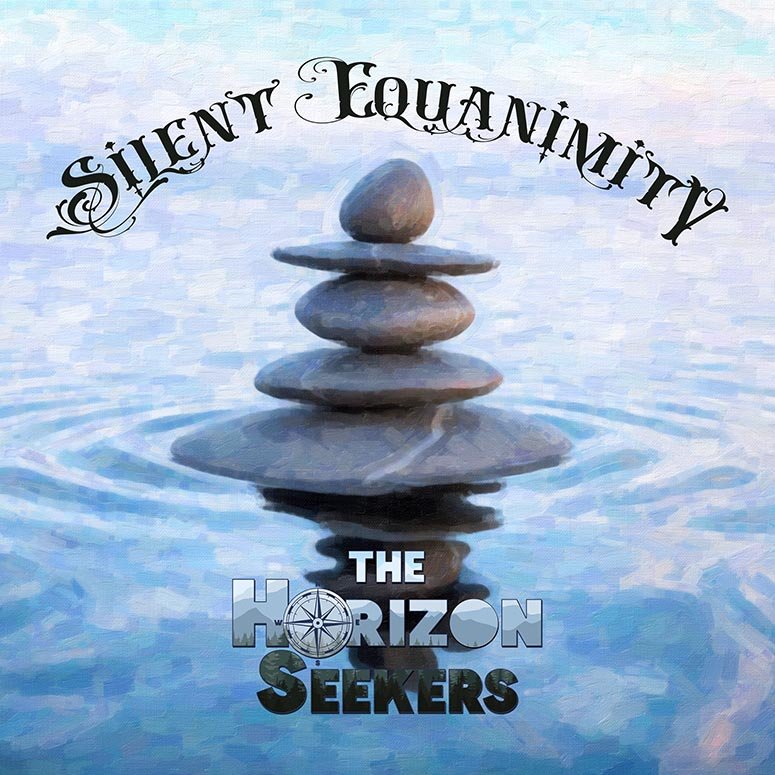
"Silent Equanimity"
I wrote "Equanimity" because the word deserves better than the way we usually use it. People hear it and think of detachment, of somebody who has arranged their life so that nothing can reach them anymore. That is not equanimity. That is armor, and it is a much smaller thing. What I was after is the state where everything still reaches you and you are steady anyway, which is harder and much more alive. The narrator does not step out of the storm in the first verse. He stands resolute in it. The chaos is still going on all around him. He has simply stopped being at war with it.
The story behind the song is in the third verse, and it is the verse the whole thing was built to arrive at. It would have been easy to write a song about peace that quietly required a person to already be at peace, where you only get the calm if you have nothing broken to carry. So I put the broken things in on purpose. He gathers them up and pulls them back into the light, turns sorrow into wisdom, and then finds the line I care about most, that even jagged edges form the pattern of our home. The damage is not something he transcended. It is load-bearing. That is why the bridge can move from I to we without it feeling like a trick, because once you stop needing your own history to be different than it was, other people stop being a threat to you and start being company.
Songs Across America is mostly a project about places, and this one is about the only place a person actually lives, which is inside their own attention. But I do not think the two are separate. The song reaches for stars and moonlight and tides for the same reason the rest of the catalog reaches for mountains and rivers, because feeling how small we are in that kind of company is not diminishing. It is the exact thing that makes room for us. That is the turn in the second verse, how small we seem, yet how infinite in soul we are. I hope this one finds people on the loud days. What I want them to take from it is the last thing the chorus says. Not separate but truly whole. The wholeness was never something to go find. It was what was left once the fighting stopped.
Meditative, spiritually resonant hymn with a mantra-like structure, its recurring chorus drawing the listener deeper with each repetition. Gentle, poetic, and introspective writing built on elemental imagery of light and shadow, storms and solid ground, stars and tides, creating a soundscape as centered as the state it describes.
Inner peace and acceptance, mindfulness and stillness as practice, the integration of suffering into wisdom, interconnectedness and shared humanity, the cosmic perspective on personal struggle, and wholeness as something uncovered rather than achieved.
Primary Subject:
A person quieting their mind in the middle of a loud and restless world, and the inward journey from fear and illusion toward steadiness, integration, and a sense of belonging to everything.
Mood:
Serene, contemplative, reverent, and expansive. Hushed and inward at the opening, widening into cosmic wonder, and resolving into grounded, luminous calm.
Equanimity is not detachment or the absence of pain, but steadiness in the middle of it. Peace comes from integrating our broken pieces rather than escaping them, and in ceasing to fight our own experience we discover we were never separate from the world or from each other.
[Verse 1]
I quiet my mind for a moment, letting the silence be my guide
Every breath becomes a whisper, floating softly deep inside
When the chaos stirs around me, I stand resolute in the storm
The walls of my fears dissolve, in the spaces where I am born
I feel the cosmic hush of truth, weaving light through every vein
In the stillness of acceptance, all my illusions start to wane
[Chorus]
Oh, in equanimity, I find my feet on solid ground
A calm that softens every cry, a love that’s all around
When the world feels loud and restless, I choose the gentler way
I open my mind to all of creation, letting wonders in to play
Oh, in silent equanimity, I sense the purpose within my soul
Now woven into everything, I’m not separate but truly whole
[Verse 2]
The moonlight paints a passage, to a place beyond my sight
Where doubt sheds off like shadows, in the stillness of the night
Each heartbeat pulls me closer, to a distant shape I cannot see
A silent vow to trust the pull, the stirrings of cosmic majesty
I sense an endless tapestry of countless spinning stars
And realize how small we seem, yet how infinite in soul we are
[Verse 3]
I gather up the broken things, and pull them back into the light
I turn sorrow into wisdom, and forge new hope out of the fight
I learn to see the harmony in these brambled paths we roam
And see that even jagged edges form the pattern of our home
In the lightness of utter being, a subtle truth begins to rise
I’m neither lost nor lonely, just awake in endless skies
[Bridge]
We float in utter stillness, where horizons merge without a trace
Each moment a reminder of this shared and sacred space
And though the tides of troubles may rise, we simply learn to be
Cradled in shared oneness...
Embraced by equanimity
[Verse 4]
Reflecting on the turbulence that shaped the heart I bear
My spirit finds redemption in the act of simply being “there”
The Universe vibrates so quietly, only the contrite heart can hear
These strings of throbbing empathy will forever keep me whole
Through ebbs and tides, I anchor to this silent pulse inside
Step by step, and truth by truth, I let equanimity become my guide
[Chorus]
Oh, in equanimity, I find my feet on solid ground
A calm that softens every cry, a love that’s all around
When the world feels loud and restless, I choose the gentler way
I open my mind to all of creation, letting wonders in to play
Oh, in silent equanimity, I sense the purpose within my soul
Now woven into everything, I’m not separate but truly whole
[Final Chorus]
Oh, in equanimity, I find my feet on solid ground
A calm that softens every cry, a love that’s all around
When the world feels loud and restless, I choose the gentler way
I open my mind to all of creation, letting wonders in to play
Oh, in silent equanimity, I sense the purpose within my soul
Now woven into everything, I’m not separate but truly whole
Here is a detailed description for "Silent Equanimity":
"Silent Equanimity" is a contemplative, spiritually expansive song about inner stillness, emotional balance, acceptance, and the gradual realization that the individual self is inseparable from the larger universe. Through images of breath, moonlight, storms, stars, tides, silence, and cosmic vibration, the lyrics describe a movement away from fear and fragmentation toward peace, empathy, and a profound sense of belonging within all creation.
The title brings together two closely related ideas. "Equanimity" refers to a stable and balanced state of mind, especially during pain, uncertainty, conflict, or change. It is not emotional numbness or indifference. Instead, it is the capacity to experience life fully without being completely controlled by every fear, loss, desire, or disruption. The word "silent" suggests that this balance is found not through argument, force, or outward achievement, but through attentive stillness.
The song is written as an inward spiritual journey. Its narrator does not claim to possess complete knowledge or final answers. Instead, the lyrics document a process of quieting the mind, observing experience, accepting uncertainty, and becoming increasingly aware of a larger unity. This gives the song a meditative quality while preserving a sense of discovery.
The opening verse begins with a deliberate pause. The narrator quiets the mind "for a moment," suggesting that equanimity is approached through small acts of attention rather than achieved permanently in a single revelation. Silence becomes a guide, leading the narrator away from mental noise and toward a deeper awareness of the self.
Each breath is described as a whisper floating inward. This image makes breathing feel almost sacred, not in a doctrinal sense, but as an intimate connection between body, consciousness, and life. Breath becomes the first doorway into stillness. By listening to it, the narrator begins to notice an inner space that remains calm beneath external disturbance.
The song then introduces chaos and storm imagery. The narrator does not escape the storm or pretend it does not exist. Instead, he stands resolutely within it. This is an essential expression of equanimity. Peace does not depend upon perfect circumstances. It is discovered through a different relationship with circumstances.
The dissolving walls of fear suggest that much of the narrator's isolation has been constructed internally. Fear creates barriers between the self and experience, between one person and another, and between human consciousness and the wider universe. In the quiet spaces where those walls weaken, the narrator experiences a kind of rebirth.
The phrase "the spaces where I am born" suggests that identity is not fixed. The self can continually emerge anew whenever fear, illusion, and rigid certainty are released. Birth becomes an ongoing spiritual process rather than a single biological event.
The "cosmic hush of truth" introduces the song's larger metaphysical dimension. Truth is not announced loudly or imposed from outside. It is encountered as a quiet presence flowing through the body. Light weaving through every vein connects cosmic awareness with physical existence, suggesting that the universe is not merely something observed from a distance. It is experienced within the living body.
The verse ends with acceptance dissolving illusion. Acceptance does not mean approving of every painful event or abandoning the desire for change. It means seeing reality without constantly demanding that it become something else before peace is possible. As resistance loosens, the narrator's illusions about control, separation, and permanence begin to fade.
The chorus provides the song's central statement. Equanimity allows the narrator to find solid ground, even though the verses repeatedly place him within fluid, uncertain, and cosmic environments. This ground is not a literal place. It is an inner stability that remains accessible while circumstances change.
The calm described in the chorus does not silence every cry. It "softens" them. This distinction preserves the emotional honesty of the song. Pain, grief, and distress still exist, but they no longer dominate the entire field of awareness. Calm creates room around suffering, allowing it to be held with greater tenderness.
The love surrounding the narrator is similarly expansive. It may refer to interpersonal love, compassion, the sustaining patterns of nature, or a universal connectedness felt through contemplation. The song leaves the source of this love open, allowing it to be understood spiritually, philosophically, psychologically, or cosmically.
When the world becomes loud and restless, the narrator chooses "the gentler way." This is not passive surrender. Gentleness becomes an ethical decision about how to respond to conflict, pressure, and uncertainty. The lyric suggests patience, empathy, restraint, curiosity, and a refusal to answer every disturbance with further disturbance.
Opening the mind to all creation transforms wonder into a form of participation. The narrator does not approach the universe only as an intellectual problem. Creation is invited inward to "play," a word that adds lightness and joy to the otherwise solemn spiritual imagery. Wonder becomes spontaneous, creative, and alive.
The final lines of the chorus express the song's deepest realization. The narrator senses purpose within the soul, but that purpose is not based upon superiority or separateness. The self is "woven into everything." Wholeness is found through relationship rather than isolation.
The weaving metaphor appears repeatedly throughout the song. Truth weaves through the veins, stars form a tapestry, and the individual becomes woven into creation. These images present existence as a pattern made from countless interconnected lives, events, energies, and forms.
Verse two shifts the meditation toward moonlight and the mystery beyond ordinary perception. Moonlight paints a passage toward something the narrator cannot yet see. The passage suggests a threshold between the known and unknown, the visible and invisible, or conscious thought and intuitive understanding.
Doubt falls away "like shadows" in the stillness of night. Shadows do not need to be destroyed; they disappear when light changes. In the same way, doubt may not be defeated through forceful argument. It can loosen when the mind becomes quiet enough to perceive experience differently.
The heartbeat becomes another internal guide. Like breathing in the first verse, it draws attention to the body's persistent rhythms. Each beat seems to pull the narrator toward a distant and indistinct presence. The song does not define this presence as a deity or specific supernatural being. It remains a "shape" beyond sight, preserving mystery.
The silent vow to trust this pull expresses faith without dogma. The narrator trusts an intuition, attraction, or sense of meaning that cannot be fully explained. The "stirrings of cosmic majesty" suggest awe arising from the awareness of existence itself.
The image of countless spinning stars expands the narrator's perspective beyond human concerns. The universe becomes an endless tapestry of motion, pattern, and scale. This astronomical awareness creates humility, but not insignificance.
The narrator recognizes how small human beings appear within the cosmos, yet also how "infinite in soul" they may be. This apparent contradiction is central to the song. Physical scale does not determine spiritual or conscious significance. A human life may be brief and geographically tiny while still containing imagination, empathy, memory, and awareness capable of contemplating the universe.
Verse three turns from contemplation toward integration and healing. The narrator gathers broken things and brings them into the light. These fragments may include memories, losses, mistakes, fears, damaged relationships, or parts of the self that have been rejected.
The lyric does not suggest discarding brokenness. Instead, it is collected and reintegrated. Healing becomes a process of including wounded parts within a larger sense of self rather than pretending they never existed.
Sorrow is transformed into wisdom, and struggle becomes material from which hope can be forged. The forging metaphor implies heat, pressure, effort, and reshaping. Hope is not presented as naïve optimism. It is created through direct engagement with hardship.
The "brambled paths" suggest that life is tangled, difficult, and resistant to simple progress. Thorns, detours, and obstructions are part of the journey. Yet the narrator begins to recognize harmony even within these difficult routes.
The jagged edges forming the pattern of home deepen the song's philosophy of inclusion. Imperfection is not outside the greater design. Painful and irregular experiences may still contribute to belonging, identity, compassion, and understanding.
"Home" therefore becomes more than a safe or comfortable place. It is the total pattern of existence, including contradiction, injury, joy, uncertainty, and growth. Equanimity allows the narrator to belong within that pattern without requiring every edge to become smooth.
The phrase "lightness of utter being" suggests relief from the burden of constantly defining, defending, or judging the self. Simply existing becomes sufficient. Within that lightness, a subtle truth rises: the narrator is neither lost nor abandoned.
Being "awake in endless skies" transforms loneliness into awareness. The infinite universe no longer feels empty or alienating. It becomes the space within which consciousness awakens. The narrator's solitude is reinterpreted as participation in something immeasurably larger.
The bridge moves from the individual "I" toward the collective "we." This is a crucial development because the song's realization of oneness must eventually include other beings. The narrator's inner peace expands into a shared condition.
Floating in stillness suggests surrender without helplessness. Horizons merge until boundaries disappear, reinforcing the dissolution of separateness. The line evokes meditation, deep space, open water, or a state of consciousness in which ordinary divisions temporarily lose their importance.
Each moment becomes a reminder of shared and sacred space. "Sacred" here can be understood broadly as something worthy of reverence, care, and protection. The song does not require a formal religious interpretation. The shared space may simply be existence itself.
The tides of trouble acknowledge that equanimity does not prevent future pain. Difficulties rise and fall like water. The answer is not absolute control but learning "to be." This phrase represents presence, acceptance, patience, and the ability to remain grounded without immediately reacting.
The image of being cradled in shared oneness gives the bridge a nurturing quality. Oneness is not presented as the erasure of individuality, but as the larger context that holds it. Equanimity becomes an embrace rather than a discipline imposed through force.
Verse four reflects upon the turbulence that shaped the narrator's heart. The song recognizes that inner balance did not develop in the absence of suffering. It emerged through confrontation with upheaval, pain, error, and emotional complexity.
The heart the narrator now carries has been shaped by those experiences. Turbulence is therefore neither glorified nor dismissed. It becomes part of the personal history from which empathy and self-knowledge arise.
Redemption is found "in the act of simply being there." This line shifts value away from achievement and toward presence. Redemption may occur through remaining emotionally available, witnessing another person's pain, accepting one's own experience, or continuing to exist honestly through difficulty.
Being present becomes a moral and spiritual act. The narrator does not need to solve the universe or earn belonging through extraordinary accomplishment. Presence itself can be redemptive.
The universe vibrating quietly introduces the idea that reality possesses subtle rhythms or resonances that cannot be perceived through constant noise. The phrase may suggest physical vibration, music, consciousness, or a more symbolic sense of universal harmony.
Only the "contrite heart" can hear this vibration. Contrition implies humility, remorse, and openness to correction. The lyric suggests that deeper awareness becomes possible when pride, defensiveness, and certainty soften.
The "strings of throbbing empathy" combine musical, bodily, and emotional imagery. Empathy becomes a set of living strings vibrating in response to the suffering and joy of others. These strings connect the individual to the wider human and cosmic tapestry.
Empathy is what keeps the narrator whole. This is an important ethical conclusion. Wholeness is not achieved by withdrawing permanently from the world or protecting oneself from all emotional disturbance. It is maintained through compassionate connection.
The reference to ebbs and tides returns to the song's understanding of change. Emotional states, circumstances, relationships, and confidence all rise and fall. The narrator cannot prevent these movements but can anchor to the silent pulse within.
This inner pulse may be breath, heartbeat, awareness, conscience, love, or the underlying sense of unity developed throughout the song. It provides continuity without requiring rigidity.
"Step by step, and truth by truth" portrays equanimity as a gradual practice. The narrator does not claim instant enlightenment. Balance becomes a guide through repeated choices, discoveries, corrections, and acts of attention.
When the chorus returns, its lines now carry the accumulated meaning of the journey. Solid ground has been found through silence, cosmic wonder, brokenness, humility, and empathy. The narrator's wholeness does not come from eliminating complexity but from recognizing connection within it.
The repeated final chorus gives the song a mantra-like conclusion. Rather than adding a new narrative event, it allows the central realization to deepen through repetition. Equanimity becomes something spoken, breathed, and internalized.
The repetition may also suggest that inner balance must be continually renewed. The same truths must be revisited when the world again becomes loud, restless, or painful. The chorus functions almost as a meditative affirmation to which the narrator can return.
Structurally, "Silent Equanimity" moves through several stages of spiritual and emotional development. The first verse introduces stillness and acceptance. The chorus establishes interconnectedness. The second verse expands consciousness into the cosmos. The third integrates suffering and imperfection. The bridge moves from individual awareness to shared oneness. The fourth grounds the philosophy in empathy, humility, and daily practice.
The lyrics draw upon ideas associated with mindfulness, contemplative spirituality, Stoic balance, Buddhist equanimity, humanism, and cosmic consciousness, yet they do not bind themselves to any single doctrine. This openness makes the song accessible to listeners with different religious, philosophical, and secular perspectives.
Its spiritual language is rooted in experience rather than authority. Breath, heartbeat, sorrow, stars, moonlight, empathy, and silence become sources of insight. The universe is approached through awe and participation rather than rigid explanation.
Musically, "Silent Equanimity" would be especially effective as an atmospheric adult contemporary ballad, progressive ambient pop piece, cinematic spiritual anthem, or meditative soft-rock composition. The production should create spaciousness and gradual expansion, allowing the lyrics to breathe.
The opening could begin with soft piano, sustained synthesizer pads, gentle acoustic guitar, or a low ambient drone. The vocal should feel close and centered, as though the listener is hearing the narrator's internal thoughts.
Subtle breath sounds, distant choral textures, or slowly moving harmonics could reinforce the meditative quality. The rhythm should initially remain understated, perhaps using a soft pulse resembling a heartbeat.
The first chorus could introduce warm bass, restrained percussion, strings, and wider vocal harmonies. The music should feel as though the room has opened into a much larger space when the narrator sings about creation and wholeness.
Verse two could incorporate shimmering guitar, bell-like piano tones, or celestial synthesizer textures to support the images of moonlight and spinning stars. The arrangement might gradually become more expansive without losing its calm center.
Verse three could add deeper strings or subtle rhythmic movement as the narrator gathers broken pieces and transforms sorrow into wisdom. Harmonic tension could briefly increase around the brambled paths and jagged edges before resolving on the realization of home.
The bridge should feel suspended and nearly weightless. Percussion could recede while voices, strings, or ambient tones create the sense of floating beyond visible horizons. Layered vocals on "shared oneness" and "embraced by equanimity" could produce a gentle, choir-like effect.
Verse four could return to a more grounded arrangement, perhaps emphasizing piano, bass, and a steady heartbeat-like rhythm. This would reflect the movement from cosmic vision back into embodied empathy and daily life.
The final choruses should grow through layering rather than sheer volume. Additional harmonies, strings, soft cymbal swells, and counter-melodies could make the music feel increasingly interconnected. The goal should be transcendence without bombast.
An instrumental outro could continue the chorus progression while gradually removing elements until only the original piano, breath, or ambient pulse remains. This would return the listener to the silence from which the song began.
At its heart, "Silent Equanimity" is about learning to remain open without being overwhelmed. It acknowledges fear, turbulence, sorrow, doubt, and brokenness while refusing to define life only through them.
The song suggests that peace is not achieved by escaping the world, but by perceiving the connections running through it. Breath connects mind and body. Empathy connects one person to another. Stars connect human awareness to the cosmos. Acceptance connects the present moment to a deeper sense of wholeness.
The result is a thoughtful and spiritually resonant meditation on what it means to be fully present within an immense and changing universe. "Silent Equanimity" presents inner balance not as emotional distance, but as a compassionate awareness in which pain is softened, wonder remains possible, and the individual discovers that they have never truly been separate from the greater pattern of existence.
































.jpg)