"California State of Mind©"
Lyrics by M. S. McKenzie (Unless Otherwise Noted) | Music Performed by Songs Across America or American Storyteller Music, All Songs Are Protected by Copyright

~ Associated State Links ~
"California State of Mind"
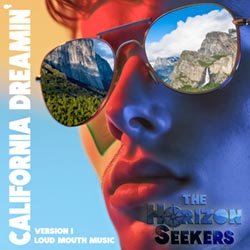
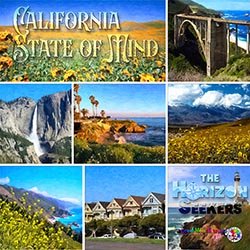
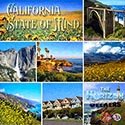
I wrote "California Dreaming, Wild and Free" because California has one of the most famous names in the world and almost none of that fame has anything to do with California. Say the word and people picture a studio lot, a freeway, a celebrity, a beach with somebody famous on it. Meanwhile the actual state contains redwoods that were standing before the Roman Empire, a valley that holds the hottest temperature ever recorded, alpine lakes, condors, and a spring bloom in the desert that most Americans have never heard of. I wanted to take the phrase California dreaming and quietly hand it back to the place itself.
The story behind the song is in its structure, which is the argument. There is no narrator in this one, no character, no plot, and I made that choice deliberately. Four verses, moving north to south and coast to desert, and each one is simply a place given its due. Redwoods and Big Sur and Monterey. Shasta and Tahoe and the northern Sierra. Half Dome and Kings Canyon and the sequoias. Then Death Valley, Joshua Tree, Anza-Borrego. What holds them together is not a story but a chorus, and the chorus keeps insisting that all of this is one golden land of mystery. A person could spend a lifetime in that state and not see all of it. The song is not trying to summarize California. It is trying to admit how much is there.
The final chorus changes one line, and that small shift is the whole point of the song. Nature's majesty, calls to you and me. It turns the refrain from a dream into a benediction, because the land is not the backdrop to the dream. It is the dream, and unlike most dreams it is already real and already out there and will keep being both whether or not anybody drives out to look. Songs Across America was built on the belief that the places themselves are worth the songs, not just the people passing through them. This is that belief in its purest form. I hope people hear this one and recognize a piece of California they have already stood in, and then notice three or four in it they have never seen. What I want them to take from it is the invitation in the last line. It is still calling. It has been calling the whole time.
Folk-Americana with orchestral and pop influences at 85 to 100 BPM. Acoustic guitar, soft percussion, piano, cello, ambient synth textures, and subtle orchestral swells beneath layered vocal harmonies. Structured as four panoramic vignettes rather than a narrative, with a unifying chorus built for communal singing and a final refrain that lands as benediction.
The natural majesty and staggering diversity of California, the reclaiming of "California dreaming" from pop-culture myth, wilderness as spiritual calling, the permanence of the land against human time, and an invitation to explore, respect, and remember.
Primary Subject:
The landscapes of California itself, traveled north to south and coast to desert, from the redwoods and Big Sur through Shasta, Tahoe, and Yosemite to Death Valley, Joshua Tree, and the Anza-Borrego bloom.
Mood:
Uplifting, reverent, cinematic, and nostalgic. Expansive and awe-struck throughout, closing on something gentler and benedictory.
California's real dream is not fame or fortune but the land itself. Its majesty spans redwood coast to desert bloom, and it does not need us to notice it in order to be magnificent. It is already there, already calling, and the invitation stands open to anyone willing to go look.
[Verse 1]
From redwood giants that touch the sky
Where the fog rolls in and pelicans fly
Through Big Sur's cliffs so wild and free
Where the mountains kiss the sea
Past wind-swept shores of Monterey
Where playful otters float their cares away
To warm sunny beaches so golden bright
Where colorful sunset paint the night
[Chorus]
California dreaming, wild and free
From mountain peaks to rolling sea
This golden land of mystery
Still calls to you and me
(With nature's majesty)
[Verse 2]
Mount Shasta wears its snowy mantle
Through wilderness, vast and tranquil
Through northern forests deep and wide
Above the canyons, eagles glide
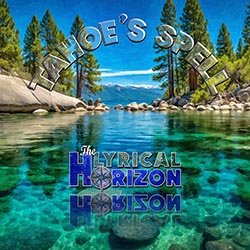
Lake Tahoe's waters crystal clear
Reflect the peaks that guard her here
The Sierra's northern gates stand tall
Where autumn's aspen leaves will fall
[Verse 3]
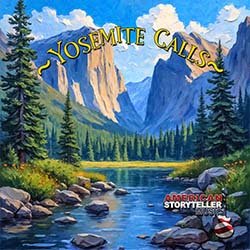
Half Dome and El Capitan's walls
Rise high above Yosemite's falls
Where serpentine rivers flow
Through peaceful meadows down below
Giant sequoias reach for the stars
While Kings Canyon cuts deep and far
Through alpine lakes so pure and clean
Where campers and climbers dare to dream
[Verse 4]
Death Valley's winds turn into gales
Where salt flats tell their ancient tales
Through Joshua Tree's twisted dance
Rapture in moonlight's desert trance
Anza-Borrego's spring display
Of wildflowers bright and gay
While desert bighorn climb so high
And echoes of a condor's cry
[Chorus]
California dreaming, wild and free
From mountain peaks to rolling sea
This golden land of mystery
Still calls to you and me
(Final line: Nature's majesty, calls to you and me)
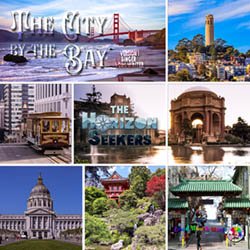
“City by The Bay” is a vibrant, panoramic tribute to San Francisco, portraying the city as a place where steep hills, drifting fog, Victorian houses, cable cars, historic neighborhoods, literary culture, immigrant traditions, waterfront landmarks, and iconic bridges all converge. The song moves through some of the city’s most recognizable districts and symbols while emphasizing a deeper theme: San Francisco has always been a place of arrival, reinvention, experimentation, and possibility.
The title is direct but fitting. “City by The Bay” immediately evokes San Francisco’s relationship with water, especially the way the city rises from a peninsula between the Pacific Ocean and San Francisco Bay. The title also carries a sense of familiarity and affection. Rather than sounding formal, it feels like the nickname of a place the narrator knows personally.
The song’s structure works like a moving city tour, but each verse adds a different layer of identity. The first verse emphasizes geography and visual beauty. The second explores literary and artistic history. The third focuses on cultural districts and the waterfront. The fourth turns toward the Golden Gate, Angel Island, and peaceful garden spaces. The chorus unifies them through the idea of San Francisco as a city where old stories and new dreams continually overlap.
The first verse opens from Twin Peaks at daybreak, one of the most effective vantage points for introducing the city. From that elevation, neighborhoods, downtown towers, water, bridges, and surrounding hills spread outward beneath changing light.
The fog arriving softly creates a distinctly San Francisco atmosphere. Fog is not merely weather in this song. It becomes part of the city’s personality, rolling through valleys, softening buildings, hiding distant landmarks, and transforming familiar streets into something more mysterious.
The phrase “Valleys wrapped in silver veils” is especially strong. It turns the fog into fabric, suggesting that the city is being slowly revealed rather than simply obscured.
“City tales begin” then introduces one of the song’s central ideas. Every street, neighborhood, and hillside contains stories. The city is not only seen; it is read.
The cable cars provide sound and movement. Their ascent up steep hills is one of San Francisco’s most characteristic urban experiences, and the line “A music box made of steel” gives them an imaginative musical quality.
The metaphor works because cable cars create their own mechanical soundtrack: bells, wheels, tracks, brakes, and the rhythm of climbing and descending.
Calling them a music box also fits the song’s romantic view of the city. What might otherwise be heard as machinery becomes part of San Francisco’s melody.
The “Victorian ladies” painting the hills refer to the colorful Victorian and Edwardian houses that contribute so strongly to the city’s architectural identity. The phrase suggests both elegance and personality.
The houses seem almost dressed in color, ranging from pastel pink and cream to blue, green, and more elaborate combinations. Against fog or blue sky, they become part of the city’s visual signature.
The first chorus broadens the perspective.
“San Francisco sits on 48 hills” captures the city’s famously hilly character and gives the landscape immediate scale.
The exact number of San Francisco hills can vary depending on how they are counted, so “48 hills” works best as a poetic and civic shorthand rather than an absolute geological measurement. The important idea is that the city’s identity is inseparable from elevation.
The line “Between the mountains and the Bay” places San Francisco inside a larger regional geography. The Bay lies to the east and north, the Pacific to the west, and hills and mountain systems surround the broader region.
Fog horns and bells provide the chorus with an auditory landscape. Fog horns connect the city to shipping and marine weather, while bells recall cable cars, churches, ships, and public life.
The towering bridges guide the way, most obviously the Golden Gate Bridge and Bay Bridge. These structures do more than move traffic. They visually define the city and symbolize connection.
The phrase “Through storied streets where old souls meet / And new hopes and dreams rise again” expresses the song’s deepest theme.
San Francisco is portrayed as a city where the past remains visible while new arrivals continue creating new futures.
“Old souls” may refer to longtime residents, artists, writers, immigrants, musicians, neighborhood characters, or simply people drawn to the city because of its layered history.
The new hopes and dreams belong to newcomers who arrive for work, love, art, identity, opportunity, or reinvention.
The line “This city built on rock and roll” is playful rather than literal. San Francisco was not literally built by rock music, but its modern cultural identity was strongly shaped by music, especially the counterculture and psychedelic-rock movements of the 1960s.
The phrase allows the city’s musical history to become part of the architecture.
The final chorus line, “Dreamers here by land, sea and plane,” widens the invitation. People have always arrived in San Francisco through different routes and for different reasons.
The city becomes a destination at the edge of the continent, attracting people who are searching for something new.
The second verse begins at Coit Tower and Telegraph Hill, shifting from the broad opening panorama toward specific neighborhoods.
The tower’s sunlit crown gives the hill a ceremonial quality. From its location, views extend across downtown, the waterfront, the Bay, and surrounding neighborhoods.
The parrots of Telegraph Hill provide one of the song’s most distinctive local details.
Their bright green feathers and red faces contrast dramatically with the pale morning sky and city architecture. The phrase “paint the dawn” makes their flight part of the city’s color palette.
The parrots also bring unexpected wildness into an urban setting. They remind the listener that San Francisco’s identity includes spontaneous, unusual, and sometimes improbable elements.
The verse then moves into North Beach, historically associated with Italian-American culture, cafés, nightlife, writers, and the Beat movement.
The neon signs create a nocturnal artistic atmosphere, while poetry and wine evoke conversation, bohemian life, and literary experimentation.
“Beatnik ghosts” continuing to write songs imagines the Beat era as a lingering presence.
Writers such as Jack Kerouac, Allen Ginsberg, Lawrence Ferlinghetti, and others helped make North Beach a symbolic center of mid-century literary rebellion.
Calling them ghosts does not imply literal haunting. It suggests that their influence remains embedded in bookstores, alleys, cafés, readings, and cultural memory.
The phrase “In jazzy numbers that rhyme” links Beat poetry with jazz rhythm. Beat writers were strongly influenced by jazz improvisation, spontaneity, phrasing, and performance.
The line suggests that poetry does not simply sit quietly on a page. It moves with rhythm and sound.
The third verse enters Chinatown through painted balconies and dragon imagery. The visual language becomes denser, more ornate, and more culturally layered.
Dragons guarding gates give the neighborhood a ceremonial entrance while also evoking Chinese artistic symbolism.
The dim sum carts introduce food and everyday community life. The song avoids treating Chinatown purely as decorative architecture by including movement, commerce, meals, and social interaction.
The phrase “fortune tales” plays on fortune cookies and the larger idea of stories about luck, destiny, and immigration.
The verse then moves toward Jack Kerouac Alley, creating a geographical and cultural bridge between Chinatown and North Beach.
That transition is meaningful because San Francisco’s neighborhoods do not exist as isolated cultural islands. They touch, overlap, and influence one another.
Pier 39 changes the tone again, bringing the listener to the lively waterfront.
Sea lions jostling for space introduce humor and movement. Their noisy presence contrasts with the more solemn image of Alcatraz beyond them.
The line works well because it places wildlife and history within the same view.
The sea lions are animated and present, while Alcatraz appears stark, silent, and burdened with memory.
Alcatraz sits on its rocky island with an imposing visual presence. Its reputation as a former federal prison gives it a severe emotional tone, but the island also has broader layers of military, Indigenous, and political history.
The word “proud” is interesting because Alcatraz is not celebrated in a conventional sense. Here it likely means visually commanding or unyielding.
The fourth verse begins with the Golden Gate Bridge at sunset, one of the song’s most cinematic images.
Crossing the bridge at sunset places the traveler between land, ocean, Bay, sky, and one of the world’s most recognizable structures.
The phrase “Where the Pacific meets the bay” captures the bridge’s symbolic position at the entrance to San Francisco Bay.
The Golden Gate is therefore both passage and boundary.
Angel Island introduces a deeper historical dimension.
The lyric “where history’s ghosts once stayed” likely refers to the island’s immigration station and the thousands of immigrants, especially from Asia, who were detained, questioned, and processed there.
This is a significant inclusion because it prevents the city portrait from becoming purely celebratory.
San Francisco’s identity includes stories of migration, exclusion, hardship, and resilience alongside beauty and cultural opportunity.
The phrase “Angel Island’s new towers rise” is less clear geographically and historically. Angel Island is known more for natural ridges, military structures, immigration-station buildings, and views than for modern towers.
If you intended the distant San Francisco skyline rising beyond Angel Island, a clearer alternative might be:
“Beyond Angel Island, towers rise”
or:
“Past Angel Island, skyline towers rise.”
Either preserves the visual movement while making the geography more precise.
The reference to “Art Deco Palace grounds and flowers” appears likely intended to describe the Palace of Fine Arts, although the Palace itself is not Art Deco. Its architecture is more strongly associated with Beaux-Arts and classical revival influences, originally created for the 1915 Panama-Pacific International Exposition.
For accuracy, you might consider:
“The Palace grounds and garden flowers”
or:
“Fine Arts Palace, grounds and flowers.”
The peacefulness described in the lyric fits the setting well. The lagoon, colonnades, lawns, and surrounding paths offer a quieter counterpoint to the busier neighborhoods earlier in the song.
The Japanese Tea Garden provides another contemplative space.
Its bridges, paths, plants, water features, stone lanterns, and carefully composed landscapes create a place designed for slower observation.
The phrase “keep lots of ancient mysteries” conveys the narrator’s sense of cultural depth, though it could be made slightly more elegant as:
“Still hold their quiet mysteries”
or:
“Still guard their ancient mysteries.”
The second option fits the tone especially well.
The repeated chorus now carries greater weight because the listener has traveled through many layers of San Francisco.
The “storied streets” now include Beat literature, Chinese American history, maritime life, Alcatraz, immigrant experience, waterfront activity, and iconic architecture.
The “new hopes and dreams” also become more complex. San Francisco has offered opportunity, but its history has also included exclusion, inequality, displacement, and struggle.
That tension makes the image of the city as a place for dreamers more meaningful rather than less.
Musically, “City by The Bay” would work especially well as an upbeat adult contemporary, melodic folk-rock, sophisticated pop-rock, or city-anthem arrangement.
The instrumental introduction could begin with piano, clean electric guitar, bass, and light drums, gradually opening into a wide panoramic sound.
A subtle brass or saxophone line would fit the city’s jazz, Beat, and nightlife imagery particularly well.
The first verse could use an easy, climbing rhythm to suggest cable cars ascending the hills.
A small bell-like percussion figure might subtly reference cable-car bells without becoming overly literal.
The chorus should broaden through layered vocals, stronger drums, strings, and possibly brass.
The line “San Francisco sits on 48 hills” deserves a confident melodic lift.
Fog horns and bells could be suggested instrumentally through low brass and bright percussion rather than through obvious sound effects.
The North Beach verse could introduce more jazz-oriented harmony, perhaps with walking bass elements, brushed drums, piano, or saxophone.
This would give the verse its own character while remaining inside the larger arrangement.
The Chinatown and waterfront verse could become more rhythmically active, reflecting markets, pedestrians, Pier 39, and sea lions.
Care should be taken not to use stereotyped “Asian” musical motifs. The cultural setting can be conveyed through lyrics without musical caricature.
The fourth verse should grow more cinematic as the Golden Gate appears.
Strings and sustained guitar could expand beneath the sunset imagery.
The Angel Island lines might briefly reduce the arrangement, allowing the historical weight of the location to register.
The Palace of Fine Arts and Japanese Tea Garden references could then introduce a calmer instrumental texture before the final chorus.
The final chorus should be the fullest arrangement, with layered harmonies emphasizing the city’s continued welcome to dreamers.
A saxophone or electric-guitar outro would suit the material especially well.
The final instrumental section could fade with a cable-car bell motif, waterfront ambience, or a distant horn, leaving the sense that the city continues moving after the song ends.
At its heart, “City by The Bay” is a song about San Francisco’s ability to contain opposites.
It is foggy and colorful, old and experimental, densely urban and surrounded by water, playful and historically serious.
Cable cars climb beside modern vehicles. Victorian houses face contemporary towers. Beat poetry survives near tourist piers. Immigrant histories exist beside postcard landmarks.
The song also understands that San Francisco’s greatest attraction is not simply its physical beauty.
Its deeper appeal comes from the sense that people have repeatedly arrived there hoping to become something different.
Writers came searching for new language.
Musicians came looking for new sounds.
Immigrants arrived seeking new lives.
Artists, workers, entrepreneurs, activists, outsiders, and travelers all added new layers to the city.
That is why “dreamers” belong at the center of the chorus.
San Francisco is not simply a place people observe.
It is a place onto which they project possibility.
“City by The Bay” is therefore both a travel portrait and a celebration of urban reinvention. It honors the hills, fog, architecture, waterfront, neighborhoods, and bridges while recognizing the human stories that give those landmarks meaning.
Its deepest message is that cities become memorable not because they remain unchanged, but because they continuously absorb new voices without completely losing the echoes of those who came before.
San Francisco’s fog may hide the horizon for a while, but beneath it the bells keep ringing, bridges keep carrying people across the water, neighborhoods keep telling their stories, and another generation of dreamers continues arriving by land, sea, and plane.















.jpg)