"Red Rock Country©"
Lyrics by M. S. McKenzie (Unless Otherwise Noted) | Music Performed by Songs Across America or American Storyteller Music, All Songs Are Protected by Copyright
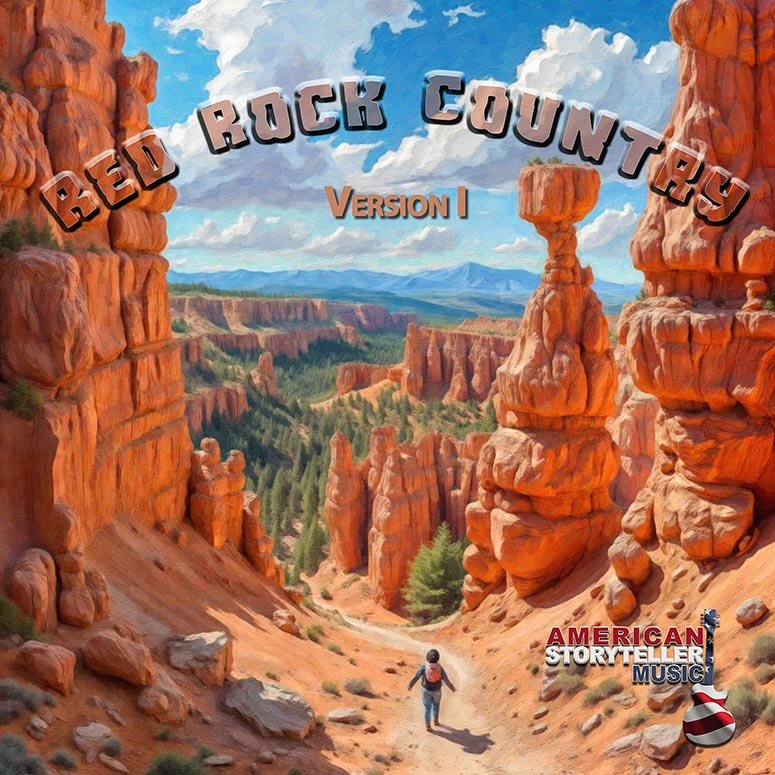
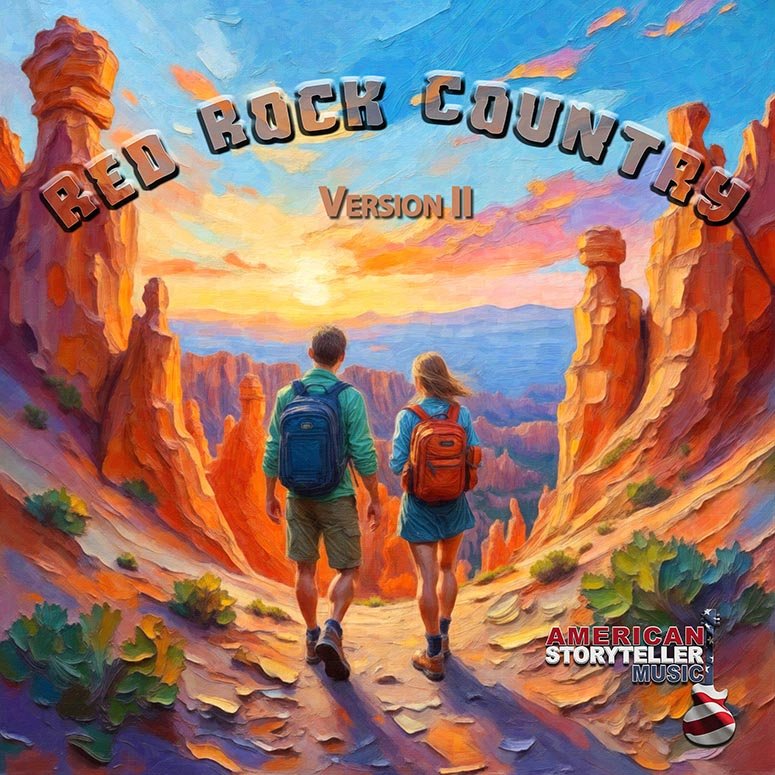
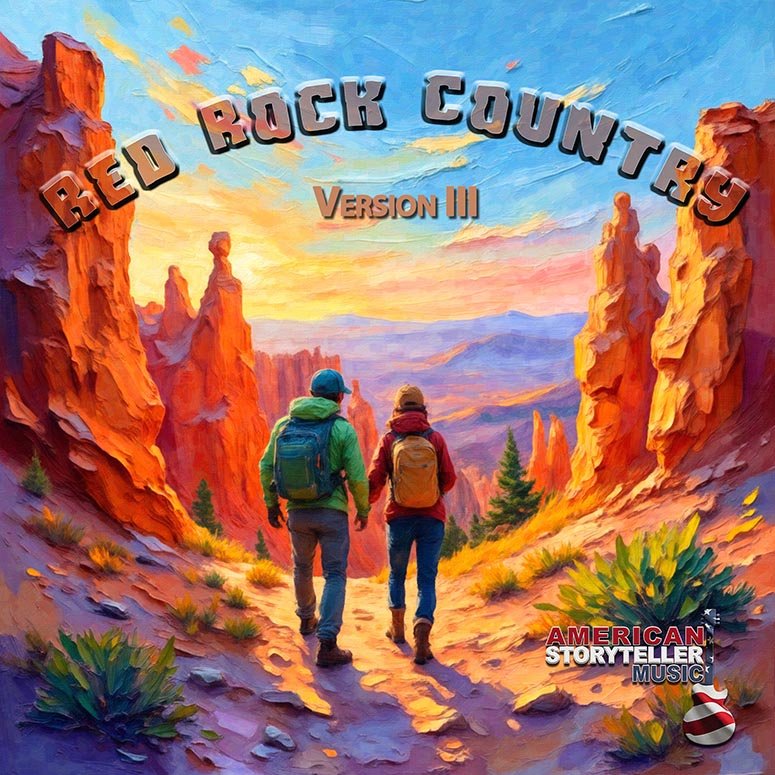
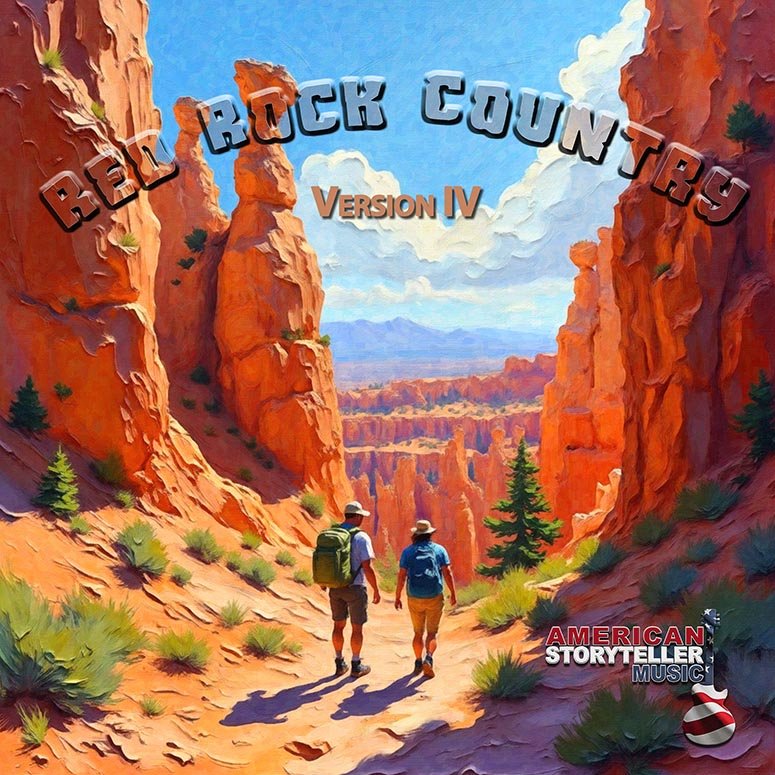
~ Associated State Links ~
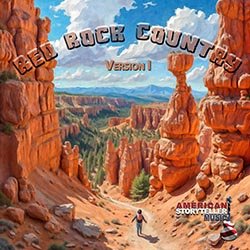
"Red Rock Country"
The story behind the song came from the way Bryce Canyon makes your mind reach for names. You look at the hoodoos and you can't help seeing castles, ramparts, ships, silent sentinels standing guard. So I let the whole song lean into that, castles and a sinking ship and a photographer's basin over at Kodachrome, because that's honestly how the place works on you. You try to relate the unfamiliar to something you already know.
But the real artist in the song is time. I kept describing the land as painted, sculpted, and carved, and every time I did I wanted to remind the listener that frost and water and patience are what actually did the work. The Sinking Ship formation carries fossils of tiny animals from ancient seas. Earth's history really is written on every hill out there, and knowing how slowly it all happened only made the wonder bigger for me, not smaller.
What I love most about that country is how many kinds of time stack up in one view. There are hoodoos shaped over ages, bristlecone pines that have lived for thousands of years, and above them some of the darkest skies left in the country, full of starlight older still. The song ends on that idea on purpose. It's a silent witness to an age-old dance, and Bryce Canyon's story is still being told.
Cinematic Americana / melodic Western folk-rock travel anthem.
Geology as art, deep time and patience, wonder and imagination, and the layering of natural and human timescales.
Primary Subject:
Bryce Canyon and Kodachrome Basin in Utah's red-rock country.
Mood:
Wonder-struck, colorful, contemplative, and a little mystical.
The red-rock country is a living work of art shaped by time itself, where the same slow forces that break stone create hoodoos, fossils, and unforgettable beauty.
[Verse 1]
Crimson castles ascend to the sky
Hoodoo ramparts proud and high
With morning sun on vermilion walls
Lost in Bryce Canyon's maze of halls
Time’s own hand like a patient sculptor
Has carved this landscape in red and sulfur
[Chorus]
This Red rock country, painted in light
From dawn's early glow to galactic starlight
Utah's landscape is a perfect symmetry
Of magic and wonder and artistry
These canyons call to wandering souls
Where the drama of geology unfolds
[Verse 2]
Kodachrome Basin's multicolored hues
Of sunset orange and trees of chartreuse
With chimneys, hoodoos, and towering spires
Silent sentinels, decked out in rusty attire
Colors so vivid they gave it this name
A photographer's film of lasting fame
[Verse 3]
A Sinking Ship sails into view
Frozen in place with stone-bound crew
Its Billowy layers tell of the tale
Of ancient seas that left a trail
In sandy rocks full of tiny animals
Earth's history written on every hill
[Bridge]
Under the arch of Natural Bridge
Carved by wind and rain's privilege
Rainbow Point to Fairyland
Inspiration to Sunset Grand
Each vista more stunning than the last
Present beauty built on ages past
[Verse 4]
Paria River's serpentine thread
Through slot canyons, turned rusty red
Bristlecone pines, impressive in age and size
Beneath the clearest and darkest starry skies
From Thor's Hammer to Queen's Garden Trail
Wonders that leave all words to fail
[Chorus]
This Red rock country, painted in light
From dawn's early glow to galactic starlight
Utah's landscape is a perfect symmetry
Of magic and wonder and artistry
These canyons call to wandering souls
Where the drama of geology unfolds
[Outro]
Silent witness to an age-old dance
Caught in stone's eternal trance
A synergy of sites to behold
Bryce Canyon's story to be told
"Red Rock Country" is a vivid, cinematic tribute to the hoodoos, multicolored cliffs, stone spires, slot canyons, ancient trees, and extraordinary night skies of southern Utah. Centered primarily on Bryce Canyon and nearby Kodachrome Basin, the song presents the region as a vast natural work of art created through sediment, uplift, water, frost, erosion, and immense stretches of geological time.
The song's title is broad and direct. "Red Rock Country" refers not to one isolated formation but to an entire region defined by crimson cliffs, orange pinnacles, pale limestone, shadowed canyons, and changing desert light. The word "country" gives the landscape a sense of breadth and identity. This is a world with its own architecture, colors, weather, wildlife, and visual language.
The song is especially concerned with the relationship between geology and art. The formations are repeatedly compared to castles, ramparts, ships, sentinels, sculptures, and painted scenes. These comparisons reflect the way the human mind tries to interpret unfamiliar natural shapes by relating them to recognizable structures. Yet the song also reminds the listener that the true artist is time itself.
The first verse opens with "crimson castles" rising toward the sky. Bryce Canyon's hoodoos and fins often resemble towers, battlements, and ruined fortresses, making the architectural imagery immediately effective. The formations appear constructed, although their shapes emerged through natural processes rather than human design.
The "hoodoo ramparts" reinforce this image of a great stone stronghold. Ramparts are defensive walls, but here they stand exposed to wind, rain, snow, and repeated freezing and thawing. Their proud appearance contrasts with their actual fragility.
Morning sunlight striking the vermilion walls introduces one of the song's central themes: light continually transforms the landscape. At dawn, low-angle sunlight intensifies the warm colors of the rock while deep shadows remain between the formations. The canyon appears to awaken gradually as individual towers emerge from darkness.
The line about being lost in Bryce Canyon's "maze of halls" turns the amphitheaters and trails into a vast natural palace. The hoodoos form passages, enclosed spaces, and shifting corridors that can feel architectural from within.
Bryce is not a single canyon in the conventional sense but a series of amphitheaters and eroded formations along the edge of a high plateau. Within the song, however, "maze" effectively conveys the visitor's sense of moving among countless towers, walls, windows, and narrow passages.
Time is then personified as a patient sculptor. This is the verse's most important idea. The landscape was not shaped quickly. Small changes accumulated through countless seasons as water entered cracks, froze, expanded, loosened stone, and carried material away.
The word "patient" distinguishes geological creation from human urgency. The Earth works without deadlines, gradually producing forms so intricate that they appear intentionally carved.
The phrase "in red and sulfur" creates a strong color image, although the yellow tones of the region are more closely associated with minerals, limestone variation, oxidation, and changing light than with exposed sulfur. Within the lyric, "sulfur" functions poetically as a description of yellow-gold coloration.
A possible alternative might be "in red and ocher" or "in red and amber," depending upon the desired rhyme and melody. The original phrase, however, contributes a vivid and elemental quality.
The chorus expands from Bryce Canyon into a larger vision of Utah's red-rock landscape. The country is "painted in light," meaning that its colors are never entirely fixed. Dawn, midday, sunset, moonlight, and starlight each reveal a different version of the stone.
The movement from morning glow to "galactic starlight" gives the chorus a full daily cycle. The landscape is beautiful not only during the famous golden hours but throughout the night, when dark skies reveal the Milky Way and the formations become silhouettes beneath the stars.
Calling Utah's landscape "a perfect symmetry" expresses admiration for the balance between shape, color, scale, and light. The landscape is not literally symmetrical in every formation, but it often produces visual harmony through repeated towers, curved amphitheaters, layered cliffs, and alternating light and shadow.
The words "magic," "wonder," and "artistry" establish the emotional response of the narrator. The formations are scientifically understandable, yet knowledge of their origins does not remove their mystery. In fact, understanding the slow processes that formed them may increase the sense of wonder.
The canyons call to "wandering souls," suggesting that the landscape attracts people who are searching for more than scenery. They may be travelers, photographers, artists, hikers, or people seeking distance from ordinary routines.
The phrase also gives the song a spiritual dimension. Wandering souls are not necessarily lost. They may be people who remain open to discovery and are willing to let the landscape challenge their usual sense of scale and time.
"The drama of geology unfolds" summarizes the song's central theme. Geology is not presented as static scientific information. It becomes a continuing drama involving uplift, erosion, vanished seas, sediment, weather, and light.
The second verse travels to Kodachrome Basin, where the song emphasizes color and unusual geological forms. The basin's multicolored cliffs, sedimentary pipes, and surrounding stone create a visual world distinct from Bryce but closely connected to the larger region.
Sunset orange and chartreuse trees create a striking color contrast. The warm stone is placed against the yellow-green or vivid foliage, making the landscape resemble a highly saturated photograph.
The song's use of "chartreuse" is particularly effective because it introduces a less common and more precise color word. It reinforces the verse's connection to photography and visual art.
Chimneys, hoodoos, and towering spires are described as silent sentinels. Like the formations in Bryce, they appear to stand guard over the desert.
Their "rusty attire" refers to the iron-rich colors of the rock. The formations seem dressed in red-brown and orange tones, giving them personality while maintaining the verse's artistic imagery.
The reference to Kodachrome explains the basin's memorable name through the vivid color film once closely associated with landscape photography. The scenery was so visually striking that it invited comparison with richly saturated photographic color.
The line about "a photographer's film of lasting fame" connects the land to the history of image-making. The formations appear almost designed to be photographed, yet they existed long before cameras and will continue changing after today's technologies have disappeared.
This introduces an important contrast between permanence and documentation. A photograph freezes one moment, while the landscape itself remains in motion through weathering, changing light, and seasonal conditions.
The third verse introduces the Sinking Ship formation as though it were a vessel sailing into view. This is one of the song's most imaginative personifications.
The formation appears frozen in place, with an imaginary "stone-bound crew" trapped aboard it. The metaphor turns geology into narrative, allowing the listener to see a ship where there is only layered rock.
The word "billowy" suggests sails, waves, or clouds, extending the nautical imagery. The stone layers appear to move even though they are physically still.
The verse then shifts from imaginative appearance to geological history. Ancient seas once covered parts of the region, depositing sediments and leaving traces of marine environments within the rock.
The "tiny animals" preserved in sandy or sedimentary layers refer to fossils and the remains of organisms that once inhabited those vanished environments. Their presence demonstrates how dramatically the region has changed over time.
A modern high plateau and arid canyon landscape can therefore contain evidence of seas, lakes, rivers, forests, and climates that no longer exist there.
The line "Earth's history written on every hill" returns to the familiar metaphor of geology as a book. Each visible layer becomes a page, while changes in color and composition represent different chapters.
The hills do not merely decorate the landscape. They preserve evidence of environmental transformation, biological life, erosion, and tectonic movement.
The bridge gathers several scenic destinations into a rapid journey through arches, overlooks, trails, and amphitheaters. Natural Bridge becomes another example of a formation created by persistent weathering and erosion.
The line describing the arch as carved by "wind and rain's privilege" gives these forces almost legal permission to reshape the stone. Nature possesses the right to alter its own creation.
Wind contributes to weathering and the movement of sediment, while water, frost, and gravity often perform the more direct work of opening and enlarging natural arches. Within the song, the phrase remains a poetic summary of the forces operating across the landscape.
The progression from Rainbow Point to Fairyland, Inspiration Point, and Sunset Point creates a tour through some of Bryce Canyon's most celebrated viewpoints and trails.
The wording "Inspiration to Sunset Grand" appears to compress several place names for rhythm. A clearer version might be:
"From Inspiration to Sunset's stand"
or:
"From Inspiration Point to Sunset's land."
The original intention is understandable: the listener is moving from one extraordinary viewpoint to another.
"Each vista more stunning than the last" captures the cumulative effect of exploring the region. Every overlook seems to reveal another amphitheater, ridge, or concentration of hoodoos more intricate than what came before.
The final bridge line, "Present beauty built on ages past," expresses the song's central philosophy with clarity. What appears before the visitor in a single moment is the result of events and processes extending across vast periods of time.
The beauty is present, but its foundations are ancient. Every visible scene contains layers of vanished worlds.
The fourth verse follows the Paria River through rust-colored slot canyons. The river becomes a serpentine thread, winding through narrow corridors and tying the landscape together.
The serpent image captures the curves and continuous movement of water. Even when the river is shallow or intermittent, its path influences the form of the canyon.
The slot canyons intensify the song's contrast between stone and light. Their walls may rise steeply on either side, leaving only a narrow opening to the sky. Reflected light creates glowing orange, red, purple, and gold surfaces inside them.
The bristlecone pines introduce living time into a song already concerned with geological time. These ancient trees endure harsh high-elevation conditions and can survive for thousands of years.
Their age is impressive within human terms, although still brief compared with the rocks around them. They form a bridge between a single human lifetime and the deeper history of the landscape.
The trees' twisted forms record wind, drought, snow, cold, and slow growth. Their beauty comes not from perfect symmetry but from visible endurance.
The exceptionally dark skies expand the landscape upward into the universe. Far from major sources of artificial light, stars become more numerous and the Milky Way more visible.
This gives the song three simultaneous scales of time: human visitors moving through the park, ancient trees living for millennia, and stars whose light has traveled across enormous distances.
Thor's Hammer and the Queen's Garden Trail return the verse to Bryce Canyon's iconic formations. Thor's Hammer resembles an enormous stone tool balanced above a narrow column, while Queen's Garden leads hikers among hoodoos that inspire imaginative names and shapes.
The line "Wonders that leave all words to fail" expresses the limits of description. The song has used castles, ships, sentinels, sculpture, paintings, and theater to describe the landscape, yet ultimately admits that none of those comparisons can fully capture it.
A smoother grammatical version might be "Wonders that make all language fail" or "Wonders where all words must fail." The second option preserves the intended feeling of speechlessness.
The repeated chorus now carries the weight of the full journey. The listener has moved through Bryce Canyon, Kodachrome Basin, fossil-bearing rock, natural arches, the Paria region, bristlecone country, and dark desert skies.
The red-rock country is no longer defined only by its color. It has become an archive of vanished environments, a gallery of geological forms, and a place where the passage of time can be seen.
The outro returns to stillness. The landscape is described as a silent witness to an age-old dance.
The "dance" involves water, wind, frost, light, uplift, erosion, and collapse. These forces interact continuously, although their movement may be too slow to observe during a brief visit.
"Caught in stone's eternal trance" gives the formations an appearance of suspended motion. Hoodoos, cliffs, and fins seem frozen, yet they are only temporarily holding their present shapes.
The phrase "a synergy of sites to behold" emphasizes that no single formation defines the region. Bryce Canyon's identity comes from the relationship among amphitheaters, hoodoos, forests, overlooks, trails, distant plateaus, changing weather, and night skies.
The final line presents Bryce Canyon as a story still waiting to be told. The song itself becomes one attempt to tell that story through music, geography, metaphor, and emotional response.
Musically, "Red Rock Country" would work especially well as cinematic Americana, melodic Western folk-rock, or an atmospheric country-rock travel anthem. The arrangement should feel colorful, expansive, and slightly mysterious.
The introduction could begin with acoustic guitar, piano, and a sustained electric-guitar note that resembles wind passing through the formations. Low strings could gradually establish the scale of the amphitheaters.
The first verse should remain spacious, allowing the imagery of castles, ramparts, and morning light to unfold. A slow rhythmic pulse could suggest the patient work of erosion.
The chorus should widen considerably through fuller drums, layered vocals, strings, and clean electric guitar. The melody could rise on "This red-rock country, painted in light," matching the visual expansion of the landscape.
Harmony vocals would be particularly effective on "magic and wonder and artistry," giving the line a celebratory, anthem-like quality.
The Kodachrome Basin verse could introduce brighter instrumental colors. Mandolin, piano, violin, or bell-like tones might reflect the vivid hues and photographic imagery.
The Sinking Ship verse could become more mysterious, with rolling percussion or low strings suggesting an ancient vessel moving across a vanished sea.
The bridge should create forward motion as it passes rapidly among viewpoints and landmarks. Drums, acoustic strumming, and rising strings could make the section feel like a continuous scenic journey.
The Paria and bristlecone verse could begin with a narrower, more enclosed sound to evoke slot canyons, then open dramatically beneath the dark-sky imagery.
The final chorus should be the arrangement's largest moment, with layered voices and sweeping instrumentation expressing the collective grandeur of the region.
The outro should gradually reduce the music to a few sustained tones, perhaps acoustic guitar, violin, or soft piano. A final wind-like texture could remain after the vocal ends, suggesting that the geological dance continues in silence.
At its heart, "Red Rock Country" is a song about seeing art within natural process. The Earth becomes painter, sculptor, architect, playwright, and storyteller.
Color is supplied by minerals and light. Architecture emerges through erosion. Drama comes from uplift, weather, vanished seas, and the fragile balance of stone.
The song also reveals that the landscape is not one consistent environment. It contains forests, desert basins, high plateaus, ancient marine sediments, slot canyons, old trees, and open skies.
The imaginative names given to formations demonstrate the human desire to find familiar shapes within the unfamiliar. Castles, ships, queens, hammers, and sentinels help visitors relate to the stone, even though the formations belong to a history far older than those metaphors.
"Red Rock Country" is therefore both a regional celebration and a meditation on deep time. It invites listeners to admire the visual spectacle while recognizing the natural forces responsible for it.
Its deepest message is that beauty often emerges through change. Frost breaks stone, rivers remove sediment, cliffs collapse, and ancient environments disappear. Yet from those processes come hoodoos, arches, amphitheaters, fossil layers, and unforgettable vistas.
The red-rock country is never truly finished. It is still being sculpted, still being painted by light, and still revealing new chapters of Earth's story to every wandering soul who enters its maze of stone.











.jpg)