"Zion's Promise©"
Lyrics by M. S. McKenzie (Unless Otherwise Noted) | Music Performed by Songs Across America or American Storyteller Music, All Songs Are Protected by Copyright
~ Associated State Links ~
"Zion's Promise"
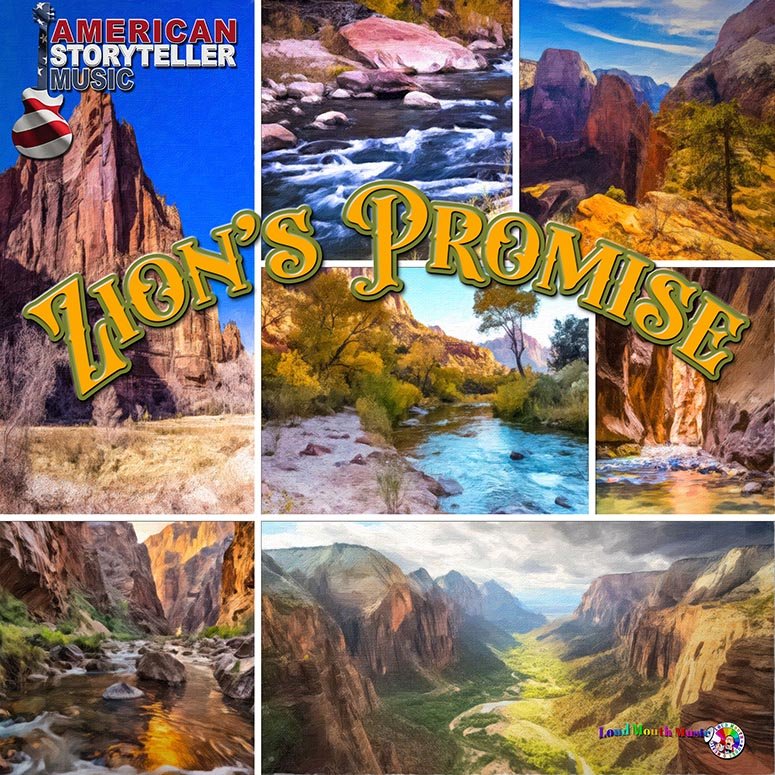
The story behind the song began in Zion, standing where the canyon walls rise so high that the old phrase "where angels fear to tread" felt exactly right. But the more I traveled Utah's red-rock country, the more I realized Zion was only the doorway. So the song moves outward from there, past the Narrows and the emerald pools into Bryce's hoodoos, Arches' impossible spans, the confluence of the Green and Colorado in Canyonlands, and the great wrinkled fold of Capitol Reef.
I kept coming back to the word "promise." It means a few things at once for me: the promise of discovery waiting past every horizon, the promise that this kind of beauty can renew a person, and the responsibility to keep these places whole for the ones who come after us. Underneath all of it is water, soft and patient, cutting thousand-foot canyons out of solid stone one grain at a time. That contrast between something fragile and something enduring is really what the whole song is about.
I wanted the land itself to be the main character, guarding secrets, catching fire at sunset, holding the marks of ancient seas and older peoples. Human history is in there, in the petroglyphs and the orchards, but it's only a thin layer over a much longer story. That's why the song ends the way it does. The stones keep their secrets, but they give us just enough to remember that beauty can be both ancient and unfinished.
Cinematic Americana / orchestral folk-rock Western ballad.
Geological time and erosion, wonder and reverence, conservation and stewardship, and the meeting of fragility and endurance.
Primary Subject:
Utah's red-rock national parks: Zion, Bryce Canyon, Arches, Canyonlands, and Capitol Reef.
Mood:
Awestruck, reverent, expansive, and meditative.
Utah's red-rock country is a vast, still-unfinished work of deep time, and its beauty carries a promise we are responsible for keeping.
[Verse I]
Where angels fear to tread
Past weeping rocks and hanging falls
In crimson glory spread
Through Narrows carved by virgin streams
In slots a thousand feet deep
While emerald pools reflect the dreams
Where sand and river meet
[Chorus]
Utah's walls and towers join earth to sky
Displayed In shades of crimson, deep
Where ancient waters have had their way
Through secrets the stones still keep
Past arches drawn against the desert light
Barren mesas as red as blood stand tall
A maze of painted cliffs still catching fire
Of an endless sunset's golden call
[Verse 2]
In Bryce's grand theater of stone
Where hoodoo spirits dance
As if the ancients themselves had to atone
For Time's slow circumstance
And Rainbow Point at breaking dawn
Where a thousand colors come alive
While silent sentinels stand guard
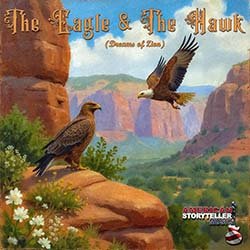
As the eagle and the hawk wheel and dive
[Verse 3]
A delicate arch bends precariously
Against the deep blue sky
While balanced rocks defy gravity
And ancient ways mystify
Those of us who still remain
Where Green and Colorado meet
Past Island in the Sky's domain
Those rivers carved so deep
[Verse 4]
Capitol Reef's great wrinkled fold
Tells tales of earth's own heart
Through fruit tree groves in desert gold
Where settlers made their mark
Past petroglyphs on canyon walls
Where ancient stories dwell
While Waterpocket's ridges rise
With secrets yet to tell
[Chorus]
Utah's walls and towers join earth to sky
Displayed In shades of crimson, deep
Where ancient waters have had their way
Through secrets the stones still keep
Past arches drawn against the desert light
Barren mesas as red as blood stand tall
A maze of painted cliffs still catching fire
Of an endless sunset's golden call
"Zion's Promise" is an expansive cinematic folk-rock and Americana tribute to the monumental landscapes of Utah. Moving through Zion, Bryce Canyon, Arches, Canyonlands, and Capitol Reef, the song presents the state as a vast natural gallery of crimson cliffs, narrow canyons, hoodoos, arches, mesas, river gorges, ancient rock art, and geological formations shaped over unimaginable spans of time.
Although the title names Zion specifically, the song gradually broadens into a portrait of Utah's entire red-rock country. Zion becomes the symbolic entrance to a much larger journey, one that leads from hanging gardens and river-carved narrows to Bryce Canyon's hoodoo amphitheaters, Arches' improbable stone spans, Canyonlands' immense river canyons, and Capitol Reef's folded layers of rock.
The word "promise" gives the title several possible meanings. It may refer to the promise of discovery awaiting anyone who enters these landscapes, the promise that natural beauty can renew the human spirit, or the responsibility to preserve these places for generations still to come. It also carries a subtle spiritual quality, suggesting that the land offers something enduring to those willing to approach it with patience and humility.
The song is not a conventional narrative centered on one character. Instead, the landscape itself becomes the central presence. Rivers, cliffs, arches, hoodoos, mesas, and stone formations act almost like living figures. They guard secrets, reflect dreams, catch fire in the evening light, and preserve the marks of people and natural forces long gone.
The first verse begins in Zion National Park with the evocative phrase "Where angels fear to tread." This immediately recalls the exposed heights and dramatic cliffs associated with Angels Landing while also creating a sense of awe and danger. The narrator is entering a landscape so immense and elevated that even heavenly beings might approach it carefully.
The line establishes Zion as both beautiful and formidable. Its cliffs invite exploration, but they also command respect. The landscape is not domesticated or easily controlled. Its scale reminds the visitor of personal vulnerability.
The song then moves past Weeping Rock and hanging waterfalls. These delicate flows of water provide a striking contrast with Zion's massive sandstone walls. Moisture emerging from the rock supports plants and creates green pockets within an otherwise dry canyon environment.
The word "weeping" also gives the landscape an emotional presence. The rock appears to shed tears, suggesting that the canyon contains its own memory and sorrow. Water becomes both a geological force and a symbol of feeling.
"In crimson glory spread" captures the way Zion's cliffs change color under different light. Red, orange, cream, pink, and shadow move across the walls throughout the day, making the canyon appear continually transformed.
The verse then enters the Narrows, where the Virgin River flows between towering canyon walls. The lyric describes "virgin streams," using the river's name while also suggesting water that remains pure, persistent, and closely tied to the wilderness.
The river has carved deeply through sandstone, creating slots where the walls rise hundreds or even more than a thousand feet above the water. This produces one of the song's most powerful contrasts: a relatively modest river has shaped an immense canyon through patience and time.
The Narrows demonstrate one of the song's central ideas. Water appears soft and yielding, yet over long periods it can cut through stone. Strength is expressed not through sudden force alone but through persistence.
The emerald pools introduce stillness after the moving river. Their reflected light, surrounding vegetation, and enclosed canyon setting create a dreamlike quality. The pools seem to hold the colors and shapes of the cliffs above them.
"Where sand and river meet" summarizes the constant interaction shaping Zion. Sandstone was formed from ancient sand, while flowing water later carved it into the canyon visible today. The landscape exists because these seemingly opposite elements have met across deep time.
The chorus expands from Zion toward the broader geography of southern Utah. Walls and towers rise between earth and sky, giving the landscape the appearance of monumental architecture.
The phrase "join earth to sky" captures the vertical scale of the cliffs. Their foundations belong to the desert floor, but their summits rise toward clouds, stars, and intense blue light.
The crimson color becomes a unifying visual motif. Although Utah's rock country contains cream, white, gold, purple, gray, and black, red remains its most iconic tone. Iron-rich minerals create walls that seem especially vivid during sunrise and sunset.
The statement that ancient waters "have had their way" reinforces the patient power of erosion. Rivers, flash floods, rain, snowmelt, and groundwater have cut canyons, opened passages, weakened cliffs, and exposed deeper rock layers.
The stones still keep secrets because only part of their history can be easily read. Fossils, sediments, faults, fractures, ancient environments, and weathered surfaces preserve evidence of worlds that existed long before human memory.
The chorus then introduces arches silhouetted against desert light. Their openings frame the sky and create a sense of deliberate design, though they were formed through natural weathering and erosion.
The barren mesas standing "as red as blood" give the landscape a more severe emotional character. Blood-red stone suggests vitality, struggle, danger, and the deep physical body of the Earth itself.
Calling the cliffs a maze emphasizes the scale and complexity of Utah's canyon country. From a distance, the formations may appear orderly, but within them lie branching canyons, hidden passages, dry washes, ledges, fins, and isolated plateaus.
The cliffs "catching fire" in sunset light create one of the chorus's strongest visual images. The stone does not literally burn, but the low sun intensifies its color until the walls appear illuminated from within.
The "endless sunset's golden call" gives the chorus both beauty and longing. Sunset is temporary, yet in memory it can feel eternal. The call of the light invites the traveler deeper into the landscape and ensures a desire to return.
The second verse enters Bryce Canyon, described as a "grand theater of stone." This metaphor is especially fitting because the park's amphitheaters contain thousands of hoodoos arranged like an audience, cast, or elaborate stage.
Bryce's formations are not a single canyon carved by one river. They are the result of erosion along a plateau edge, where frost, water, and weather gradually create fins, windows, and isolated columns.
Within the song, however, the landscape becomes theatrical. Hoodoo spirits dance across the stone, giving the formations movement and personality.
The reference to ancient people being required "to atone" introduces a mythic and somewhat mysterious atmosphere. It may suggest that the hoodoos resemble figures frozen in place as punishment, a theme found in some stories associated with the landscape.
The line should be understood poetically rather than as a definitive representation of any particular Indigenous tradition. Its purpose is to make the stone figures seem like a gathering of beings transformed by time.
"Time's slow circumstance" again presents erosion as gradual and unavoidable. The hoodoos were not created in a single dramatic event. Their strange forms emerged through repeated cycles of freezing, thawing, rain, and erosion.
Rainbow Point at dawn provides a broad view across the high plateau and surrounding country. Morning light brings out layers of color that may remain subdued beneath midday brightness.
The phrase "a thousand colors come alive" reflects the complexity of Bryce's palette. Pink, orange, white, red, gold, and shadow shift across the formations as the sun rises.
The silent sentinels standing guard are the hoodoos themselves. Their upright forms resemble towers, soldiers, elders, or watchful figures.
The eagle and hawk circling above add real movement to the apparently frozen gathering below. Stone remains upright while birds turn and dive through the open air.
This contrast between earthbound formations and airborne wildlife gives the verse a sense of vertical freedom. The hoodoos stand where time has placed them, while the birds move effortlessly above.
The third verse brings together Arches and Canyonlands. It begins with Delicate Arch, one of Utah's most recognized natural formations.
The arch appears to bend precariously against the sky, creating the impression that it might collapse at any moment. Its narrow upper span and isolated position make it look both fragile and enduring.
The deep-blue sky intensifies the orange and red tones of the stone. The color contrast gives the formation a clarity that seems almost unreal.
Balanced rocks continue the theme of apparent impossibility. Heavy masses of stone rest upon narrower bases, seeming to defy gravity even though their shapes result from differential erosion.
These formations remind the visitor that stability can be temporary. What appears permanent may exist only within one stage of a much longer geological process.
The line about "ancient ways" introduces human history into the verse. The desert contains old pathways, rock art, settlements, ceremonial places, and travel routes created by people who understood the landscape long before modern roads and park boundaries.
Those ancient ways mystify modern visitors because much of their full meaning is not available through the physical remains alone. The land contains cultural knowledge that cannot always be reconstructed from a distance.
The song then moves to the confluence of the Green and Colorado rivers in Canyonlands. Their meeting creates one of the most geographically significant images in the song.
Two major rivers join and continue through a labyrinth of deeply cut canyons. Their persistent erosion has divided the region into vast districts of plateaus, cliffs, needles, and remote river corridors.
Island in the Sky becomes a high domain overlooking those rivers. The word "domain" gives the mesa a commanding presence, as though it rules above the canyons.
From that elevation, the rivers may appear small, yet their enormous geological influence is visible everywhere below. They have carved through layer after layer of rock and created a landscape that feels nearly impossible to comprehend from one viewpoint.
The verse therefore explores the paradox of scale. The rivers look distant and narrow from above, but they are responsible for the vastness of the canyon system.
The fourth verse moves to Capitol Reef and the Waterpocket Fold. The phrase "great wrinkled fold" gives the formation a physical, almost bodily quality.
The Waterpocket Fold is a long uplift and deformation in the Earth's crust, where rock layers have been bent into a dramatic geological monocline. Within the song, it becomes a wrinkle across the land, as though the Earth's surface has aged and preserved the marks of immense pressure.
The fold "tells tales of earth's own heart," suggesting that forces from deep within the planet have shaped what can now be seen at the surface.
Capitol Reef differs from the earlier landscapes because it also contains a strong history of settlement and agriculture. The fruit-tree groves introduce green, cultivated life within the desert.
The orchards represent persistence of another kind. Settlers planted trees, developed irrigation, and attempted to create stable communities within a harsh environment.
"Desert gold" may refer to autumn leaves, ripening fruit, sandstone light, or the value of water and fertile soil in an arid region. The phrase links agricultural abundance with the surrounding natural color.
The settlers' mark remains visible in the orchards, buildings, roads, and cultural landscape. Their presence becomes another layer within a place already containing much older geological and Indigenous histories.
Petroglyphs along canyon walls carry the song further backward in time. These carved figures and symbols preserve evidence of earlier human presence and expression.
The lyric correctly treats them as stories whose full meanings remain partly hidden. Modern observers can see the images, but interpreting them requires care and respect.
The Waterpocket ridges rising with "secrets yet to tell" bring the verse back to the theme of incomplete knowledge. Every geological layer and cultural site may reveal something, but no landscape gives up its entire history at once.
The repeated chorus now gathers all five park regions into one immense panorama. Zion's cliffs, Bryce's hoodoos, Arches' stone spans, Canyonlands' river gorges, and Capitol Reef's folded layers appear as different expressions of the same elemental forces.
Water becomes the song's unifying creator. It flows through Zion's Narrows, contributes to Bryce's erosion, shapes arches through weathering, cuts the Green and Colorado canyons, and helps define the Waterpocket region.
Stone provides the material, but water, wind, frost, gravity, and time provide the ongoing transformation.
The title "Zion's Promise" takes on a broader meaning by the end. Zion may be the first park named, but its promise extends across Utah's red-rock country. The promise is that wonder continues beyond each horizon.
It may also be understood as a conservation promise. The landscapes preserve extraordinary beauty, but human beings must choose whether future generations will encounter them with the same sense of openness, silence, darkness, and natural integrity.
Musically, "Zion's Promise" would work especially well as a cinematic Americana, orchestral folk-rock, or expansive Western ballad. Its arrangement should convey vast scale, deep time, and a sense of reverence without becoming excessively heavy.
The song could begin with a sparse acoustic guitar, low piano, or sustained string note, creating the feeling of first light entering a canyon. A distant flute or violin phrase could suggest wind moving between sandstone walls.
The first verse should remain spacious and slightly mysterious. Soft percussion, low cello, and reverberant guitar could accompany the Narrows and hanging-waterfall imagery.
The chorus should widen significantly through strings, fuller drums, layered vocals, and sustained electric guitar. The melodic line should rise on "Utah's walls and towers join earth to sky," reflecting the vertical reach of the cliffs.
The phrase "ancient waters have had their way" could receive a descending melodic pattern, suggesting rivers carving downward through stone.
The Bryce Canyon verse might use lighter, more intricate musical textures. Plucked strings, piano, or delicate percussion could mirror the strange shapes and changing colors of the hoodoos.
The mention of hoodoo spirits dancing offers an opportunity for subtle rhythmic movement, though the music should remain dignified rather than whimsical.
The third verse could introduce a broader and more adventurous sound as the song enters Arches and Canyonlands. Stronger drums, electric guitar, and low strings could reflect the scale of the river canyons.
The line about the Green and Colorado meeting could be supported by two instrumental lines joining into one, creating a musical representation of the river confluence.
The Capitol Reef verse might begin more gently around the orchards and settlement imagery before rebuilding toward the Waterpocket Fold.
Acoustic guitar, mandolin, or piano could bring warmth to the fruit-grove scene, while deeper strings return as the lyrics consider tectonic forces and petroglyphs.
The final chorus should be the song's greatest musical expansion. Layered voices could make the Utah landscape feel communal and almost timeless, while drums, strings, and electric guitar create the sense of cliffs catching fire beneath sunset.
An instrumental outro would fit naturally even though one is not specified in the lyric. It could repeat the chorus melody on violin, guitar, or piano while the arrangement gradually fades into wind-like strings.
At its heart, "Zion's Promise" is about the creative relationship between fragility and endurance. Water appears fragile beside stone, yet it carves canyons. Arches appear permanent, yet they continue weathering. Hoodoos stand like towers, though each winter changes them.
The song also portrays Utah as a land where beauty comes from exposure. Rock layers, faults, cliffs, folds, and canyon walls reveal histories that would remain hidden elsewhere beneath soil and vegetation.
Human history is present but never dominant. Settlers plant orchards, ancient peoples leave petroglyphs and pathways, and modern visitors stand in awe. Each human era occupies only a brief portion of the land's much longer story.
The song's landscapes function as natural temples, theaters, fortresses, and monuments. These architectural comparisons express how deliberate and extraordinary the formations appear, even though they were created without human design.
Most importantly, the song invites humility. Its thousand-foot walls, immense canyons, ancient rivers, and stone formations place human problems within a larger frame.
"Zion's Promise" is therefore both a Utah travel anthem and a meditation on geological time. It celebrates the five great park landscapes as separate wonders while showing how they are connected through stone, water, light, and transformation.
Its deepest message is that the land is still being written. Rivers continue carving, cliffs continue weathering, arches continue thinning, and desert light continues revealing new colors. The stones keep their secrets, but they offer enough of their story to remind us that beauty can be both ancient and unfinished.











.jpg)