"I'm Rollin' Down The Line©"
Lyrics by M. S. McKenzie (Unless Otherwise Noted) | Music Performed by Songs Across America or American Storyteller Music, All Songs Are Protected by Copyright
~ Associated State Links ~
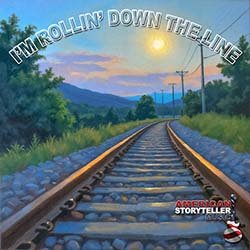
"I'm Rollin' Down The Line"
I wrote "I'm Rollin' Down the Line" as a classic rambling song, a man riding the rails west out of Memphis with nothing but a blade in his boot and his last dollar, because I wanted to honor that old American tradition of believing the next town might finally be the one that works out. A blade in my boot and my last buck down, the day's dust on my overcoat and a song in my soul, maybe if I ride these steel rails, I'll make myself whole, is a whole philosophy of hope in four lines.
The story behind the song is the drifter named Clyde who shares a meal with him in the third verse, son, there's gold where your spirit don't hide, keep walkin', don't you settle for fear. I wanted a stranger's small kindness to be the actual turning point of the song rather than anything about Kansas City itself. Sometimes it takes someone else's hard-won wisdom to keep a person moving toward their own.
What I care about most is the bridge's defiance, I've been down before but I ain't been beat, I've still got rhythm in these old travelin' feet, because I wanted this to be a song about persistence carried in the body itself, rhythm as a kind of stubborn hope that keeps a person's feet moving even when their circumstances haven't improved yet. Songs Across America has plenty of songs about arriving somewhere. This one is about the belief that keeps a person on the rails in the first place.
Classic rambling blues-folk built on harmonica and a steady train-rhythm chorus, structured as a westbound rail journey from Memphis to Kansas City.
Rambling and rail-riding as American tradition, hope carried through hardship, kindness from strangers as a turning point, and persistence as something felt in the body rather than argued in the mind.
Primary Subject:
A drifter riding the rails from Memphis to Kansas City, chasing work and a fresh start with almost nothing to his name.
Mood:
Weary but hopeful throughout, carrying stubborn determination beneath its hardship.
Sometimes what keeps us moving toward a better life isn't evidence that things will improve, it's a stubborn rhythm carried in the body itself, and a stranger's small kindness along the way can be enough to keep that rhythm going.
[Intro: solo harmonica instrumental]
[Verse 1]
I caught a westbound train from Memphis town
With a blade in my boot and my last buck down
The day’s dust on my overcoat and a song in my soul
Maybe if I ride these steel rails, I’ll make myself whole
[Chorus]
I’m rollin’ down the line to ole Kansas City
Kansas City where the nights are dark and gritty
Got a dream in my pocket and hope up my sleeve
Old Kansas City’s callin’ and I still can believe
[Verse 2]
Passed through the Ozarks and waved at the moon
Felt the rhythm of the tracks like an old barroom tune
Every mile’s a prayer every stop’s a test
But I’m chasing down work and I won’t rest
[Breakdown: saxophone and piano]
[Verse 3]
Shared some beans with a drifter named Clyde
He said son there’s gold where your spirit don’t hide
He told me to keep walkin’ don’t you settle for fear
Cause sometimes answers aren’t too far from here
[Bridge]
Smoke stacks rising like a call to the sky
With luck on the wind and a glint in my eye
I’ve been down before but I ain’t been beat
I’ve still got rhythm in these ole travelin’ feet
[Verse 4]
City lights shimmer through a smoky haze
And the rhythm of the rails still guides my days
I can taste the coffee and hear the band play
At a diner that waits near Union trainway
[Chorus]
I’m rollin’ down the line to ole Kansas City
Kansas City where the nights are dark and gritty
Got a dream in my pocket and hope up my sleeve
Old Kansas City’s callin’ and I still can believe
[Verse 5]
If the boss man’s hiring and the rent is really cheap
I’ll trade in these rails for a bed and much needed sleep
I might even find a new girl with a smile like my June
And we’ll both dance until dawn to a soul-band tune
[Final Chorus]
I’m rollin’ down the line to ole Kansas City
Kansas City where the nights are dark and gritty
Got a dream in my pocket and hope up my sleeve
Old Kansas City’s callin’ and I still can believe
[Outro: instrumental fade out]
[End]
“I’m Rollin’ Down The Line” is a gritty, hopeful Americana story-song about a down-on-his-luck traveler heading west toward Kansas City in search of work, stability, and another chance at life. Built around the rhythm of the railroad, the song follows a narrator who has little money, few possessions, and no certainty about what waits for him at the end of the line, yet he refuses to surrender his belief that something better may still be ahead. Memphis, the Ozarks, the passing moon, train tracks, drifters, factory smokestacks, coffee, jazz, and the lights of Kansas City all become part of a distinctly American journey through hardship and possibility. The song’s real destination is therefore not simply Kansas City, but the hope that movement can lead to reinvention.
The title, “I’m Rollin’ Down The Line,” immediately places the song within the tradition of railroad blues, folk, country, and early American popular music. “The line” is literally the rail line, but it also suggests the course of the narrator’s life. He does not know exactly where that line will take him, but continuing forward is preferable to remaining where he has already failed. The use of “rollin’” gives the lyric a loose, conversational quality that suits a character accustomed to travel, uncertainty, and living from one opportunity to the next.
The solo harmonica introduction is an excellent choice because it can establish both loneliness and movement before the story begins. A single harmonica can sound like a train whistle in the distance without needing to imitate one literally, and it immediately places the listener inside an older American musical landscape. The melody could be spare and slightly bluesy, with enough empty space between phrases to suggest open track and nighttime travel. When the band eventually enters, the listener should feel as though the train has begun moving beneath the narrator.
The first verse introduces him with almost cinematic economy. He catches a westbound train out of Memphis with almost no money and a blade hidden in his boot, immediately suggesting that he comes from a hard environment and is accustomed to protecting himself. The knife is less important as a weapon than as a character detail, telling us that this man travels through a world where caution and self-reliance are necessary. His “last buck down” reinforces just how precarious his situation has become.
The dust on his overcoat suggests that he has already been traveling, working, or drifting before the song begins. He is physically worn, but the crucial contrast comes in “a song in my soul.” Materially, he owns almost nothing; emotionally, something inside him has survived. That internal music becomes a form of resilience, which is especially appropriate for a song eventually leading toward Kansas City and its rich musical associations.
The line “Maybe if I ride these steel rails, I’ll make myself whole” reveals that the journey is about more than employment. The narrator is trying to repair something inside himself. He may have suffered poverty, heartbreak, failure, or simply years of instability, but he believes a new place might allow him to rebuild. The phrase “make myself whole” also places responsibility on him rather than expecting the destination to magically save him.
The chorus establishes Kansas City as a symbol of possibility. “I’m rollin’ down the line to ole Kansas City” has the natural repetition and rhythm of a traditional traveling song, and the place name itself has enough musical weight to carry the refrain. Kansas City becomes almost a beacon at the end of the tracks. The narrator has probably heard stories about jobs, nightlife, music, cheap rooms, factories, and the chance to disappear into a larger city and start over.
The description of Kansas City nights as “dark and gritty” is important because the narrator is not imagining a polished paradise. His dream is realistic enough to include rough streets, smoke, work, and uncertainty. He does not require perfection; he simply needs opportunity. That makes the line “Got a dream in my pocket and hope up my sleeve” especially effective because those are his real possessions.
The final chorus line, “Old Kansas City’s callin’ and I still can believe,” becomes the emotional hook of the song. The significant word is “still.” It tells us this man has already been disappointed many times and has reasons not to believe anymore. Yet belief has survived, perhaps battered but not extinguished, and that stubborn optimism carries him west.
Verse two turns the movement of the train into music. Passing through the Ozarks and waving at the moon creates a lonely but strangely peaceful nighttime scene, while the wheels striking the rails provide their own percussion. “Felt the rhythm of the tracks like an old barroom tune” is one of the song’s strongest images because it links transportation directly with musical memory. The train itself seems to be playing the accompaniment to his journey.
The line “Every mile’s a prayer, every stop’s a test” captures the uncertainty of being nearly broke and dependent upon whatever opportunities appear next. The narrator cannot afford to treat travel casually. Each stop might bring work, trouble, hunger, shelter, rejection, or another ride. The language of prayer suggests that much of his future is beyond his control.
His declaration that he is “chasing down work” keeps the song grounded in economic necessity. This is not a carefree wanderer romanticizing the open road. He is traveling because he needs employment and a place to live. That distinction gives the song its working-class character and prevents the rail imagery from becoming overly nostalgic.
The saxophone-and-piano breakdown is perfectly positioned after this verse because it begins introducing Kansas City musically before the narrator actually arrives there. The railroad rhythm can temporarily give way to a blues or jazz-inflected instrumental section, suggesting that the city’s sound is already pulling him toward it. Piano can provide the rhythmic drive while saxophone takes a wandering melodic line over it. The arrangement could almost make the listener feel that Kansas City is getting closer with every phrase.
Verse three introduces Clyde, another traveler, and gives the song one of its most human moments. Sharing beans with a drifter immediately establishes a temporary bond between two people who possess very little but are willing to share what they have. Clyde may never appear again, yet for a few miles or a single night he becomes mentor, companion, and philosopher. This is a classic story-song device because strangers encountered on the road can say things that stay with the narrator long after they separate.
Clyde’s line “there’s gold where your spirit don’t hide” shifts the meaning of wealth away from money. The narrator is heading toward Kansas City hoping to earn wages, but Clyde reminds him that a worthwhile life also requires courage and openness. Hiding from fear may provide temporary safety, but it prevents opportunity. The “gold” he describes is therefore confidence, experience, human connection, and the willingness to keep trying.
The advice “keep walkin’, don’t you settle for fear” reinforces the song’s philosophy of forward motion. The narrator’s greatest danger is not necessarily poverty but resignation. If he stops believing that change is possible, the journey ends psychologically even if the train continues moving. Clyde gives him permission to keep trusting the road.
The line “sometimes answers aren’t too far from here” is deliberately modest. Clyde does not promise that Kansas City will solve everything. He simply suggests that the answer may be closer than the narrator thinks. That small amount of hope is enough to keep him moving.
The bridge changes the visual atmosphere as industrial Kansas City begins appearing ahead. “Smokestacks rising like a call to the sky” gives industry almost the same symbolic role the mountains or ocean might have in one of your landscape songs. Here, smokestacks mean jobs, factories, wages, and the possibility of permanence. To someone desperate for employment, an industrial skyline can look every bit as beautiful as natural scenery.
The phrase “With luck on the wind and a glint in my eye” signals a change in the narrator’s emotional state. Earlier he was uncertain and nearly broke; now he can almost see the destination. Hope is becoming confidence. He has not found work yet, but arriving has begun to feel possible.
“I’ve been down before but I ain’t been beat” may be the clearest statement of the character’s resilience. Being down refers to poverty, disappointment, loneliness, and perhaps repeated failure, but being beaten would mean giving up completely. He refuses to confuse hardship with defeat. That distinction defines the entire song.
The final bridge line, “I’ve still got rhythm in these ole travelin’ feet,” brings the rail rhythm, music, and personal resilience together. His feet may be tired, but they can still move and still dance. The phrase also foreshadows the Kansas City music scene waiting ahead. Travel has not exhausted him enough to remove his capacity for joy.
Verse four finally brings the city into view. Lights shimmering through smoky haze give Kansas City an almost dreamlike arrival, especially after long miles through rural darkness. The city is not pristine; smoke and industry remain part of the image, but those imperfections make it more believable. The narrator sees possibility inside the haze rather than beyond it.
The continuing rhythm of the rails suggests that travel has already become part of his identity. Even when the train journey ends, the rhythm will stay with him. In that sense, the railroad has taught him something about persistence: keep moving, keep time, and accept that every destination eventually becomes another beginning.
The line about tasting coffee and hearing the band play brings warmth into the song. After dust, cold travel, uncertainty, and shared beans, the imagined smell of diner coffee feels almost luxurious. Hearing music nearby confirms that Kansas City represents more than employment. It offers companionship, nightlife, culture, and the possibility of becoming part of a community again.
The phrase “At a diner that waits near Union trainway” clearly evokes the Union Station area, but “trainway” sounds slightly unnatural. If you ever wanted to smooth that line while preserving the idea, “At a diner waiting near old Union way” or “At a diner somewhere near Union Station way” could work depending upon your meter. The existing line still communicates the arrival scene, but this is one of the few places where the wording might benefit from adjustment.
When the chorus returns, Kansas City is no longer merely imagined. The narrator can see it, hear it, and almost smell it. That changes “I still can believe” from distant hope into something more tangible. He has not succeeded yet, but he has at least reached the place where success might become possible.
Verse five gives the narrator refreshingly modest ambitions. He is not hoping to become rich or famous. He wants a boss who is hiring, rent he can afford, a bed, sleep, companionship, and perhaps someone to dance with. After everything the song has described, those ordinary comforts feel enormously meaningful.
The line “I’ll trade in these rails for a bed and much needed sleep” suggests that the narrator is not addicted to drifting. He travels because circumstances require it, but what he truly wants is stability. This makes him different from the romanticized hobo who never wants to settle down. He is ready to stop moving if Kansas City gives him a reason.
The reference to “a new girl with a smile like my June” introduces a quiet suggestion of past heartbreak. June may have been someone he loved, someone he lost, or simply a memory associated with a better period in his life. The song wisely does not explain her. That single name gives the narrator a history beyond the journey we have witnessed.
His willingness to imagine another relationship also shows that hope has expanded. Earlier, he was concerned primarily with survival and employment. Now he can imagine affection, dancing, and pleasure again. The dream has grown from finding work to rebuilding an entire life.
The final image of dancing until dawn to a soul-band tune brings the story into full circle with the “song in my soul” from the opening verse. At the beginning, music existed only inside him. By the end, he imagines sharing music with another person in a city alive with rhythm. That progression gives the song a satisfying emotional arc even though his future remains uncertain.
The final chorus should therefore feel more optimistic than the earlier versions. The words remain the same, but their meaning has changed because the narrator has nearly arrived. Background vocals could join on “Kansas City” and “I still can believe,” making the chorus sound less solitary. His hope is beginning to connect him with other voices.
Musically, “I’m Rollin’ Down The Line” would work especially well as a rootsy blend of Americana, blues-rock, country-rock, railroad folk, and Kansas City rhythm-and-blues. Harmonica should remain one of the signature sounds, but piano and saxophone are equally important because they help distinguish the destination from the journey. Acoustic guitar and upright or warm electric bass could provide the foundation, while brushed drums or a train-like shuffle would create continuous movement.
The verses could use a restrained railroad rhythm, perhaps with snare brushes or rim clicks mimicking wheels passing over rail joints. The tempo should feel steady rather than rushed, giving the impression of a long-distance train moving relentlessly westward. Harmonica could answer selected vocal lines, particularly whenever the narrator refers to distance, hardship, or hope.
The saxophone-and-piano breakdown could be the song’s major stylistic turning point. The piano might begin in a rolling blues pattern before saxophone enters with a smoky, late-night melody. That instrumental section would symbolically carry the narrator from the rural road-song world into Kansas City’s urban musical environment. It could be one of the track’s most memorable moments.
The bridge should build gradually as the smokestacks appear. Electric guitar, drums, and organ could broaden the sound while maintaining the same underlying rail pulse. The line “I’ve been down before but I ain’t been beat” deserves a strong vocal delivery with a slight pause afterward, allowing the statement to land before the rhythm kicks forward again.
By verse four, piano and saxophone could remain more prominently in the arrangement, suggesting that Kansas City has begun changing the musical environment around the narrator. The listener should hear the destination before he completely enters it. Diner imagery could be supported by warmer chords, perhaps giving this section the first real feeling of shelter in the song.
Verse five should sound almost relaxed compared with the opening. The narrator is still poor and uncertain, but he can imagine stopping. A lighter piano groove or subtle horn section could suggest the dance music he hopes to hear later that night. The song should not become triumphant in a grand sense because he has not yet earned the job or rented the room, but it can allow itself a smile.
The instrumental outro should return to harmonica while retaining traces of saxophone and piano underneath it. This would connect the lonely traveler from the opening with the city he has finally reached. A fading train rhythm could continue beneath the instruments, leaving open the possibility that movement will always remain part of him even if Kansas City eventually becomes home.
At its heart, “I’m Rollin’ Down The Line” is a song about the dignity of trying again. The narrator begins with almost nothing and has no guarantee that Kansas City will provide what he needs, yet he refuses to let previous failures determine the rest of his life. His optimism is not naïve because he clearly understands hunger, exhaustion, rejection, danger, and uncertainty. He simply believes those things are not the whole story.
The railroad becomes the perfect metaphor for that attitude. The tracks do not promise comfort, but they provide direction. Every mile physically separates the narrator from whatever went wrong before while carrying him toward another opportunity. He cannot control everything waiting at the destination, but he can choose whether to stay aboard.
Kansas City functions as both a real city and a symbol of the next chance. Its industrial history represents work, its nightlife represents companionship, and its musical traditions represent the joy the narrator refuses to surrender. In his imagination, a cheap room, hot coffee, a steady paycheck, a dance floor, and another person’s smile become signs that he has returned to life.
“I’m Rollin’ Down The Line” is therefore both a railroad song and a working-class redemption story. It celebrates the American idea of starting over without pretending that reinvention is easy. The narrator does not arrive with money, status, or connections. He arrives with a dream in his pocket, hope up his sleeve, and enough rhythm left in his feet to keep going.
Its deepest message is that being down is not the same as being defeated. Sometimes rebuilding begins with nothing more dramatic than getting aboard, following the rails toward another town, and believing that somewhere ahead there may still be a job, a bed, a hot cup of coffee, a song playing through the night, and a place where you can finally stop running.




.jpg)











.jpg)