"The Ghosts of Cimarron©"
Release Date: 08/14/2026
Lyrics by M. S. McKenzie | Performed by Songs Across America, Protected by Copyright
~ Associated State Links ~
"The Ghosts of Cimarron"
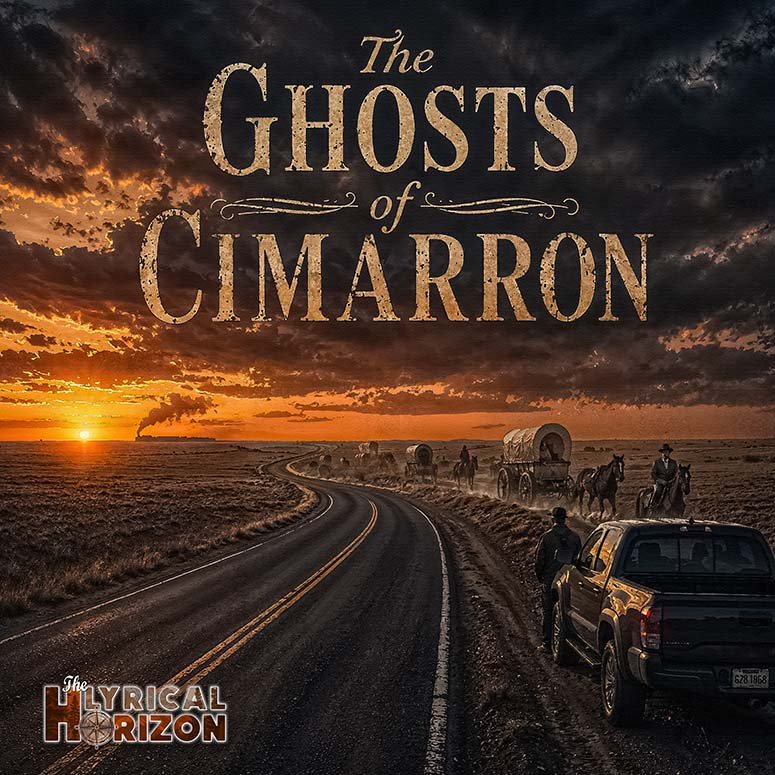
I wrote "The Ghosts of Cimarron" because I have always been fascinated by places where the past still seems close enough to touch. Across western Kansas, traces of the Santa Fe Trail remain in the land, sometimes as visible wagon ruts and sometimes only as names, stories, old forts, and the knowledge that thousands of people once crossed the same prairie. The story behind the song grew from imagining a modern traveler following those old routes after sunset and gradually becoming aware of everyone who had traveled there before him. I wanted the prairie itself to feel like a keeper of those memories, holding onto pieces of lives that history may no longer remember by name.
I also wanted to look beyond the romantic image of the Old West and think about the ordinary people who actually made those journeys. There were traders and soldiers, but there were also mothers carrying children, families searching for new homes, people chasing fortunes, people escaping old lives, and countless travelers whose stories disappeared almost completely. Some reached Santa Fe or destinations farther west, some stopped along the plains and built new lives, and some never finished the journey at all. That is why the ghosts in the song are not really meant to be frightening; they represent all of those ambitions, sacrifices, disappointments, and hopes that once moved across the prairie beneath the same stars we see today.
The part of the song that means the most to me is when the narrator realizes that he is not separate from those earlier travelers. His headlights have replaced wagon lanterns and the highway has replaced much of the old trail, but he is still another human being passing briefly through an ancient landscape and leaving very little behind. Eventually his own journey will become part of the past too. I wanted "The Ghosts of Cimarron" to capture that humbling sense of continuity—the idea that roads change, transportation changes, towns rise and fall, but people continue searching, traveling, dreaming, and moving on. In the end, the prairie outlasts all of us, and perhaps in its own way, the wind remembers.
Atmospheric country rock and Americana with cinematic Western influences. The sound combines a steady road-song pulse with haunting electric guitar, piano, organ, low toms, mournful harmonica, wide harmony vocals, and the recurring sound of a distant train whistle.
Memory, westward migration, the passage of time, forgotten lives, the Santa Fe Trail, the enduring power of landscape, and the connection between modern travelers and those who crossed the American plains generations before them.
Primary Subject:
A present-day traveler drives west across Kansas along the historic Santa Fe Trail corridor, passing Council Grove, Fort Larned, Dodge City, and the road toward Cimarron. As night falls, the landscape seems to awaken with echoes of the traders, soldiers, families, fortune seekers, and unnamed travelers who once crossed the prairie.
Mood:
Haunting, reflective, mysterious, nostalgic, cinematic, spacious, slightly eerie, and ultimately contemplative. The song carries the solitude of a nighttime drive across the Great Plains while gradually creating the feeling that the traveler is surrounded by echoes of another time.
Every generation believes it is moving through the present, but eventually every traveler becomes part of the past. "The Ghosts of Cimarron" suggests that landscapes preserve something of the people who cross them—their hopes, hardships, dreams, and losses—and reminds us that our own journeys are part of a much larger human story that began long before us and will continue long after we are gone.
[Intro]
[Verse 1]
I caught the trail west of Council Grove
Where the prairie rolls like a scroll
Past wagon ruts disappearing in the tall grass
Where thousands of restless souls have passed
Fort Larned faded in the rearview glass
Old Sol went down like a fire dying fast
Then somewhere out beyond the horizon
I heard a train whistle, then the night rolled in
[Chorus]
I hear the ghosts of Cimarron
Where the old trail fades and the night rolls on
Wagon wheels turn where the tall grass blows
Carrying away the dreams from so long ago
So many went west, but some didn't get far
And some found a home under these same stars
And when that midnight whistle calls
You too will hear the ghosts of Cimarron
[Verse 2]
I passed Dodge City under a blood-red moon
Saw Boot Hill sleeping in the shadows of June
And something in the air turned suddenly cold
Like the highway remembered the stories it told
I swear I heard boots spurs where nobody stood
The sound of horse's hooves in the neighborhood
Then a voice on the wind said, "Keep moving on"
Like somebody still riding for Cimarron
[Chorus]
I hear the ghosts of Cimarron
Where the old trail fades and the night rolls on
Wagon wheels turn where the tall grass blows
Carrying away the dreams from so long ago
So many went west, but some didn't get far
And some found a home under these same stars
And when that midnight whistle calls
You too will hear the ghosts of Cimarron
[Instrumental Breakdown – Haunting Electric Guitar, Piano & Distant Train Whistle]
[Low toms build beneath sustained organ and wind-swept guitar]
[Brief mournful harmonica answers the distant whistle]
[Verse 3]
There were traders with silver and soldiers with guns
Mothers with babies beneath the hot Kansas sun
Men chasing fortunes, men running from shame
People who vanished without leaving a name
Some crossed this prairie for Santa Fe
Some saw these plains and decided to stay
I'm just another pair of headlights movin' on
Leaving my shadow on the road to Cimarron
[Final Chorus – Full Band, Wide Harmony Vocals]
I hear the ghosts of Cimarron
Where the old trail fades and the night rolls on
Wagon wheels turn where the tall grass blows
Carrying away the dreams from so long ago
So many went west, but some didn't get far
And some found a home under these same stars
And when that midnight whistle calls
You too will hear the ghosts of Cimarron
[Outro – Band Falls Away to Guitar, Piano & Train Whistle]
Yeah, the prairie keeps what the prairie wants
Every broken wheel, every dream that taunts
And long after travelers have come and gone
The wind still remembers
The ghosts of Cimarron
[Distant train whistle fades into prairie wind]
"The Ghosts of Cimarron" is a haunting country-rock journey across the Kansas plains, following the old pathways of westward migration while blurring the boundary between present-day travel and the lives of those who crossed the region generations ago. Beginning near Council Grove and moving west past Fort Larned and Dodge City toward Cimarron, the song places a modern traveler behind the wheel on a landscape still marked by wagon ruts, frontier settlements, abandoned dreams, and countless human stories. As daylight disappears and the prairie grows dark, history begins to feel less like something confined to books and museums and more like a presence traveling alongside him.
The opening establishes that connection almost immediately. The narrator follows a trail where the prairie seems to unroll endlessly before him, while old wagon ruts vanish beneath the tall grass. Those faint impressions in the earth are reminders that thousands of people once traveled through the same country with no certainty about what waited ahead. Fort Larned disappears in the rearview mirror, the sun sinks across the plains, and a distant train whistle announces the transition from ordinary road trip to something more mysterious. By the time darkness arrives, the narrator is no longer simply driving through Kansas; he is listening to a landscape filled with memory.
The chorus gives those memories a collective identity as "the ghosts of Cimarron." They are not necessarily literal apparitions, but the lingering presence of everyone whose hopes, fears, hardships, and ambitions became part of the trail. Wagon wheels seem to turn again beneath the blowing grass, carrying dreams westward beneath the same enormous sky the narrator sees today. Some travelers reached the destinations they imagined, some stopped and built lives on the plains, and others never completed the journey at all. The line "So many went west, but some didn't get far" quietly acknowledges the enormous human cost hidden beneath the romantic mythology of westward expansion.
That sense of haunting intensifies around Dodge City. Under a blood-red moon, Boot Hill lies silent while the narrator begins hearing things he cannot easily explain: boots and spurs where nobody stands, the sound of horses where no riders can be seen, and finally a voice carried on the wind telling him to keep moving toward Cimarron. The imagery draws upon the legends of the frontier without turning the song into a conventional supernatural tale. Instead, the strange sounds suggest that a place can retain something of the people who passed through it, especially when generations have traveled the same roads, camped under the same stars, and faced the same immense horizon.
The instrumental breakdown reinforces that atmosphere with haunting electric guitar, piano, sustained organ, low toms, harmonica, and the distant sound of a train whistle. The whistle becomes particularly effective because it connects different eras of western travel. Wagon trains once crossed these plains, railroads later transformed them, and now highways carry another generation through the same landscape. The narrator's automobile is simply the newest form of transportation in a much older human pattern: people moving west, searching for opportunity, escaping something behind them, or trying to discover where they belong.
Verse three widens the song beyond famous frontier characters and focuses instead on ordinary people. Traders carried silver, soldiers carried weapons, mothers protected children beneath the brutal Kansas sun, and men traveled west for reasons ranging from ambition to desperation. Some were chasing fortunes, while others were running from failures or shame. Many disappeared without leaving names that history remembers. By emphasizing these anonymous travelers, "The Ghosts of Cimarron" suggests that history belongs not only to celebrated figures but also to the countless people whose individual lives collectively shaped the American landscape.
One of the song's most meaningful moments comes when the narrator recognizes his own place within that continuum. "I'm just another pair of headlights movin' on / Leaving my shadow on the road to Cimarron" collapses the distance between past and present. His journey may be safer and faster than those made by wagon, horseback, or early rail, but the underlying impulse is familiar. He too is passing through, leaving behind only a temporary trace. Someday another traveler may cross the same prairie without knowing anything about him, just as he knows almost nothing about most of those whose wagon wheels once cut into the Kansas earth.
The outro brings that idea to its most poetic conclusion with the declaration that "the prairie keeps what the prairie wants." Broken wheels, abandoned plans, hardship, hope, and human longing have all become part of the land. Travelers come and disappear, settlements change, highways replace trails, and names fade from memory, yet the prairie remains. The final image of the wind remembering the ghosts of Cimarron transforms the landscape into a kind of living archive, preserving traces of people long after conventional history has forgotten them.
Musically, "The Ghosts of Cimarron" lends itself naturally to atmospheric country rock and Americana with a cinematic Western edge. Electric guitar, piano, organ, low drums, and mournful harmonica can create the feeling of an enormous nighttime landscape, while the distant train whistle functions almost like another instrument within the arrangement. A steady road-song rhythm keeps the narrator moving forward even as the music grows increasingly eerie around him. The full-band final chorus can broaden into something almost anthemic before the arrangement gradually falls away, leaving only guitar, piano, wind, and that fading whistle across the plains.
Ultimately, "The Ghosts of Cimarron" is as much about memory as it is about ghosts. It asks what remains after travelers disappear and how profoundly a landscape can be shaped by the people who once crossed it. The song looks at the American West without treating its history simply as nostalgia or legend; beneath the romance are sacrifice, uncertainty, loss, determination, and thousands of individual dreams. Long after the wagon wheels have stopped turning and the travelers themselves have vanished, the tall grass continues to move beneath the stars—and if you listen closely enough, the song suggests, you may still hear them.



.jpg)








.jpg)