Lyrics by M. S. McKenzie (Unless Otherwise Noted) | Music Performed by Songs Across America or American Storyteller Music, All Songs Are Protected by Copyright
The story behind the song is the Blue Ridge as one long thread running through four states. I kept coming back to the word "line" in the title, because the Blue Ridge isn't a single peak or town, it's a chain of ridges that ties Virginia, Kentucky, Tennessee, and West Virginia together into one continuous mountain story. The "line" is a ridge, a road, a lifeline, and a melody all at once, and the "heart" is the shared character you feel all along it.
I wanted it to sound like the mountains themselves, so I leaned into folk and Appalachian textures, morning mist rolling through the hollers, rivers carving through stone, the eagles over Cumberland Gap, the winding spine of the Blue Ridge Parkway. Each verse touches a different state, Virginia's natural bridge and whispering caves, Kentucky's deep forests, Tennessee's moonlit willows, West Virginia's wild country, but they're all singing the same tune.
The chorus is where the meaning settles. "So keep these hills forever green, the heart of the Blue Ridge dream" is both a love song and a quiet plea. The narrator feels personally called by the landscape, hears his own name in its echoes, and that closeness turns naturally into wanting to protect it. I wrote it as a reflection more than a travelogue, a way of saying these mountains are a homeland and a source of renewal, and that their promise is one worth keeping unbroken.
Genre:
Reflective folk / Americana with Appalachian textures.
Theme:
Appalachian homeland and belonging, continuity across states, emotional renewal in nature, and conservation and stewardship.
Primary Subject:
The Blue Ridge and Appalachian mountain country across Virginia, Kentucky, Tennessee, and West Virginia.
Mood:
Reflective, tender, reverent, and peaceful.
Core Message:
The Blue Ridge is one continuous mountain homeland threading four states together, and feeling personally called by its beauty turns naturally into a plea to keep these hills forever green.
▲ Roll me back up.
Original Lyrics by M.S. Mckenzie, All Rights Reserved
[Intro: extended Instrumental]
[Verse 1]
Morning mist rolls soft and clear
Through holler and mountain fold
Blue Ridge hums so sweet to hear
A song that never grows old
[Chorus]
Where the rivers carve through stone and sky
And the echoes call my name
Through Cumberland Gap the eagles fly
In freedom's quiet flame
So keep these hills forever green
The heart of the Blue Ridge dream
[Verse 2]
Virginia's bridge of natural grace
An arch that stands so proud and tall
And caves that whisper in dark embrace
Their secrets kept within empty halls
[Verse 3]
Kentucky winds through forest deep
Where starlight finds its tune
Tennessee dreams where willows weep
Beneath a silvery moon
[Bridge]
I walk the Parkway's winding spine
Where clouds drift close and near
The ridges rise in sacred line
To every soul that's here
[Verse 4]
West Virginia's wild remains
A promise yet unbroken
May every voice in these mountain rains
Be nature's truth well spoken
[Chorus]
Where the rivers carve through stone and sky
And the echoes call my name
Through Cumberland Gap the eagles fly
In freedom's quiet flame
So keep these hills forever green
The heart of the Blue Ridge dream
[Chorus (reprise)]
Where the rivers carve through stone and sky
And the echoes call my name
Through Cumberland Gap the eagles fly
In freedom's quiet flame
So keep these hills forever green
The heart of the Blue Ridge dream
[Outro: Instrumental]
Song Description
"Heart of the Blue Ridge Line" is a reflective folk, Americana, and Appalachian-inspired song about the beauty, memory, and enduring spirit of the mountain country stretching through Virginia, Kentucky, Tennessee, West Virginia, and the wider Blue Ridge region. Through morning mist, river-cut stone, natural bridges, caves, forested hollows, moonlit valleys, and the winding Blue Ridge Parkway, the song presents the mountains as both a physical homeland and a source of emotional renewal.
The song's title carries several interconnected meanings. The "Blue Ridge Line" may refer to the long chain of ridges defining the eastern Appalachian landscape, but it also suggests a road, boundary, lifeline, or musical phrase running through the mountains. The word "line" gives the region continuity, joining separate states, valleys, communities, and natural landmarks into one extended mountain story. The "heart" of that line is not one particular summit or town. It is the shared character of the region: misty ridges, deep forests, flowing rivers, old pathways, wildlife, musical traditions, and communities shaped by mountain geography. The heart is also emotional. The narrator feels personally called by the landscape and hears something familiar within its echoes.
The song is quieter and more meditative than a conventional travel anthem. It does not rush through a long catalog of attractions or describe an action-driven journey. Instead, it lingers within atmosphere. Mist rolls through hollows, caves whisper, starlight finds a tune, clouds drift close to the Parkway, and mountain rain seems to speak on behalf of nature. The extended instrumental introduction is well suited to this contemplative approach. It could begin with fingerpicked acoustic guitar, mountain dulcimer, fiddle, mandolin, or soft piano. A distant flute or clean electric-guitar line might enter gradually, suggesting mist moving between ridges before the first lyric appears.
The introduction should feel spacious enough to establish the landscape before the narrator speaks. A long melodic passage could evoke the slow unfolding of dawn, when the outlines of separate ridges become visible one after another.
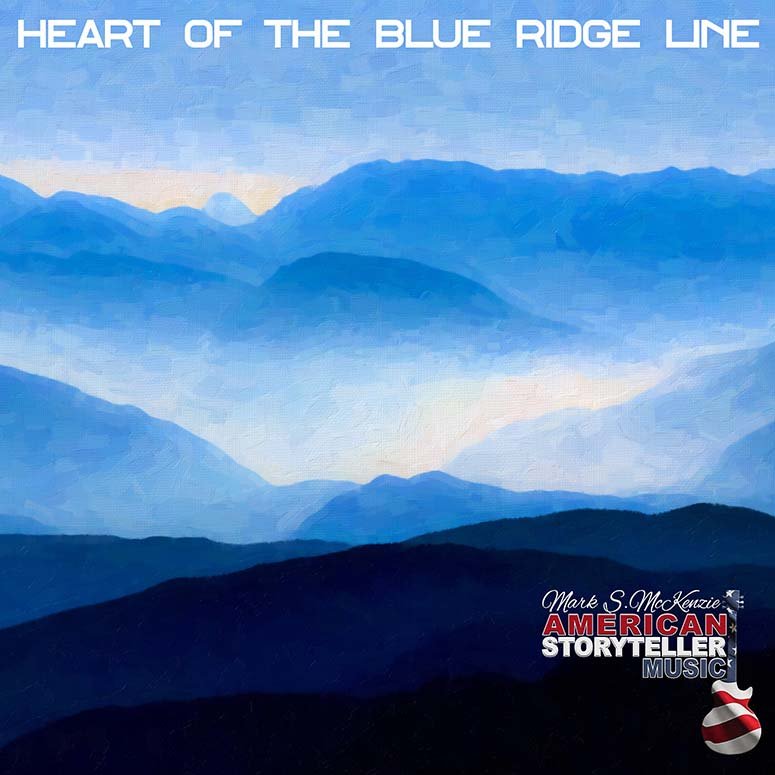
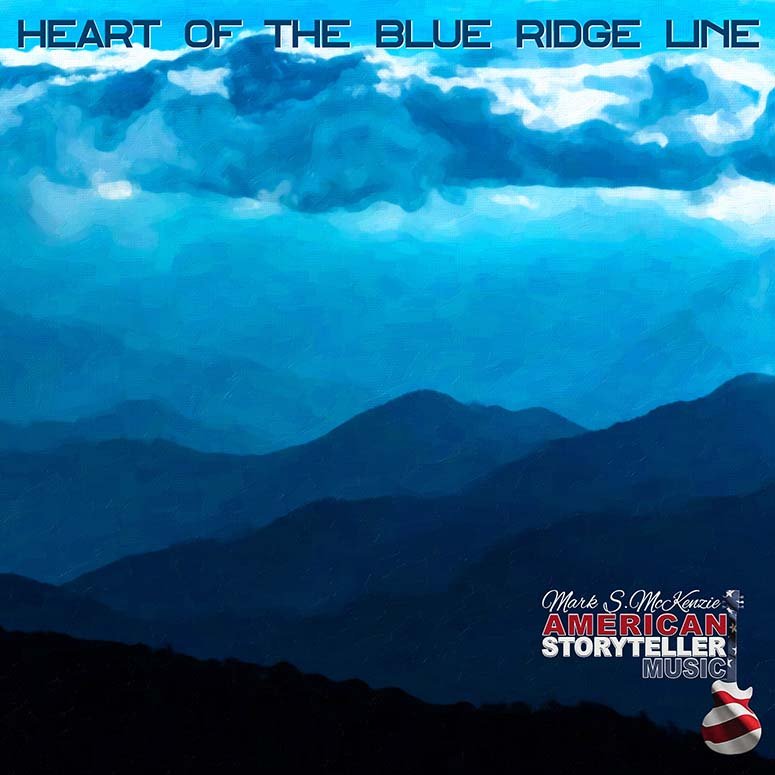
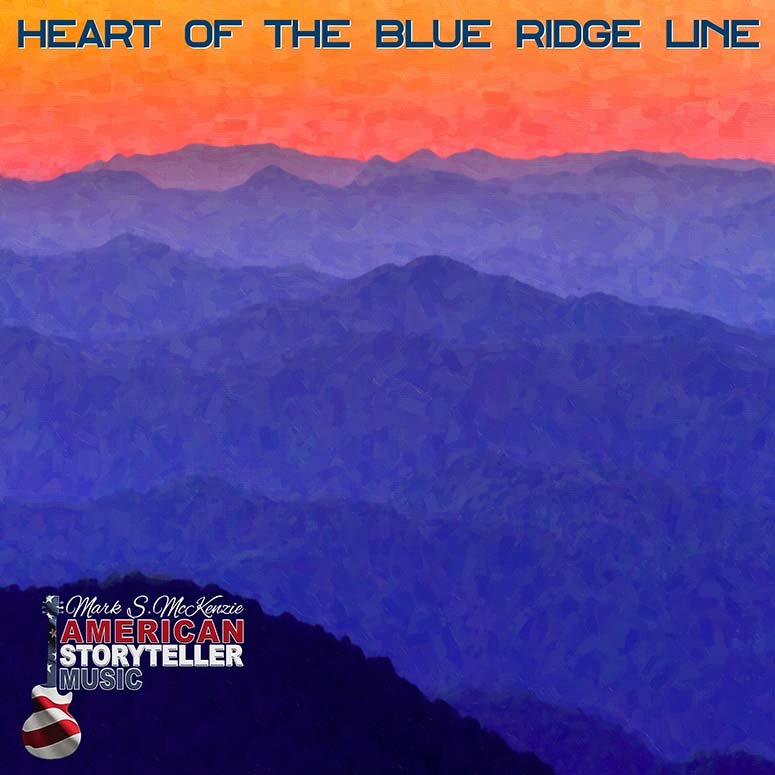
The first verse begins with morning mist settling into hollows and mountain folds. This is one of the defining visual experiences of the Blue Ridge and southern Appalachian region. Moist air gathers in low valleys while higher ridgelines emerge through layers of blue-gray atmosphere. The word "holler" gives the verse a distinctly Appalachian voice. Derived from "hollow," it refers to a narrow valley or sheltered space between mountain slopes, often associated with homes, family histories, creeks, and close-knit rural communities.
The pairing of "holler and mountain fold" captures two scales of the region. The holler is intimate and inhabited, while the mountain fold suggests the larger geological structure of repeated ridges and valleys. The mist is described as rolling "soft and clear," which creates a gentle rather than ominous mood. It does not hide the mountains completely. It reveals them gradually, making the landscape appear fluid and dreamlike. The Blue Ridge itself is said to hum. This personification turns the mountains into a musical presence. Their sound may be the combined effect of wind, water, insects, birds, trees, distant thunder, and human music carried through valleys.
The hum is "sweet to hear," suggesting familiarity and belonging. The narrator does not encounter the sound as something strange. It resembles an old song remembered from childhood or inherited through generations. "A song that never grows old" introduces the theme of continuity. Styles of music, roads, towns, and communities may change, but the mountains continue producing their own underlying rhythm. This line may also refer to Appalachian musical tradition. Ballads, fiddle tunes, gospel harmonies, folk songs, and family stories have traveled through these mountains across generations, changing in detail while preserving recognizable emotional themes. The first chorus broadens the landscape through rivers, stone, sky, echoes, eagles, and Cumberland Gap. The line "Where the rivers carve through stone and sky" combines vertical and horizontal movement.
Rivers literally carve through stone, cutting valleys, gorges, and channels across long periods of time. The addition of "sky" gives the image greater emotional scale, suggesting that water, mountains, and open air belong to one continuous composition. The rivers act as both creators and connectors. They shape the land while linking headwaters, valleys, forests, farms, communities, and larger watersheds. "The echoes call my name" makes the landscape personal. The narrator feels recognized by the mountains, as though the ridges are returning something he has sent into them. An echo repeats a voice while changing its distance and tone. Symbolically, the mountains return the narrator's memories, longings, and questions in altered form.
Cumberland Gap introduces one of the most historically significant natural passages through the Appalachian Mountains. It has served as a travel corridor across generations, first for Indigenous peoples and later for settlers, migrants, traders, soldiers, and travelers moving between regions. Within the song, however, the gap becomes primarily a symbol of passage and freedom. Eagles fly through it in a "quiet flame," combining movement with restrained intensity. The phrase "freedom's quiet flame" suggests that freedom does not always arrive through dramatic declarations. It can be experienced privately in open country, high ridges, clear air, and the ability to travel through landscapes that remain largely wild.
The eagle reinforces this image through flight. It moves above boundaries and follows the natural shape of the mountains rather than roads, fences, or political lines. The final couplet gives the chorus its conservation message: "So keep these hills forever green / The heart of the Blue Ridge dream." The command to keep the hills green is both literal and symbolic. Literally, it calls for the protection of forests, watersheds, wildlife habitat, scenic views, and mountain ecosystems. Symbolically, green represents life, continuity, hope, and the survival of the region's essential character. The phrase "Blue Ridge dream" suggests an ideal of belonging, natural beauty, freedom, and harmony between people and landscape. Yet dreams can be lost if they are not protected.
The chorus therefore does more than express affection. It asks listeners to recognize stewardship as part of loving the mountains. The second verse travels to Virginia and introduces Natural Bridge. Calling it a "bridge of natural grace" gives the formation elegance and symbolic meaning. The arch appears to connect two masses of stone while also framing sky, trees, and the landscape beyond it. It functions like a gateway between different parts of the mountain world. The words "proud and tall" give the bridge a dignified presence. It stands as though it has survived with intention, even though it was shaped by natural geological processes.
The formation also extends the song's theme of passage. Cumberland Gap allows movement through the mountains, while Natural Bridge creates an opening within stone. Both are natural portals linking one space with another. The verse then descends into caves. This movement from open arch to enclosed darkness broadens the song's geographical and emotional range. The caves "whisper in dark embrace," giving underground space both mystery and intimacy. Darkness surrounds the visitor, while echoes create the impression of unseen voices.
The phrase "dark embrace" avoids presenting the caves as purely threatening. The darkness is enclosing and mysterious, but it may also feel protective, removing the visitor from the outside world. The caves keep their secrets within "empty halls." This architectural comparison turns underground chambers into forgotten rooms or cathedrals. They are empty of ordinary human life, yet not truly empty. They contain flowing water, mineral formations, geological evidence, animal habitat, and the accumulated silence of long ages. The secrets they hold may include records of ancient climates, underground water systems, vanished creatures, human use, and natural processes still unfolding beyond sight.
The second verse therefore moves from visible monument to hidden interior. The mountains possess both an outer face and an unseen depth. The third verse crosses into Kentucky and Tennessee, becoming more lyrical and less tied to individual landmarks. Kentucky is represented through deep forest and moving wind, while Tennessee appears through dreams, willow trees, and moonlight.
The Kentucky forest is described as deep, suggesting both physical density and emotional mystery. Thick trees, ravines, streams, and shadowed slopes create a world in which distance can be difficult to judge. The wind moves through this forest like another voice within the song. It may carry leaves, scents, birdsong, and fragments of sound between valleys. "Where starlight finds its tune" joins the night sky with Appalachian musical imagery. Stars do not literally make music, but the quiet of the forest allows their presence to feel rhythmic and expressive. The line suggests that the night itself becomes part of the mountain song. Music is no longer confined to instruments or human voices. Light, wind, trees, and darkness all participate.
"Tennessee dreams where willows weep" brings a softer and more melancholic image. The drooping branches of willow trees naturally suggest sadness, memory, and quiet reflection. The phrase may also evoke riverbanks, valleys, old homes, or places where water gathers beneath trees. Tennessee becomes a landscape of tenderness rather than dramatic elevation alone. The silvery moon unites the Kentucky and Tennessee scenes under a shared nighttime atmosphere. Moonlight softens detail and turns familiar landscapes into something more timeless.
The verse implies that each state contributes a different emotional note to the larger Blue Ridge composition. Virginia offers stone and hidden chambers. Kentucky offers forest and starlight. Tennessee offers dreaming valleys and moonlit trees. The bridge brings the narrator onto the Blue Ridge Parkway, described as a winding spine. This is one of the song's strongest geographical metaphors. A spine gives structure, supports movement, and connects separate parts of a body. In the same way, the Parkway follows the ridges and links overlooks, forests, communities, parks, and mountain landscapes. The road does not cut across the mountains in a straight line. It follows their natural contours, rising, descending, and curving through the high country.
Calling it the mountains' spine also supports the title's reference to a "line." The Parkway becomes a visible path tracing the heart of the Blue Ridge. The clouds drifting close create the sensation of traveling at the boundary between land and sky. At higher elevations, fog and low clouds may surround the road, making the world below disappear. The phrase "close and near" is intentionally repetitive, emphasizing the intimacy of the clouds, though one of the words could be changed if greater variety is desired. A possible revision might be:
"Where clouds drift low and near"
or:
"Where clouds draw close and clear."
The ridges rise in a "sacred line," returning to the song's reverent treatment of the mountains. Their sacredness comes from beauty, age, ecological importance, cultural memory, and the humility they inspire. The line also suggests a procession of peaks, each one following another toward the horizon. "To every soul that's here" makes the experience inclusive. The mountains do not call only to lifelong residents or one cultural group. Anyone who enters with attention may feel their emotional power. The bridge therefore places the narrator within the landscape rather than above it. He follows the ridge line and becomes one traveler among many responding to the same mountains. The fourth verse moves into West Virginia and introduces a stronger conservation emphasis. The phrase "West Virginia's wild remains" can be understood in two ways.
It may mean that wildness still remains within the state, surviving through forests, rivers, ridges, and remote country. It may also suggest that these remaining wild places are fragments requiring protection. "A promise yet unbroken" gives that surviving wildness moral weight. The promise may be that the mountains will continue providing habitat, water, beauty, and cultural continuity if people honor their responsibility toward them. The language implies both hope and vulnerability. The promise is still intact, but it is not guaranteed. The following lines ask that every voice within the mountain rain speak nature's truth. Rain becomes another messenger, joining wind, echoes, rivers, caves, and birds as a voice of the landscape. The phrase "every voice in these mountain rains" may refer to streams, leaves, roofs, animals, people, and memories awakened by rainfall. "Nature's truth well spoken" suggests that the mountains communicate something essential about endurance, interdependence, limits, and belonging. Nature's truth may be that forests and rivers require protection, that human beings remain dependent upon healthy ecosystems, or that no generation has the right to consume what future generations will need.
The fourth verse is brief, but it functions as the song's ethical conclusion. The journey through multiple states leads not simply to admiration but to responsibility. The repeated chorus reinforces that responsibility. The rivers continue carving, echoes continue calling, and eagles continue flying, but the central request remains: keep the hills green. The reprise allows the chorus to become communal and anthem-like. A second repetition can suggest that the message is being carried forward by more than the original narrator. Layered voices might enter during the reprise, turning a personal response into a regional pledge. The line "The heart of the Blue Ridge dream" becomes increasingly significant with repetition. The dream is not merely scenic nostalgia. It is the hope that the region can remain alive, culturally meaningful, and ecologically whole.
The instrumental outro could return to the melodic theme introduced at the beginning. Fiddle, acoustic guitar, dulcimer, or mandolin might restate the chorus melody while the rhythm gradually recedes. A final sustained violin or guitar note could resemble an echo across the mountains. The music might fade into subtle sounds of wind, rain, or flowing water, suggesting that the mountain song continues after the human performance ends.
Musically, "Heart of the Blue Ridge Line" would work especially well as Appalachian folk-rock, acoustic Americana, a cinematic mountain ballad, or a gentle country-folk anthem. The arrangement should feel organic and rooted in place. Acoustic guitar, fiddle, mountain dulcimer, mandolin, upright or warm electric bass, and restrained drums would suit the imagery.
The extended introduction could begin as a slow instrumental conversation between acoustic guitar and fiddle. A dulcimer pattern might suggest flowing water or the repeated folds of the mountains. The first verse should remain intimate, with a warm vocal and minimal percussion. The singer should sound as though he is listening to the mountains rather than performing over them. The chorus should broaden through harmony vocals, fuller strings, and a stronger rhythmic foundation. The melody could rise on "Where the rivers carve through stone and sky," reflecting the physical scale of the landscape. The phrase "the echoes call my name" could be supported by an answering harmony or delayed vocal line, creating an actual echo effect. The Cumberland Gap line might introduce a soaring fiddle or electric-guitar phrase to represent the eagle's flight.
The second verse could darken slightly around the caves, using low cello, sparse piano, or reverberant guitar to suggest underground chambers. The third verse could take on a more nocturnal quality. Soft mandolin, brushed drums, and a higher fiddle melody could accompany the starlight and moon imagery. The bridge should create a sense of movement along the Parkway. A steady rhythm and rising string arrangement could mirror the road climbing through ridges and clouds. The West Virginia verse might reduce the instrumentation again, allowing the conservation message to stand clearly. A low harmony could enter beneath "a promise yet unbroken."
The final chorus and reprise should provide the arrangement's greatest expansion. Layered voices, fiddle, guitar, and full but restrained drums could turn the song into a regional anthem without losing its reflective character. The outro should feel like the mountains gradually reclaiming the music. Instruments could fade one by one until only fiddle, guitar, or ambient wind remains.
At its heart, "Heart of the Blue Ridge Line" is a song about continuity. The mountains connect states, watersheds, ecosystems, communities, histories, and musical traditions.
The song does not present the region as a collection of isolated landmarks. Natural Bridge, Cumberland Gap, caves, forests, rivers, Parkway ridges, and West Virginia wildlands all belong to one connected Appalachian story. It also recognizes that the Blue Ridge is both a real landscape and an emotional inheritance. People may be drawn to it through birthplace, ancestry, travel, music, memory, or a more difficult-to-explain sense of belonging. The narrator hears his own name within the echoes because the landscape has become part of his identity. The mountains do not simply surround him. They help define who he is.
The song's conservation message emerges naturally from that attachment. To love the Blue Ridge is to want its forests to remain green, its rivers clean, its wildlife free, and its mountain communities connected to the land that shaped them. "Heart of the Blue Ridge Line" is therefore both a regional tribute and a quiet preservation anthem. It celebrates the beauty of the Appalachians while recognizing that beauty as a living promise rather than a permanent guarantee. Its deepest message is that the mountains carry a song older than any one generation. Rivers, echoes, wind, rain, birds, and human music all contribute to it. Our responsibility is not to claim that song as our own, but to keep the hills alive so it can continue.
Songs Associated with
The Commonwealths of VA & KY and
the States of TN & WV
Seasonal Favorites: Our Featured Picks for Summer Season of 2026
This website uses cookies to ensure you get the best experience on our website.
By using this site, you accept our Privacy Policy.


























.jpg)