"Silver Falls©"
Lyrics by M. S. McKenzie | Performed by American Storyteller Music ©
~ Associated State Links ~
"Silver Falls"
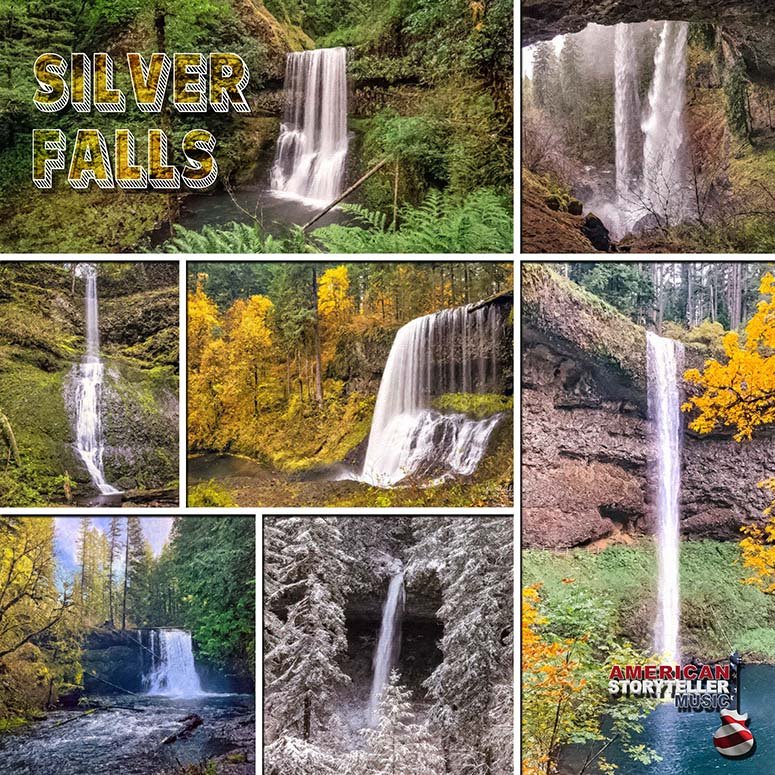
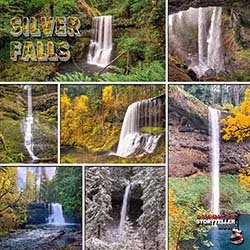
I wrote "Silver Falls" wanting the song to feel like actually walking behind one of its ten waterfalls, ancient columns rise in rows, where the silver water flows, hexagons of basalt dreams guard these misty ancient streams. Silver Falls State Park lets visitors walk behind the falls themselves, and I wanted the song's structure to mirror that unusual intimacy with moving water most parks only let you observe from a distance.
The story behind the song is how much I trusted texture and sound over narrative, moss-draped maples, sword ferns whispering ancient lore, hidden caves of volcanic art where the earth revealed its heart. I wanted the song to feel almost wordless in spirit even while using words, closer to the actual experience of standing in that mist than to a story being told about it.
What I care about most is the chorus's claim, ten falls singing to the stone, tales that only time has known, because I wanted each waterfall to feel like its own voice in a larger choir rather than a single feature repeated ten times. Songs Across America has plenty of songs about single, dramatic landmarks. This one is for a whole chorus of them, each one adding its own note to the same misty canyon.
Ethereal, atmospheric folk built on water-drop percussion textures and a misty, echoing chorus, structured as a walk through the canyon's ten waterfalls.
Silver Falls' ten waterfalls as a living chorus, immersive natural wonder over narrative, volcanic and ancient forest textures, and the rare intimacy of walking behind falling water.
Primary Subject:
Silver Falls State Park in Oregon, its ten waterfalls, basalt columns, and moss-draped canyon trail.
Mood:
Ethereal, hushed, and quietly enchanted throughout.
Some places aren't defined by a single dramatic feature but by an entire chorus of smaller wonders, each one adding its own voice, and walking through that chorus can feel like being let into a hidden, ancient conversation.
[Instrumental Intro]
[Verse 1]
[Ethereal, like water droplets]
Ancient columns rise in rows
Where the silver water flows
Hexagons of basalt dreams
Guard these misty ancient streams
Ferns unfurl in canyon shade
Where the forest's secrets laid
[Pre-Chorus]
Through the veil of falling rain
Nature's temple calls my name
Moss-draped maples bend and sway
While the waters find their way
[Chorus]
Ten falls singing to the stone
Tales that only time has known
Walking through the waterfall
Where the ancient spirits call
Silver Creek's eternal dance
Holds me in its misty trance
[Verse 2]
Deep beneath the forest crown
Where the waters tumble down
Hidden caves of volcanic art
Where the earth revealed its heart
Sword ferns whisper ancient lore
On this dampened forest floor
[Verse 3]
Morning mist embraces trees
Dancing with the canyon breeze
South Falls' curtain parts the sky
As the swifts and swallows fly
Nature's cathedral stands
Carved by time's eternal hands
[Bridge: Building intensity]
Layer upon layer of time
Where the waters carve sublime
Through the stories etched in stone
Nature's secrets shown alone
In the shadows of the falls
Where the winter canyon calls
[Verse 4]
Red vine maples catch the light
Where the Double Falls take flight
Crystal pools reflect the day
While the cedars gently sway
Every step reveals anew
Silver Creek's enchanted view
[Final Chorus: Full power]
Ten falls thunder through the green
Paint this prehistoric scene
Walking through the curtain's spray
Where the waters make their way
Silver magic never ends
As the river curves and bends
[Outro: Soft, ethereal]
Ancient columns touch the sky
While the silver waters fly...
Here is a detailed description that presents “Silver Falls” as an atmospheric journey through Silver Falls State Park, where water, volcanic geology, forest life, and deep time create the feeling of entering a living natural cathedral.
“Silver Falls” is an ethereal, cinematic tribute to the waterfalls, basalt cliffs, fern-covered canyons, and temperate forests of Oregon’s Silver Falls country. Centered on the experience of walking among the park’s celebrated waterfalls, the song presents the landscape as an enchanted world shaped by ancient lava, persistent water, mist, changing seasons, and the almost immeasurable patience of geological time.
The song is less a conventional travel narrative than an immersion in atmosphere. It does not follow a clearly defined human storyline or describe a visitor moving from one landmark to another in a practical sequence. Instead, it recreates the sensation of entering a damp, green canyon where waterfalls appear through the trees, mist hangs in the air, and trails pass so close to the descending water that the visitor seems to step inside the landscape itself.
The title, “Silver Falls,” works with elegant simplicity. “Silver” describes the appearance of falling water as it catches light, breaks into spray, and flows across dark volcanic rock. It also gives the waterfalls a magical quality, as though the streams were made from liquid metal or moonlight. The word “falls” refers not merely to individual cascades but to the entire system of moving water that gives the park its identity.
The instrumental introduction should establish the song’s dreamlike atmosphere before the first lyric begins. Delicate piano notes, soft bells, fingerpicked acoustic guitar, or lightly plucked strings could resemble droplets striking leaves and stone. Sustained synthesizer or string textures could create the impression of mist gathering beneath a forest canopy.
The opening direction, “ethereal, like water droplets,” is especially important. The music should not begin with the full power of the waterfalls. It should begin with small sounds, as though the listener is approaching from a distance and first noticing moisture on leaves, scattered drops from branches, and the faint rush of water deeper in the canyon.
The first verse introduces the landscape through its basalt formations. “Ancient columns rise in rows” evokes the geometric structure of volcanic rock exposed within the canyon walls. The columns seem almost constructed, yet they are the result of lava cooling, contracting, and fracturing into repeating shapes.
The next line places flowing water directly among those formations. Silver water moves past dark stone, creating a strong contrast between fluid motion and geological permanence. The waterfalls appear temporary because the water is always passing, while the basalt seems fixed and enduring.
“Hexagons of basalt dreams” transforms geology into something imaginative and almost subconscious. The regular shapes resemble patterns created by intention, even though they formed through natural physical processes. The phrase suggests that the Earth itself was dreaming in geometry as the lava cooled.
The basalt formations are described as guarding the streams. This gives the canyon walls the presence of sentinels or temple pillars. They surround the water, shape its path, and preserve the channel through which it continues to flow.
The ferns unfurling in the canyon shade soften the severity of the rock. Their green fronds introduce life, delicacy, and continual renewal. Unlike the ancient basalt, each fern follows a seasonal cycle of growth and decline, yet generation after generation continues occupying the damp forest floor.
The line “Where the forest’s secrets laid” appears to mean that the secrets of the forest lie hidden beneath the canopy. Grammatically, it would read more naturally as “Where the forest’s secrets lie” or “Where the forest’s secrets are laid.” The first alternative is especially smooth and preserves the intended mystery.
The pre-chorus deepens the sense of entering a sacred place. Falling rain and waterfall spray combine into a veil, partially concealing the forest and making the landscape feel separated from the outside world.
“Nature’s temple calls my name” establishes one of the song’s primary metaphors. The canyon becomes a natural place of reverence, with basalt cliffs as walls, tall trees as pillars, and waterfalls as luminous curtains. The narrator experiences the landscape as sacred without connecting that feeling to a particular religious tradition.
The moss-draped maples bending and swaying bring softness and motion to the forest canopy. Moss indicates the abundance of moisture, while the bending branches reveal the presence of wind and rain.
“While the waters find their way” expresses the persistent intelligence of flowing water. Water does not follow a human plan, yet gravity continually guides it through cracks, channels, ledges, pools, and river bends. It adapts to each obstacle and gradually reshapes the rock around it.
The chorus introduces the park’s collection of waterfalls as a kind of natural choir. “Ten falls singing to the stone” turns the sound of rushing water into music. Each waterfall has a different height, shape, volume, and rhythm, yet together they create a continuous song throughout the canyon.
The stone becomes both audience and archive. The waterfalls sing against it, but the cliffs also preserve evidence of the events that formed the landscape. Their “tales that only time has known” extend far beyond recorded human history.
“Walking through the waterfall” captures one of the most distinctive experiences associated with Silver Falls: trails passing behind or beneath certain falls. The visitor does not remain at a distant overlook. The trail enters the recessed space behind the descending water, allowing the person to see the canyon through a moving curtain of spray.
This line gives the song a sense of participation. The narrator is not simply observing nature but physically passing through it. Water surrounds the senses through sound, mist, coolness, reflected light, and constant movement.
The “ancient spirits” calling may represent the emotional presence of deep time, earlier inhabitants, vanished ecosystems, or the enduring character of the forest itself. The phrase adds mystery without requiring a literal supernatural interpretation.
Silver Creek’s “eternal dance” emphasizes the continuous motion of water. The creek falls, pools, bends, narrows, and continues downstream in an unending sequence. Although individual drops pass quickly, the overall movement appears timeless.
The narrator is held in a “misty trance,” suggesting complete absorption. The ordinary sense of time fades beneath the repetition of water, shadow, birdsong, and forest movement. The canyon becomes almost hypnotic.
The second verse moves deeper beneath the forest canopy. The “forest crown” suggests an overhead layer of branches and leaves that encloses the trail like a roof.
Water descending through this enclosed world creates a vertical connection between sky, forest, cliff, and creek. Rain enters above, gathers into streams, plunges over ledges, and continues through the canyon below.
The “hidden caves of volcanic art” refer to the recessed spaces behind the waterfalls and the cavities exposed beneath harder layers of rock. These spaces feel like galleries carved into the canyon, displaying the internal structure of the volcanic landscape.
Calling them “volcanic art” presents geology as creative expression. Lava, cooling, fracture, erosion, and water have produced forms that resemble deliberate sculpture and architecture.
“Where the earth revealed its heart” suggests that erosion has opened the landscape and allowed visitors to see beneath its surface. The canyon exposes rock layers that would otherwise remain buried, revealing the inner history of the region.
Sword ferns again contribute an ancient, almost prehistoric quality. Their broad fronds and dense growth recall plant forms that seem connected to distant eras of Earth’s history.
The ferns “whisper ancient lore,” personifying the soft movement of their leaves. Their sound is quiet compared with the waterfalls, but they contribute another voice to the forest’s larger composition.
The damp forest floor reinforces the sensory character of the song. The listener can imagine wet soil, decomposing leaves, mossy logs, stone, roots, and the rich scent of rain-soaked vegetation.
The third verse begins in morning mist. The fog embraces the trees, creating intimacy between air and forest. The use of “embraces” makes the mist feel gentle and protective rather than obscuring or threatening.
The canyon breeze causes mist to move through the branches, giving the landscape a constantly changing appearance. Trees and cliffs emerge, disappear, and return as vapor shifts through the canyon.
South Falls becomes the central image of the verse. Its descending sheet of water is described as a curtain parting the sky. This theatrical metaphor is especially fitting because the waterfall creates a moving boundary between the viewer and the landscape beyond.
The word “curtain” also suggests revelation. As water shifts in the wind or the trail passes behind it, new portions of the canyon come into view.
Swifts and swallows flying near the falls bring quick, graceful movement into the scene. Their aerial paths contrast with the straight downward pull of the water. The falls descend while the birds cross, circle, and rise around them.
“Nature’s cathedral stands” returns to the sacred architectural metaphor introduced in the pre-chorus. The cathedral is not built from cut stone, stained glass, or timber. It consists of cliffs, trees, open sky, falling water, and echoing canyon walls.
The following line, “Carved by time’s eternal hands,” imagines time as the cathedral’s builder. Water, erosion, volcanic activity, plant growth, frost, and gravity have collaborated over ages to create the sanctuary.
The bridge increases the song’s intensity by emphasizing layer upon layer of time. This phrase can refer to basalt flows, sediment, soil, vegetation, and the accumulated history visible within the canyon.
Water continues carving “sublime” forms through the landscape. The use of “sublime” is appropriate because the scenery inspires both beauty and awe. The waterfalls are graceful, but their power and geological context also make the visitor feel small.
“Stories etched in stone” repeats the idea that geology functions as a written record. Cracks, columns, ledges, recesses, and canyon walls reveal earlier stages of the landscape.
The line “Nature’s secrets shown alone” is somewhat abstract. It may mean that the secrets are revealed only to those who enter the solitude of the canyon. A smoother version might be “Nature’s secrets slowly shown” or “Nature’s secrets carved in stone.” The first option preserves the original sound while strengthening the meaning.
The shadows beneath the waterfalls create a darker seasonal image. The mention of the winter canyon suggests heavier water flow, colder air, bare branches, and a more severe form of beauty.
Winter changes the emotional tone without diminishing the enchantment. The canyon becomes quieter, darker, and more elemental. Water, stone, and forest remain, but their relationships shift with temperature and rainfall.
The fourth verse introduces the color of vine maples catching the light. Their red leaves or stems add warmth to the green and gray landscape, particularly during autumn.
Double Falls brings another distinct waterfall into the song. Its divided or layered descent creates the impression of water taking flight, giving the cascade a sense of upward grace despite its downward movement.
Crystal pools reflect daylight beneath the falls, creating still surfaces within an otherwise active water system. The contrast between tumbling water and quiet pools mirrors the song’s balance between movement and contemplation.
Cedars swaying gently add height and stability to the scene. Their vertical trunks echo the basalt columns, while their moving branches remind the listener that the living forest responds continually to weather.
“Every step reveals anew” describes the experience of following a waterfall trail. The landscape changes around bends, beneath cliffs, across bridges, and behind curtains of water. Even nearby viewpoints can reveal a completely different shape or mood.
Silver Creek’s “enchanted view” gathers these discoveries into a final expression of wonder. Enchantment does not come from fantasy alone. It comes from the unusual closeness of waterfalls, forests, geology, wildlife, and trail.
The final chorus reaches full power as the waterfalls “thunder through the green.” Earlier, the falls were singing. Now their force is emphasized. The sound expands as the arrangement reaches its greatest intensity.
The water seems to paint the prehistoric scene. Mist softens the forest, spray catches sunlight, and moisture deepens the colors of rock, bark, moss, and fern.
Calling the setting “prehistoric” reflects the way dense ferns, volcanic cliffs, mist, and waterfalls can make the canyon feel separated from the modern world. The visitor might imagine entering a landscape from a much earlier era.
The line “Walking through the curtain’s spray” returns to the song’s defining human experience. The narrator passes close enough to become physically touched by the waterfall. Observation becomes immersion.
“Where the waters make their way” echoes the pre-chorus and reinforces the persistent movement of Silver Creek. Nothing remains entirely fixed, yet the canyon maintains its recognizable identity through that movement.
“Silver magic never ends” gives the final chorus a sense of continuity. Water will continue falling after the visitor leaves, and the canyon will continue changing through seasons and generations.
The river curving and bending carries the song away from the falls and toward its conclusion. The water does not stop at the dramatic cascades. It continues beyond them, linking each waterfall to the larger watershed.
The soft, ethereal outro returns to the atmosphere of the introduction. Ancient columns reach upward while silver water flies through the air, bringing together the song’s two central elements: enduring stone and perpetual motion.
The final image contains a beautiful paradox. The basalt rises and remains, while the water falls and passes away. One symbolizes endurance and the other change, yet each depends upon the other for the landscape’s character.
Musically, “Silver Falls” would be especially effective as cinematic folk-rock, ethereal Americana, or an orchestral acoustic ballad. The arrangement should combine delicate textures with several powerful expansions that mirror the changing force of the waterfalls.
The instrumental introduction could use soft piano, harp-like guitar, glockenspiel, or plucked strings to imitate individual droplets. Quiet ambient water sounds could be blended into the opening, though they should remain subtle.
The first verse should feel intimate and mysterious. Breath-like vocals, sustained strings, and sparse percussion would allow the basalt and fern imagery to emerge slowly.
The pre-chorus could introduce a gentle rising pattern, perhaps through strings or piano, as the natural temple begins to call. The melody should create the feeling of approaching a waterfall before the chorus opens.
The chorus should broaden through layered vocals, fuller strings, bass, and restrained drums. “Ten falls singing to the stone” offers a natural place for vocal harmonies to enter like separate streams joining one another.
“Walking through the waterfall” could receive the chorus’s largest melodic lift, capturing the physical wonder of passing behind the water.
The second verse could return to a darker, more enclosed arrangement to represent caves, forest shade, and underground volcanic history. Low cello, muted piano, or reverberant guitar would suit this section.
The third verse could add brighter strings and airborne melodic figures around the swifts and swallows. South Falls should feel visually and musically expansive.
The bridge should build steadily through stronger percussion, rising strings, and perhaps a sustained electric-guitar line. The growth should resemble water gathering volume as it approaches a ledge.
The fourth verse might introduce warmer instrumentation to accompany the red vine maples and crystal pools. Violin or acoustic guitar could bring a gentler autumnal quality.
The final chorus should have the arrangement’s greatest force. Full drums, layered voices, sweeping strings, and broad electric guitar could suggest the collective thunder of the waterfalls.
The music should then recede quickly into the outro, as though the listener has walked farther down the trail and the falls are becoming distant. Individual instruments could fade until only piano, soft strings, or water-like tones remain.
At its heart, “Silver Falls” is a song about the meeting of movement and permanence. Water is always passing, while basalt cliffs appear to endure. Forests grow and change around both, creating a landscape in which no moment is ever exactly repeated.
The song also celebrates the unusual intimacy of Silver Falls. Many great waterfalls are viewed from distant overlooks, but here trails allow visitors to pass behind the descending water, stand within its mist, and experience the canyon from inside the spectacle.
The landscape becomes sacred not because it is removed from natural processes but because those processes remain visible and active. Water carves stone, plants reclaim damp surfaces, birds move through the spray, and fallen leaves return to the soil.
“Silver Falls” is therefore both a celebration of a remarkable Oregon landscape and a meditation on deep time. It invites the listener to hear the waterfalls as voices, read the cliffs as history, and recognize the forest as a living sanctuary.
Its deepest message is that nature creates its greatest works gradually. Drop by drop, flood by flood, season by season, the canyon continues to change. Within that patient creation, the narrator finds mystery, wonder, and the sense of having briefly stepped into a world where ancient stone and silver water are still composing their eternal song.












.jpg)