"Oh, Superior©"
Lyrics by M. S. McKenzie (Unless Otherwise Noted) | Music Performed by Songs Across America or American Storyteller Music, All Songs Are Protected by Copyright
~ Associated State Links ~
"Oh, Superior"
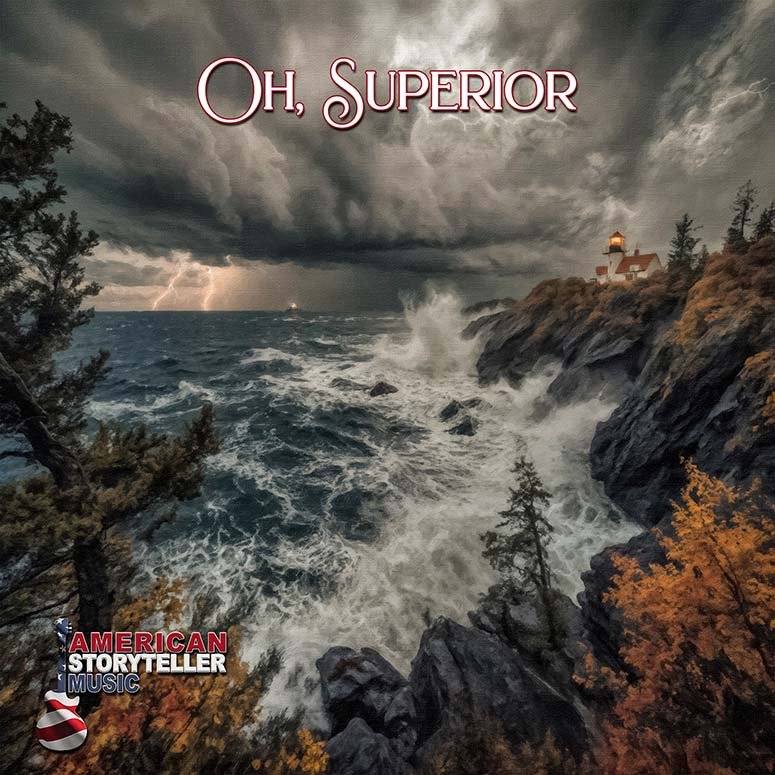
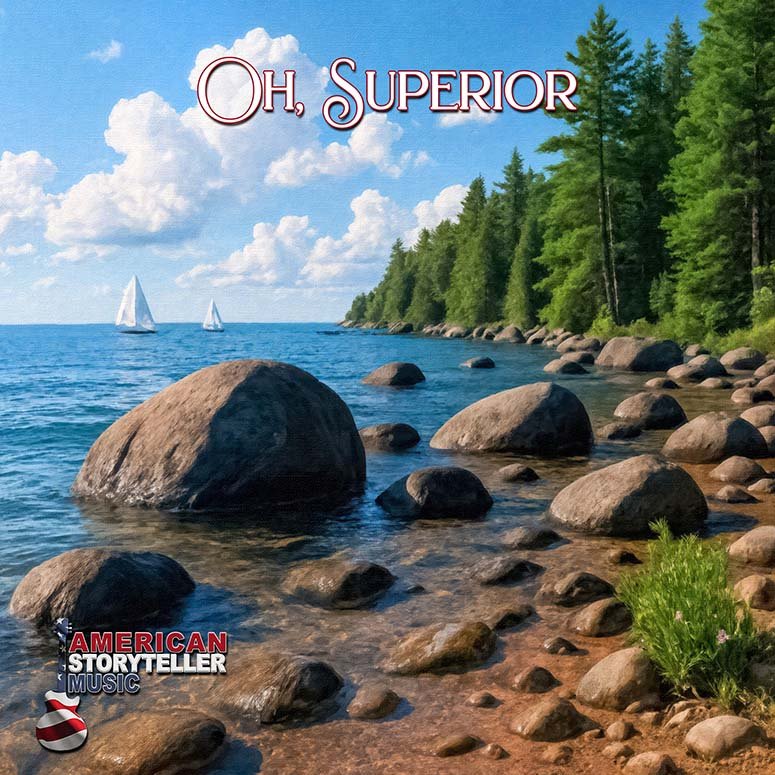
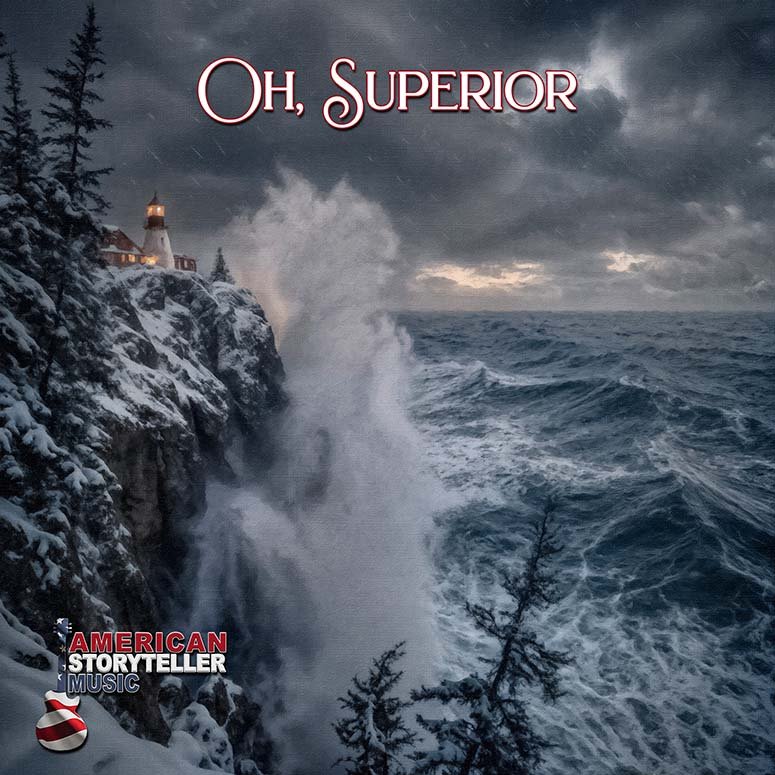
I wrote "Oh Superior" about the specific kind of respect you can only earn from a body of water large enough to have its own weather and its own casualties. Lake Superior isn't scenery in the usual sense, it's an inland sea, they say she sleeps but never slumbers, and I wanted a song built on that duality, a lake capable of glass-still dawns and ship-swallowing gales within the same day, sometimes within the same hour.
The story behind the song is the family thread running underneath the geography, a granddad who hauled ore through sleet and bitter cold, a father walking his own children along Pictured Rocks decades later, still thinking of the Edmund Fitzgerald's crew whose cries still echo in the fog. I wanted Superior's danger to be inherited knowledge, passed down the same way the fishing spots and the skipping-stone beaches get passed down, because that's genuinely how people who live near her learn to respect the lake.
What I care about most is the bridge, she humbles the hardest hearts, she swallows pride, she teaches without a sound, because I think that's the actual relationship between people and Superior. Not conquest, not mastery, just a long, humbled coexistence with something far bigger than any of us. Songs Across America keeps returning to landscapes that demand respect rather than simply offering beauty, and Superior might be the most honest example in the whole catalog, a lake people love specifically because it never once pretended to be safe.
Atmospheric, cinematic folk-rock built on acoustic guitar, cello, and ambient wind textures, structured as a family memory unfolding across Superior's shoreline, with a haunting saxophone interlude marking its most sorrowful verse.
The inland sea's dual nature of beauty and danger, inherited respect passed down through generations, maritime loss and memory, and humility before something far larger than ourselves.
Primary Subject:
Lake Superior itself, from Marquette's ore docks and Pictured Rocks to Duluth, and three generations of a family who have learned to respect and love her in equal measure.
Mood:
Awestruck, haunted, and reverent throughout, warming into tenderness in the final verse.
Real respect for the natural world often comes from acknowledging its danger rather than only its beauty. Lake Superior teaches humility precisely because it has never pretended to be tame, and that honest danger is part of why people keep returning to her shore across generations.
[Instrumental: Start softly with acoustic guitar and cello, backed by ambient wind textures and a low, slow drumbeat. Capture the ominous calm before a storm. Include brief brass accents and distant thunder-like drum rolls as the verse nears.]
[Intro]
The sky was calm at the break of day, but Big Lake told a different tale
Clouds rolled down from Ontario, hitching a ride on a northern gale
They say she sleeps but never slumbers, this inland sea of stone and glass
And those who challenge her proud domain might never make it past
[Verse 1]
My granddad hauled ore from Marquette down through the shipping lanes
Through sleet and hail, and bitter-cold nights, with lines of salt in his veins
He spoke of storms that rose up like raging fists to split the darkness in two
Where prayers were whispered into the wind, but not all dreams came true
[Chorus]
Oh Superior, with waters azure blue and wide
A stunning beauty that truly hides a hungry side
From Saint Mary’s River to Old Duluth’s shore
You’ve swallowed the best and asked for more
With waves ten stories high and skies of thunder
Crashing many a ship, dragging mariners under
And yet, millions of visitors see a gentler side
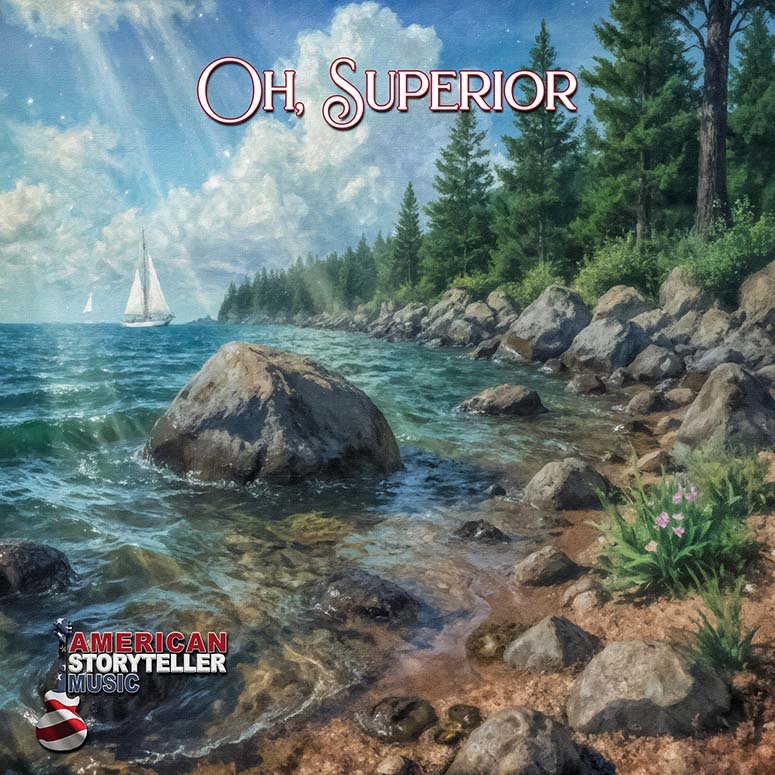
For those who boat or fish or enjoy a ferry ride
[Verse 2]
I walk the dogs near Pictured Rocks where pretty sandstone cliffs meet the sky
And think of all those poor lost souls far beneath who have never said goodbye
Like the crew of the Edmund Fitzgerald, whose helpless cries still echo in the fog
Each wind gust gnaws at the frozen shore, and the undertow tugs at the dogs
[Instrumental Interlude: a haunting saxophone, drums and piano melody]
[Verse 3]
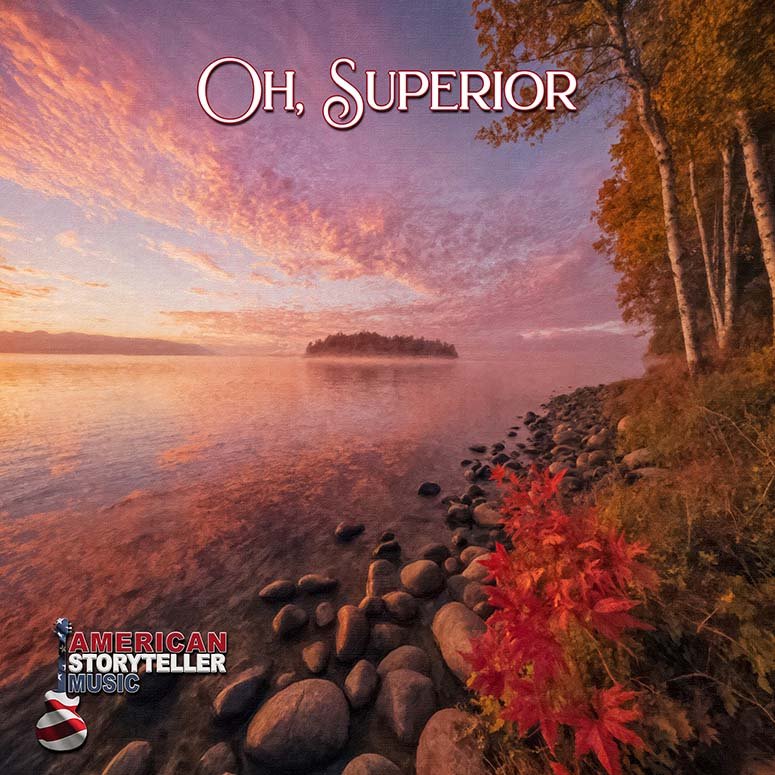
I’ve seen her glass-like surface reflect a spectacular dawn with nary a ripple near
But cursed her name the next midday when thunder and lightning cracked the pier
I’ve seen the autumn colors of The Keweenaw, its lighthouses and copper mines
And witnessed epic snow storms that made ice sculptures of houses and signs
[Bridge]
And yet we still come, we stubborn fools, to laugh at her wrath and ride her gales
To pull sturgeon from her depths, mine her treasures or simply fill out our sails
She humbles the hardest hearts...she swallows pride...she teaches without a sound
Hard-fought lessons carved in the granite cliffs and in fog that hugs the ground
[Verse 4]
Now I bring my two children to this shore, their hands tucked warmly into mine
Hunting for the flattest stones and skipping them over her water under the pines
Even though I fear what Superior can bring any moment, I love what she bestows
A deep dark wildness full of moose, deer and wolves and secrets only she knows
[Chorus]
Oh Superior, with waters azure blue and wide
A stunning beauty that truly hides a hungry side
From Nipigon Bay passed Copper Harbor’s shore
You’ve swallowed the best and asked for more
With waves ten stories high and skies of thunder
Crashing many a ship, dragging mariners under
And yet, millions of visitors see a gentler side
For those who boat or fish or enjoy a ferry ride
[Final Chorus]
Oh Gitche Gumee, so proud...so vast
We heed your call from the first to the last
You pull the careless under but raise the wise
You disguise your truth behind cloudy skies
And though we know you will never yield
We find ourselves with our fate being sealed
In awe of a power that no one can control
The ‘Big Sea Water’ has become a soul
[Outro – soft instrumental fade out]
Overview:
"Oh, Superior" is a sweeping, atmospheric folk ballad that pays homage to Lake Superior in all her complexity: her raw, untamable power, her icy elegance, her tragic legacy, and her enduring allure. Woven with generational memory and vivid place-based imagery, the song blends personal reflection with historical resonance, evoking the spiritual and emotional gravity that surrounds the greatest of the Great Lakes.
Structure & Narrative Arc:
[Intro]
The song opens with calm acoustic instrumentation over ambient wind, setting a deceptively peaceful tone. The imagery introduces Lake Superior as both a majestic force and a potential threat, where storms brew with little warning. The lyrical personification of the lake as a sentient and unforgiving being establishes the tone: one of awe and caution.
[Verse 1]
A generational thread is introduced through the narrator's grandfather, a rugged ore hauler out of Marquette. His story is not just a tribute to grit and endurance but also a reminder of the lake's violent temperament. The verse paints scenes of near-mythical storms and whispered prayers lost in the dark, hinting at both reverence and fear passed down through family legacy.
[Chorus]
The chorus serves as both an elegy and a paradox. Superior's outward beauty is undeniable: azure waters and stunning shores; but beneath it lies a "hungry side" that has claimed ships and lives. The duality of her nature is central: she welcomes tourists even as she exacts tribute from those who misjudge her power.
[Verse 2]
The narrator draws a direct connection between modern life and historic tragedy. Walking near Pictured Rocks, the song conjures ghostly memories of wrecks like the Edmund Fitzgerald. This verse blends the sublime with the haunting, as even domestic acts like walking a dog become tinged with the lake's omnipresent danger and mystery.
[Instrumental Interlude]
A mournful saxophone and minimalist piano carry the emotional weight forward, echoing the sorrow of lost sailors and the loneliness of Superior's vast, cold expanse.
[Verse 3]
This section reinforces the lake's erratic temperament. From calm reflections at dawn to midday storms, the lyrics emphasize how quickly the lake can turn. The verse also touches on regional icons: The Keweenaw Peninsula, copper mining, lighthouse lore, and white-out blizzards: further rooting the song in place and history.
[Bridge]
The emotional climax of the song, the bridge poetically describes humanity's complicated relationship with Superior. Despite her indifference and danger, people return: fishermen, miners, sailors, and wanderers alike: drawn to her mystery. The lake becomes a silent teacher, etching lessons in stone and fog.
[Verse 4]
In a turn toward the tender, the narrator reflects on their own children, now exploring the lake's edge with innocent wonder. This generational motif echoes the first verse but with a tone of hope and continuity. The wildness of Superior becomes something spiritual: something to be feared, yes, but also to be cherished and passed down.
[Final Chorus]
This final section elevates the song to mythic proportions. Referring to Lake Superior by her Ojibwe name: Gitche Gumee, it acknowledges Indigenous roots and spiritual significance. Here, the lake becomes more than a place: she becomes a force of destiny, an entity that shapes the soul. This last chorus leans philosophical, musing on fate, surrender, and the ancient bond between people and place.
[Outro]
A soft instrumental fade-out mirrors the intro, closing the cycle with a sense of quiet reflection and unresolved reverence.
Themes & Symbolism:
- Nature's Power: Superior is a stand-in for nature's untamable might, both majestic and deadly.
- Generational Memory: From grandfathers to children, the lake's lessons transcend time.
- Duality of Beauty: The contrast between serene surface and dangerous depths is central.
- Cultural Heritage: The use of Gitche Gumee invokes Native American reverence for the lake.
- Spiritual Awe: The lake becomes a character, a force, and ultimately a soul: an embodiment of mystery, mortality, and meaning.



















.jpg)