"Downeast Maine, Forever Strong©"
Lyrics by M. S. McKenzie (Unless Otherwise Noted) | Music Performed by Songs Across America or American Storyteller Music, All Songs Are Protected by Copyright


~ Associated State Links ~
"Downeast Strong"
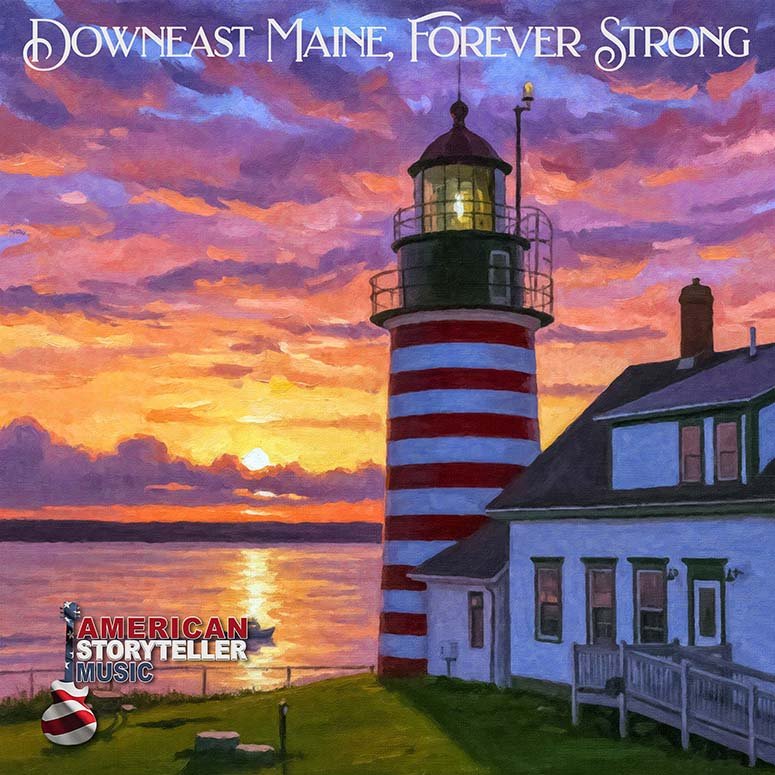
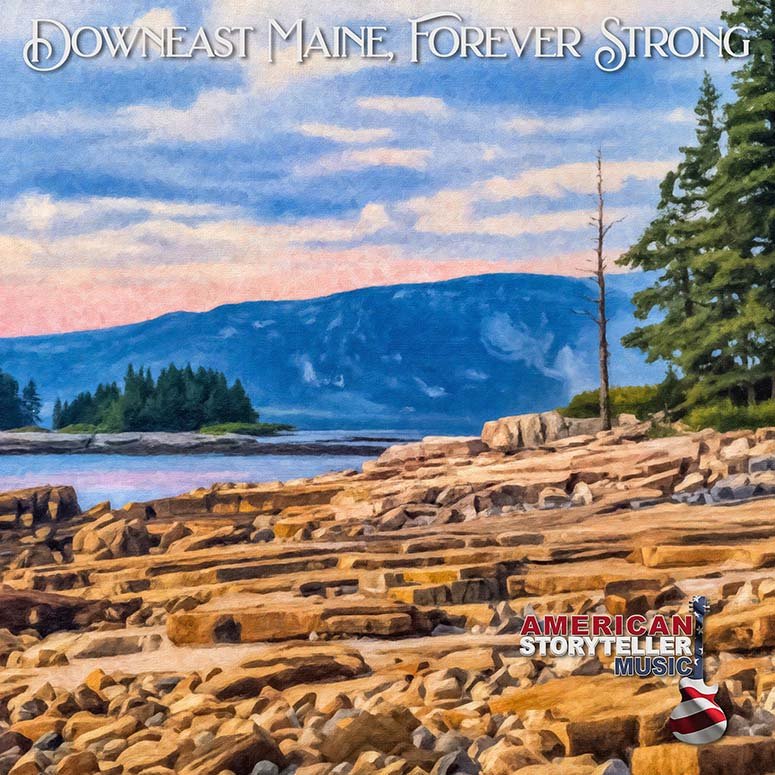
I wrote "Downeast Maine, Forever Strong" as a tribute to the specific toughness of people who make their living on the hardest, farthest edge of the state. From Roque Bluffs to Jonesport's old docks, the salty air clings to ancient granite rocks, and I wanted the song's whole character built around hands worn raw and skies an honest blue, the plain, unglamorous endurance of a place that doesn't get nearly the attention Maine's more famous coastline does.
The story behind the song is how deliberately I included every kind of hard labor this region depends on, lobstermen hauling with cracked and weathered hands, loggers cutting where the black spruce grow, lumber trucks braving heavy winter snow. I wanted the song to honor the whole working spine of Downeast Maine rather than just its most photographed industry.
What I care about most is the line honoring the Passamaquoddy people who still sing their songs, holding their place where the river runs strong, because this land carries indigenous history and presence that continues today, and I did not want a song about toughness and endurance to leave out the people whose endurance here predates everyone else's by centuries. Songs Across America keeps returning to the hardest-working corners of this country, and Downeast Maine, where the cold North Atlantic meets the first dawn in the nation, felt like exactly that kind of place.
Rugged, driving Americana anthem built on a proud, weathered chorus, structured as a tour through Downeast Maine's fishing villages and working landscape.
Downeast Maine's working toughness, lobstering and logging as regional identity, Passamaquoddy presence and heritage, and pride in a hard, overlooked corner of the country.
Primary Subject:
Downeast Maine, from Roque Bluffs and Jonesport to Lubec and Quoddy Head, its lobstermen, loggers, and Passamaquoddy community.
Mood:
Rugged, proud, and quietly reverent throughout.
The toughest, most overlooked corners of a place often hold its truest character, built by generations of hard, unglamorous labor, and honoring that toughness means also honoring the people whose presence here goes back further than anyone else's.
[Intro]
Where first dawn breaks upon a rocky shore
And scores of gulls cry out while the seas roar
[Verse 1]
From Roque Bluffs to Jonesport's old docks
The salty air clings to ancient granite rocks
In Lubec where Mulholland Light still shines
While morning rises through fishermen's lines
At Quoddy Head the fog rolls all cold and gray
But boats still push out before the break of day
[Chorus]
Downeast Maine, your heart is tough and true
With hands worn raw, and skies an honest blue
Through storm and struggle, your spirit carries on
Where the cold North Atlantic meets the first dawn
Passing beaches and cliffs is an average day's drive
On the edge is where the nation's heartiest people thrive
[Verse 2]
Lobstermen haul with cracked and weathered hands
Braving seas no landlubber could ever understand
Loggers cut deep where the black spruce grow
And lumber trucks brave the heavy winter snow
Tribes of Passamaquoddy still sing their songs
Holding their place where the river runs strong
[Chorus]
Downeast Maine, your heart is tough and true
With hands worn raw, under earnest skies of blue
Through storm and struggle, your spirit carries on
Where the cold North Atlantic meets the first dawn
Passing beaches and cliffs is an average day's drive
On the edge is where the nation's heartiest people thrive
[Bridge]
The Narraguagus River rushes wild and free
While Bar Harbor's lights play upon the sea
Mark Island light shines through the pines at night
As we hug the coastal trail, till the morning light
[Verse 3]
From Ellsworth's streets to Eastport's weathered piers
The shoreline's carried their voices for hundreds of years
With every tide that rises and every wave that falls
Fortunes are written on these rugged stone walls
There's no easy road, but their pride runs deep
And the promise of safe passage is a hope they keep
[Chorus]
Downeast Maine, your heart is tough and true
With hands worn raw, under earnest skies of blue
Through storm and struggle, your spirit carries on
Where the cold North Atlantic meets the first dawn
Passing beaches and cliffs is an average day's drive
On the edge is where the nation's heartiest people thrive
[Chorus]
Downeast Maine, your heart is tough and true
With hands worn raw, under earnest skies of blue
Through storm and struggle, your spirit carries on
Where the cold North Atlantic meets the first dawn
Passing beaches and cliffs is an average day's drive
On the edge is where the nation's heartiest people thrive
[1st Outro]
Where the first light shines upon us…
…is where we still belong
It's Downeast Maine foreverrrrrrr…
Downeast Maine foreverrr…, strong!
[Final Outro]
"Downeast Strong" is a proud, hard-edged tribute to Downeast Maine, built around the resilience of the people who live and work along one of the most exposed stretches of the American coast. Moving through Roque Bluffs, Jonesport, Lubec, Quoddy Head, the Narraguagus River, Bar Harbor, Ellsworth, Eastport, and the working waterfronts in between, the song presents the region as a place where beauty and hardship exist side by side. The Atlantic may be cold, the fog persistent, the winters difficult, and the work unforgiving, but those conditions have helped create a culture defined by toughness, self-reliance, loyalty, and an unusually strong sense of place. The result is not simply a Maine travel song, but a regional anthem about the character of the people who remain.
The title, "Downeast Strong," is direct and effective because it describes both physical endurance and emotional identity. "Downeast" immediately locates the song within coastal Maine, while "strong" refers to much more than muscle or hard labor. It suggests communities that have survived storms, changing fisheries, difficult winters, economic uncertainty, isolation, and generations of dependence upon natural resources. The word also carries a sense of pride without pretending that life in the region is easy, which gives the title credibility.
The introduction opens at first light, placing the song in one of Downeast Maine's most iconic settings: dawn breaking across a rocky Atlantic shoreline. The image of gulls crying above roaring seas immediately establishes sound, motion, and exposure. Rather than beginning with peaceful postcard imagery, the song introduces a coast that is alive, noisy, and physically powerful. The first dawn also becomes symbolic, suggesting that the people who live here begin their days early and often face difficult conditions before much of the country has even awakened.
Verse one moves through some of the most recognizable working and coastal communities of eastern Maine. Roque Bluffs and Jonesport establish a world of rocky shores, small harbors, fishing boats, docks, and salt air, while the "ancient granite rocks" give the landscape a sense of permanence. Human generations come and go, but the coast appears older and more durable than anyone living upon it. That contrast between geological endurance and human effort runs quietly beneath the entire song.
Lubec and the Quoddy Head region bring the song to the far eastern edge of the country, where fog, tide, cold water, and early morning light become part of everyday experience. The image of fishermen preparing before dawn reinforces the idea that this culture is shaped by schedules determined less by clocks than by weather, tide, season, and opportunity. The boats pushing out despite cold gray fog represent the central spirit of the song: people continue because the work has to be done. Courage here is not theatrical; it is routine.
The chorus turns those regional details into a declaration of identity. "Downeast Maine, your heart is tough and true" personifies the entire region, suggesting that the land and its people share the same character. "Hands worn raw" brings the pride down to a physical level, reminding the listener that this identity comes from hauling, cutting, lifting, repairing, navigating, and working outdoors in difficult conditions. The hands themselves become evidence of a lifetime spent earning a living from sea, forest, dock, road, and weather.
The line "Through storm and struggle, your spirit carries on" is the emotional center of the chorus. It does not deny hardship or romanticize it, but instead emphasizes continuity. Storms can be literal nor'easters, winter gales, rough seas, or damaging weather, but they can also represent economic decline, difficult seasons, loss, and changing industries. The spirit "carries on" because Downeast strength comes from persistence rather than invulnerability.
The phrase "Where the cold North Atlantic meets the first dawn" gives the chorus both geographical and poetic power. The eastern Maine coast is associated with some of the earliest sunrise views in the continental United States, so dawn becomes part of regional identity rather than merely scenery. The cold Atlantic reinforces the exposed character of the coastline, while first light suggests renewal and another day of work. Together, those images create a place that feels simultaneously harsh and hopeful.
The line "Passing beaches and cliffs is an average day's drive" is effective because it treats extraordinary scenery as ordinary local experience. Visitors may stop repeatedly for photographs, while residents may simply be traveling to work, the store, the harbor, or another town. That contrast says something important about place: what is spectacular to outsiders can become woven naturally into everyday life. The final chorus line, "On the edge is where the nation's heartiest people thrive," reinforces the idea that geographic remoteness and difficult conditions help shape cultural resilience.
Verse two shifts from scenery toward the working people of the region. Lobstermen hauling gear with cracked and weathered hands provide perhaps the clearest symbol of Downeast labor. The sea is not treated as romantic scenery here, but as a workplace capable of being dangerous, unpredictable, and physically exhausting. The phrase "Braving seas no landlubber could ever understand" adds a touch of regional humor while drawing a sharp distinction between those who experience the ocean from shore and those who depend upon it for a living.
The verse then moves inland to logging and winter trucking, broadening the song beyond fishing communities. Black spruce, forest roads, snow, and lumber trucks remind the listener that Downeast Maine is not only coastline. Forestry and wood products have also shaped communities and livelihoods throughout the region. The contrast between fishermen facing winter seas and loggers working inland forests shows that toughness is expressed differently depending upon the landscape, but the same willingness to work through cold and difficulty connects them.
The reference to the Passamaquoddy adds an important historical and cultural layer. Their presence reminds the listener that Downeast Maine did not begin with European settlement or modern fishing towns. Indigenous communities have longstanding relationships with the rivers, forests, coastlines, and marine resources of the region, and their continued presence makes them part of the living story rather than a vanished past. The line about songs continuing while the river runs strong ties culture directly to landscape and emphasizes endurance across generations.
The repeated chorus after verse two carries more weight because "tough and true" now has specific examples behind it. The listener has seen fishermen, loggers, truckers, and Indigenous continuity, so the regional strength no longer feels abstract. It comes from labor, adaptation, family histories, and the determination to remain connected to place despite difficulty. The chorus therefore functions almost like a communal refrain, gathering different kinds of Downeast lives into one shared identity.
The bridge returns to geography and movement. The Narraguagus River introduces freshwater into a song dominated by saltwater, showing how rivers connect the inland forests with the coast. Bar Harbor's lights reflected upon the sea bring a different atmosphere, more populated and luminous than the earlier fishing villages, but still inseparable from the ocean. The shift suggests that Downeast Maine contains both quiet working harbors and internationally known destinations, each existing within the same broader coastal culture.
Mark Island Light adds another maritime image of guidance and safety. Lighthouses throughout Maine carry a symbolic weight far beyond navigation because they represent endurance, isolation, warning, and the promise of safe passage. Their beams cut through fog and darkness in the same way the song's people continue moving through uncertainty. The line about following the coastal trail until morning creates a sense of continuous travel, almost as though the narrator is trying to experience the entire region in one long journey through darkness and dawn.
Verse three expands the emotional focus again by moving between Ellsworth and Eastport. These towns represent different aspects of Downeast life, but the line about weathered piers immediately brings the song back to the long relationship between people and water. The shoreline "carrying their voices for hundreds of years" gives the coast a form of memory. Conversations, work calls, songs, warnings, departures, reunions, and losses seem to remain embedded in the landscape.
The line "With every tide that rises and every wave that falls / Fortunes are written on these rugged stone walls" is particularly strong. It suggests that livelihoods rise and fall with natural cycles and changing conditions. In coastal communities, weather, fisheries, markets, fuel costs, and seasons can all influence whether a year is prosperous or difficult. The stone walls become silent witnesses to that uncertainty, much like the ancient rocks introduced in the first verse.
"There's no easy road, but their pride runs deep" states the song's philosophy clearly. Downeast pride does not emerge from comfort or abundance, but from surviving conditions that require adaptability. It also avoids presenting hardship as something that people necessarily seek. The pride comes from facing reality, continuing through it, and maintaining community.
The final line about safe passage is especially fitting because it can be read both literally and metaphorically. Sailors and fishermen hope to return safely from the water, but everyone living through difficult circumstances hopes for some version of safe passage. It may mean surviving a storm, making it through winter, sustaining a business, raising a family, or simply reaching another morning. That ambiguity gives the line emotional depth.
The repeated choruses near the end are appropriate because the song has been building toward an anthem rather than a narrative resolution. By the third and fourth repetitions, the words should feel less like the narrator speaking alone and more like an entire community answering. Layered harmonies, group vocals, or a rough-edged choir could make the final choruses feel especially powerful. The strength should come from collective voices rather than glossy perfection.
The first outro provides the song's most direct statement of belonging. "Where the first light shines upon us / is where we still belong" connects geography with identity in a simple and effective way. The people belong not because Downeast Maine is easy, but because it is theirs, shaped by memory, work, family, community, landscape, and routine. The line suggests that belonging can survive even when living somewhere requires sacrifice.
The extended "Downeast Maine forever" gives the ending the quality of a regional chant. The final word, "strong," lands as both summary and declaration. It recalls the title while allowing everything that came before to define what strength actually means. By that point, strength includes work, perseverance, cultural continuity, survival, pride, and the willingness to remain on the edge.
Musically, "Downeast Strong" would work extremely well as rugged Americana, folk-rock, country-rock without excessive twang, or a broad coastal anthem. Acoustic guitar, electric guitar, fiddle, bass, and a strong snare-driven rhythm would suit the working-class imagery. The song should feel weathered and substantial rather than polished to the point of losing its regional character, and a slightly rough male vocal or blended male-female chorus could add authenticity.
The introduction could begin with low acoustic guitar, distant fiddle, and perhaps subtle sounds suggesting surf or wind. The first verse should remain restrained, allowing the geography and early-morning imagery to unfold naturally. When the boats push out before dawn, the drums could begin building, giving the impression that the workday has started and the song is moving with it.
The chorus should open significantly, with fuller drums, electric guitar, and layered vocals on "Downeast Maine." The phrase "your heart is tough and true" is especially suited to a broad melodic rise, while the final line about the heartiest people thriving on the edge could be delivered with a stronger rhythmic emphasis. The chorus should feel proud without becoming overly sentimental.
Verse two might use a heavier rhythmic texture to reflect hauling, logging, and winter work. Tom drums or low guitar could give the section more physical weight. The Passamaquoddy reference would benefit from a respectful, straightforward musical treatment rather than attempting to imitate Indigenous musical traditions, allowing the lyric itself to carry the cultural acknowledgment.
The bridge could become more spacious and reflective. The Narraguagus River and lighthouse imagery invite violin, clean electric guitar, or piano, with fewer drums and more atmospheric sound. The return to the final verse could then rebuild gradually, as though traveling from a quiet coastal night back into the working communities at dawn.
The final choruses should be the largest sections, with multiple voices joining in. Rather than a polished choir, a slightly rough communal sound would fit the song better, suggesting fishermen, loggers, families, and townspeople singing together. The final "forever strong" could be sustained over a descending instrumental line before the song moves into the final outro.
At its heart, "Downeast Strong" is about the relationship between hardship and belonging. The song does not argue that people love Downeast Maine because life there is always easy or comfortable. It suggests almost the opposite: the difficulties are part of what gives the place its identity. The cold, storms, distance, hard work, and changing economy create challenges, but they also strengthen the bonds between people and land.
The song also succeeds because it does not treat Downeast Maine as a museum piece frozen in some romantic past. Fishing, logging, roads, towns, tourism, Indigenous presence, modern harbors, and historic lighthouses all exist together. The region changes, but its central relationship with weather, water, forest, and community remains recognizable. That makes the song feel more lived-in than nostalgic.
"Downeast Strong" is therefore both a regional anthem and a tribute to endurance. It celebrates beautiful scenery, but the real subject is the people who continue building lives along that scenery regardless of what the Atlantic, winter, or economy may bring. The coastline may attract visitors, but the song belongs to those who stay after the summer crowds leave and another cold season begins.
Its deepest message is that strength is not about being untouched by hardship. It is about continuing through it without losing your sense of who you are or where you belong. In "Downeast Strong," the first light over the Atlantic becomes more than sunrise. It becomes a daily promise that no matter how hard the night has been, another day begins on that rocky Maine shore.







.jpg)










.jpg)