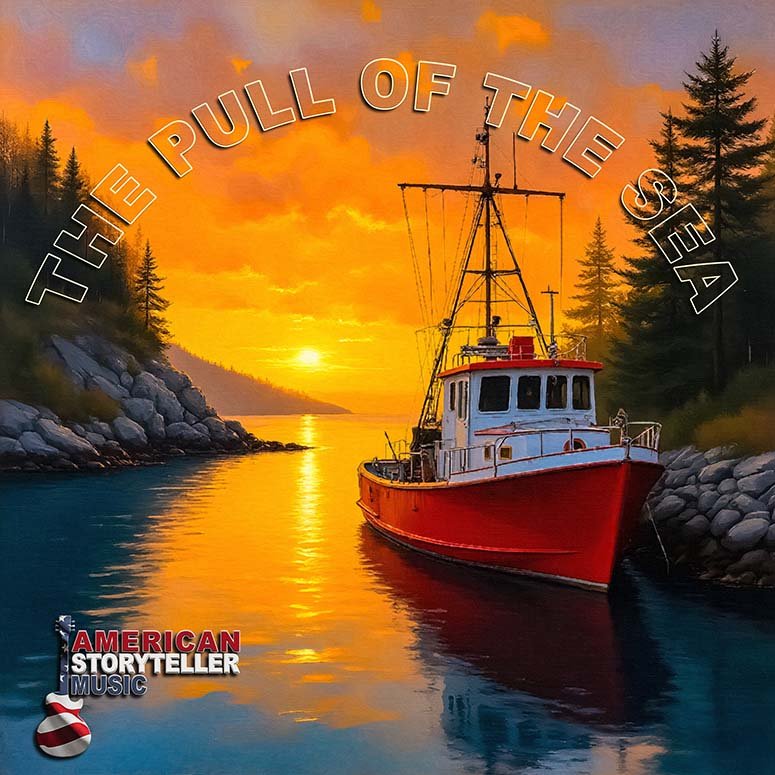
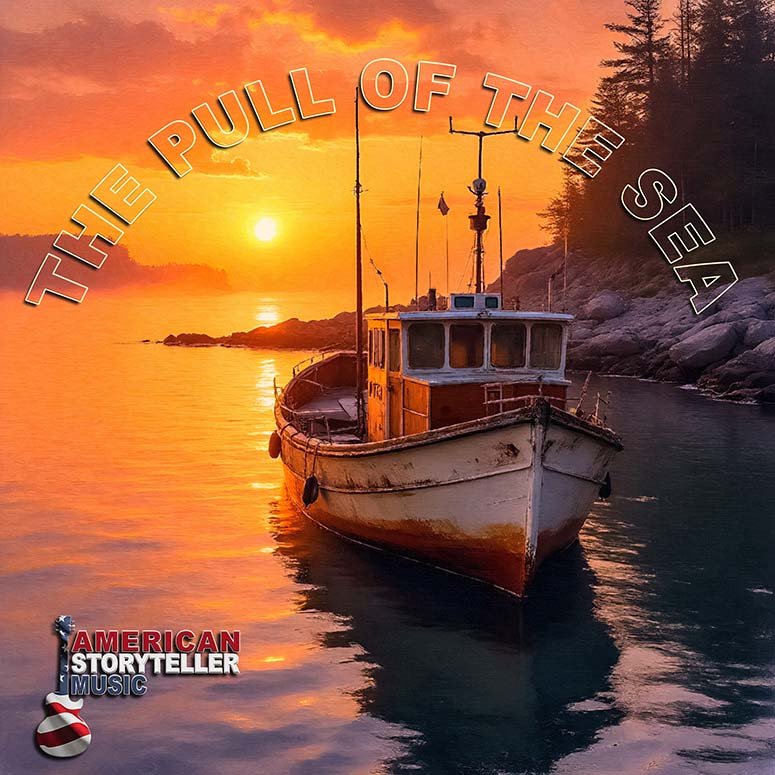
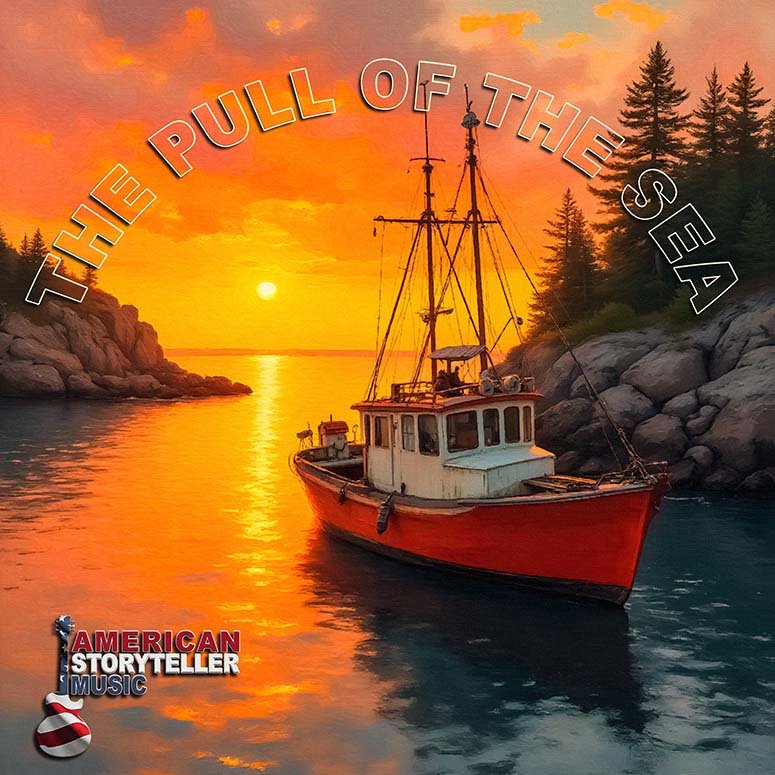
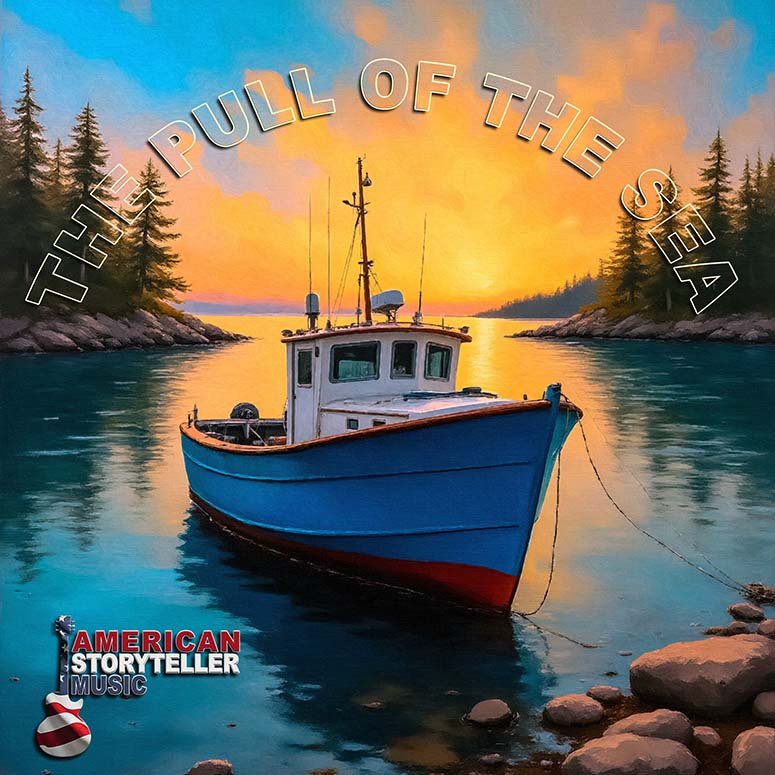
I wrote "The Pull of the Sea" for the specific tension inside a lobstering family when one generation's whole identity is built on the water and the next generation's heart is somewhere else entirely. His Bean boots are on the deck like his father's before, and I wanted that inherited detail, boots, lines, traps, to sit right alongside his son gazing out at the horizon, already dreaming of leaving.
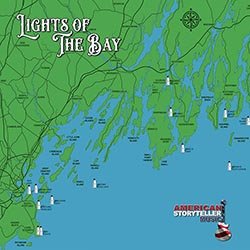
The story behind the song is the phrase the boy uses for his father's life, Old Sow, a giant whirlpool pulling him down, while his old man sees Vinalhaven as a sacred hometown. I did not want either generation to be wrong. The father's devotion to this life is completely real, and so is his son's sense that it might be swallowing him. I wanted the song to hold both truths without forcing either one to give way.
What I care about most is the small, human moment in the third verse, hauling traps together, the son losing his footing and falling on his backside, his father's big laugh, because I wanted at least one memory in this song to be simply joyful, uncomplicated by the larger tension, proof that love between them exists underneath the disagreement about what a good life looks like. Songs Across America has plenty of songs about a place someone loves without question. This one is for the harder, more honest version, a life that is sacred to one person and a whirlpool to another, inside the very same family.
Reflective coastal folk ballad built on acoustic guitar, fiddle, and squeeze box, structured around a single morning of lobstering that carries decades of family history.
Generational tension over inherited work and identity, the lobstering life on the Maine coast, a father's devotion versus a son's yearning to leave, and love that survives disagreement about what a good life looks like.
Primary Subject:
A Maine lobsterman on Vinalhaven and his son, torn between the life his father built and a pull toward somewhere else.
Mood:
Tender and wistful throughout, carrying real melancholy beneath a current of warmth and love.
A way of life can be sacred to one generation and feel like a trap to the next, and both feelings can be completely true at once. Love between a parent and child can survive that disagreement, even when neither one is wrong about what they feel.








.jpg)










.jpg)