"Idaho Your Mountains Call©"
Lyrics by M. S. McKenzie (Unless Otherwise Noted) | Music Performed by Songs Across America or American Storyteller Music, All Songs Are Protected by Copyright

~ Associated State Links ~
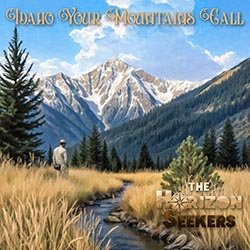
"Idaho Your Mountains Call"
I wrote "Idaho, Your Mountains Call" as a second telling of the same journey I gave to "Deep in the Northern Forests Green," moving through the same Lake Pend Oreille, Sawtooth Range, Salmon River, and Craters of the Moon, but I wanted this version's title to make the invitation explicit rather than implied. Idaho isn't just beautiful in this telling. It's actively calling, and I wanted the chorus itself to read as a summons rather than a description.
The story behind the song is the same nickname I couldn't leave out either time, the River of No Return, because that phrase does double duty as literal geography and as an invitation to a kind of remoteness most people never choose. Where wilderness still runs so deep, and nature's secrets still we keep, felt like the right way to frame Idaho as a place actively guarding its own mysteries rather than simply displaying them.
Songs Across America has room to return to a state this overlooked more than once, and I wanted this version to be the one that issues the invitation directly, mountains that call rather than mountains that wait to be discovered.
Sweeping instrumental Americana travelogue, moving state-wide through named landmarks with a steady, anthemic chorus built for open-road singing.
Idaho's overlooked wilderness as an active invitation, the River of No Return as literal geography and metaphor, wild places that guard their own mysteries, and the call of remote, unspoiled land.
Primary Subject:
Idaho's wilderness itself, from Lake Pend Oreille and the Sawtooth Range through Craters of the Moon to the Palouse hills and the Snake River canyon.
Mood:
Reverent, expansive, and quietly inviting throughout.
Some landscapes don't just sit quietly waiting to be found, they actively call to the people who need them, and Idaho's overlooked wilderness deserves to be heard as an invitation rather than simply a scenic backdrop.
[Verse 1]
Deep in the northern forests green
Where ancient cedars stand serene
Lake Pend Oreille's waters gleam
Like mirrors in a mountain dream
And Coeur d'Alene at break of day
Where osprey dive and otters play
These crystal waters tell their tale
Of wild beauty that will prevail
[Chorus]
Idaho, your mountains call
From rushing streams to waterfalls
Where wilderness still runs so deep
And nature's secrets still we keep
[Verse 2]
Through Sawtooth peaks that pierce the sky
Where mountain goats climb wild and high
Past Redfish Lake's clear alpine light
Where stars paint stories in the night
Down Salmon River's sacred flow
Through canyons deep where rapids go
The River of No Return sings
Of freedom on its silver wings
[Verse 3]
Across the fields of ancient stone
Where lava flows made earth their home
Through Craters of the Moon so stark
Where mysteries leave their timeless mark
Then Shoshone Falls' thundering might
Sends rainbows dancing in the light
Like curtains drawn across the land
By nature's own artistic hand
[Verse 4]
Through rolling Palouse hills of gold
Where wheat fields wave their stories old
Past farmland flowing like the sea
In waves of pure serenity
While Snake River cuts deep and slow
Through canyons where the eagles go
This living canvas spreads so wide
Where heaven and earth still coincide
[Chorus]
Idaho, your mountains call
From rushing streams to waterfalls
Where wilderness still runs so deep
And nature's secrets still we keep
“Idaho, Your Mountains Call” is a sweeping scenic tribute to Idaho’s wild landscapes, built around the idea that the state itself seems to summon the traveler through mountains, rivers, forests, lakes, canyons, waterfalls, lava fields, and open farmland. Rather than concentrating on a single region, the song moves across a broad cross-section of Idaho, beginning in the green forests and clear lakes of the north, passing through the Sawtooth Mountains and Salmon River country, then entering the stark volcanic terrain of Craters of the Moon before opening out into the Palouse and Snake River country. The result is a song that feels both like a road journey and a love letter to the state’s natural variety. Idaho becomes not merely a backdrop but an active presence, calling the narrator deeper into the landscape.
The title, “Idaho, Your Mountains Call,” immediately establishes that emotional relationship. The mountains are personified as if they possess a voice capable of reaching the traveler from a distance, and the chorus turns that call into the central force of the song. The word “call” suggests more than simple admiration. It implies longing, return, and a persistent attraction that is difficult to ignore. Even though the lyrics travel through lakes, rivers, farms, waterfalls, and volcanic landscapes, the mountains remain the symbolic heart of Idaho’s identity.
The first verse opens in northern Idaho, where the mood is cool, green, and peaceful. Ancient cedars standing serene create an immediate sense of age and stillness, while Lake Pend Oreille introduces the reflective water imagery that defines much of the verse. Describing the lake as a mirror inside a “mountain dream” gives the scene an almost unreal quality, with water, forest, and peaks appearing to blend together. The image is especially effective because it captures the way large mountain lakes can seem to double the landscape through reflection, creating a second world beneath the surface.
The movement toward Coeur d’Alene at break of day brings more life into the scene. Osprey diving and otters playing give the verse motion and personality, preventing the landscape from becoming purely static scenery. The water is described as crystal clear and capable of “telling its tale,” which gives it both memory and voice. That phrase suggests that the lakes have witnessed generations of wildlife, changing seasons, travelers, communities, and weather while continuing to reflect the surrounding mountains.
The final line of the first verse, “Of wild beauty that will prevail,” introduces a subtle conservation theme. The word “prevail” implies that wild beauty is not simply present but must endure. It can suggest hope that forests, lakes, wildlife, and clean water will remain despite development and other pressures. The song does not turn into an environmental lecture, but the idea that Idaho’s wilderness should survive becomes part of its emotional foundation.
The chorus is deliberately simple and direct, which works well after the more detailed verse. “Idaho, your mountains call” functions as both declaration and refrain, while the following lines widen the imagery to rushing streams, waterfalls, and deep wilderness. The song does not need to name every place in the chorus because the verses provide the geographic detail. The chorus instead summarizes the emotional effect of all those places. Idaho’s wilderness becomes something deep enough to still contain mystery.
The line “And nature’s secrets still we keep” has an interesting ambiguity. It could mean that the landscape itself still holds secrets not fully understood, or that people who love the state feel a responsibility to protect what remains hidden and wild. Either interpretation fits the song. The phrase gives the chorus a slightly reverent quality, suggesting that not everything in nature needs to be explained, developed, or exposed.
The second verse moves into the Sawtooth Mountains and takes on a more rugged, adventurous character. Peaks piercing the sky create sharp vertical imagery, while mountain goats climbing high reinforce the sense of elevation and difficulty. The Sawtooths feel more dramatic than the gentle lake country of the opening verse, and that shift helps the song build geographically and emotionally. The traveler is no longer simply observing beauty from the shoreline but moving into a more demanding mountain environment.
Redfish Lake brings a moment of calm inside that rugged landscape. Its clear alpine light and star-filled night sky create a peaceful contrast with the jagged peaks surrounding it. The line “Where stars paint stories in the night” gives the sky the same artistic role previously given to lakes and mountains. The stars become another form of storytelling, connecting the traveler to something larger than the immediate landscape.
The Salmon River then changes the verse from stillness to motion. Its flow through deep canyons introduces one of Idaho’s most powerful symbols of wilderness and independence. The phrase “River of No Return” carries both geographic identity and emotional meaning, suggesting remoteness, danger, freedom, and the idea of crossing into country that does not easily give people back. Within the song, however, the river is not threatening so much as liberating.
The line “The River of No Return sings / Of freedom on its silver wings” is particularly effective because it gives the river both voice and flight. Water becomes almost birdlike, carrying freedom downstream. The imagery connects naturally with the chorus, where the mountains call and the wilderness keeps its secrets. The landscape throughout the song repeatedly communicates with the narrator through sound, reflection, and movement.
The third verse shifts dramatically into volcanic terrain. “Fields of ancient stone” immediately change the visual palette from green forests and blue water to black lava, open ground, and stark geological forms. Craters of the Moon creates one of the song’s most unusual landscapes because it looks almost extraterrestrial compared with the lake and mountain imagery of the earlier verses. The lyric uses that contrast well, presenting Idaho as a state whose natural identity cannot be reduced to one type of scenery.
The phrase “Where lava flows made earth their home” gives volcanic rock a kind of living presence, as if the lava arrived and settled permanently into the land. The image is poetic rather than technical, but it suits the song’s tendency to personify natural features. Craters of the Moon is described as mysterious and timeless, which works particularly well because the terrain can appear ancient, empty, and strangely untouched. The lack of lush vegetation allows the geology itself to dominate the scene.
Shoshone Falls then brings the element of water back with dramatic force. The shift from dark volcanic terrain to thundering falls creates one of the verse’s strongest contrasts. Rainbows dancing in the spray add color and movement, turning the waterfall into a natural spectacle. The phrase “Like curtains drawn across the land / By nature’s own artistic hand” transforms the waterfall into a vast theatrical composition.
That curtain metaphor works because a large waterfall can appear like fabric suspended in motion, especially when sunlight catches the spray. It also reinforces the song’s repeated portrayal of nature as an artist. Earlier the stars painted stories, the lake mirrored a dream, and now water becomes a curtain created by nature itself. The landscape is continually described as though it has been composed deliberately, even though the song understands that these forms come from natural processes.
The fourth verse opens out into the Palouse, where the imagery becomes broad, agricultural, and almost oceanic. Rolling hills of gold replace mountain cliffs, while wheat fields move like waves beneath the wind. The song handles this transition well because it does not treat farmland as less beautiful than wilderness. Instead, it presents cultivated land as another major part of Idaho’s visual identity.
The phrase “Where wheat fields wave their stories old” suggests generations of farming and human relationship with the land. Unlike the deep wilderness of earlier verses, the Palouse is clearly shaped by people, but it still retains a strong sense of rhythm and natural beauty. The fields “flow like the sea,” turning land into water through metaphor. This continues the song’s habit of blending elements, just as the first verse turned lakes into mirrors and the Snake River later becomes part of a living canvas.
The Snake River brings the song back to canyon geography and wildlife. Its slow, deep cutting through the land creates a calmer but no less powerful image than the Salmon River’s rapids. Eagles moving through the canyons reinforce the vertical relationship between river depths and open sky. The line “This living canvas spreads so wide” then gathers river, farmland, canyon, birds, and sky into one enormous composition.
The final image, “Where heaven and earth still coincide,” gives the song a suitably expansive conclusion. It suggests places where mountains, sky, fields, rivers, and light come together so naturally that the boundary between the physical and spiritual seems to blur. The line does not need to be read religiously. It can simply describe the feeling of standing in a landscape so open and beautiful that the sky seems physically connected to the land.
Musically, “Idaho, Your Mountains Call” would work particularly well as an expansive folk-rock, country-rock, Americana, or adult contemporary travel anthem. The arrangement should feel open and melodic rather than heavily rustic. Acoustic guitar, warm bass, steady drums, fiddle, piano, and clean electric guitar would suit the imagery without pushing the song into overly traditional country territory.
The first verse could begin gently, with acoustic guitar and light piano reflecting the calm of Pend Oreille and Coeur d’Alene. A clean electric-guitar line or soft fiddle could provide long, reflective notes beneath the lake imagery. The chorus should widen with fuller drums and layered vocals, especially on “Idaho, your mountains call,” which has the potential to become a broad, memorable hook. The harmony should feel uplifting without becoming overly grand.
The Sawtooth verse could introduce stronger rhythmic movement, perhaps through toms or a more prominent bass line, reflecting the rugged terrain and the flowing Salmon River. The star imagery at Redfish Lake would benefit from a slight softening of the arrangement before the music rises again around the River of No Return. A fiddle or electric-guitar phrase could rise above the vocal on “freedom on its silver wings,” musically reinforcing the sense of flight.
The Craters of the Moon verse could use a more atmospheric sound, perhaps with low synthesizer pads, sustained guitar, or sparse percussion to create the stark volcanic mood. When Shoshone Falls enters, the arrangement could open dramatically through drums, strings, and brighter instrumentation. This would make the waterfall feel like a sudden release of energy after the dark lava-field section.
The Palouse verse should feel warm and rolling, with a steady rhythm that mirrors wheat moving in the wind. Acoustic guitar, mandolin, or light fiddle could give the section a broad rural atmosphere without becoming too literal. As the Snake River appears, the instrumentation could deepen again, with lower strings or sustained guitar creating a sense of canyon scale. The final chorus should then bring together the song’s full instrumental palette.
The repeated chorus works well as the song’s final statement because it returns everything to the simple idea of the mountains calling. By that point, the listener has traveled through forests, lakes, jagged peaks, alpine water, wild rivers, lava fields, waterfalls, wheat country, and canyonlands. The chorus becomes more meaningful because “mountains” now represents the entire Idaho experience rather than one specific landform.
At its heart, “Idaho, Your Mountains Call” is about the emotional pull of wild and open country. The narrator is drawn not only to famous places but to the feeling those places create: quiet, distance, freedom, mystery, and connection with the natural world. Idaho’s landscapes repeatedly seem to speak through rivers, forests, stars, waterfalls, and mountain silhouettes. The traveler is not simply observing the state; he is listening to it.
The song also succeeds because it acknowledges Idaho’s variety. The state is not presented only as mountain wilderness. It includes northern lakes, alpine peaks, volcanic plains, deep rivers, waterfalls, agricultural hills, and wide canyon country. That breadth gives the song the character of a statewide anthem rather than a regional portrait.
“Idaho, Your Mountains Call” is therefore both a scenic travel song and a celebration of belonging. Its deepest message is that certain landscapes exert a pull that is difficult to explain logically. They remain in memory, call people back, and create the feeling that freedom is still possible somewhere beyond the next ridge. In this song, Idaho’s mountains are not merely part of the scenery. They are the voice that keeps calling the traveler home.












.jpg)