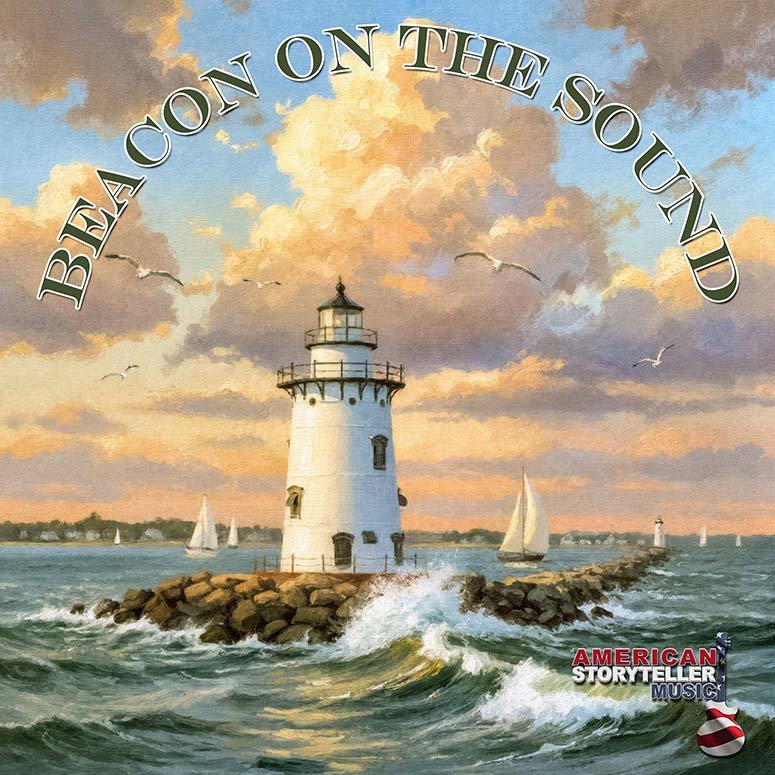
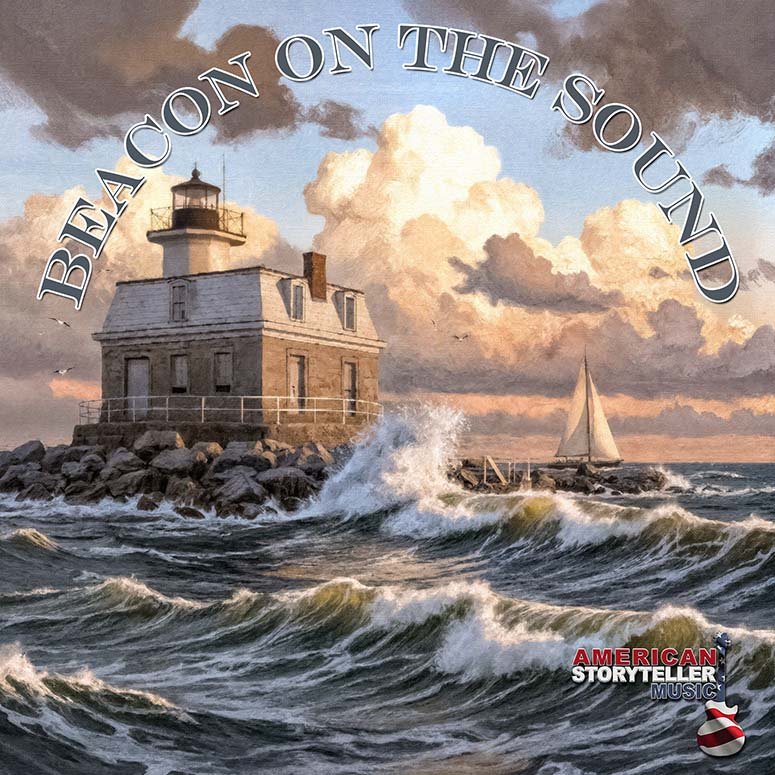
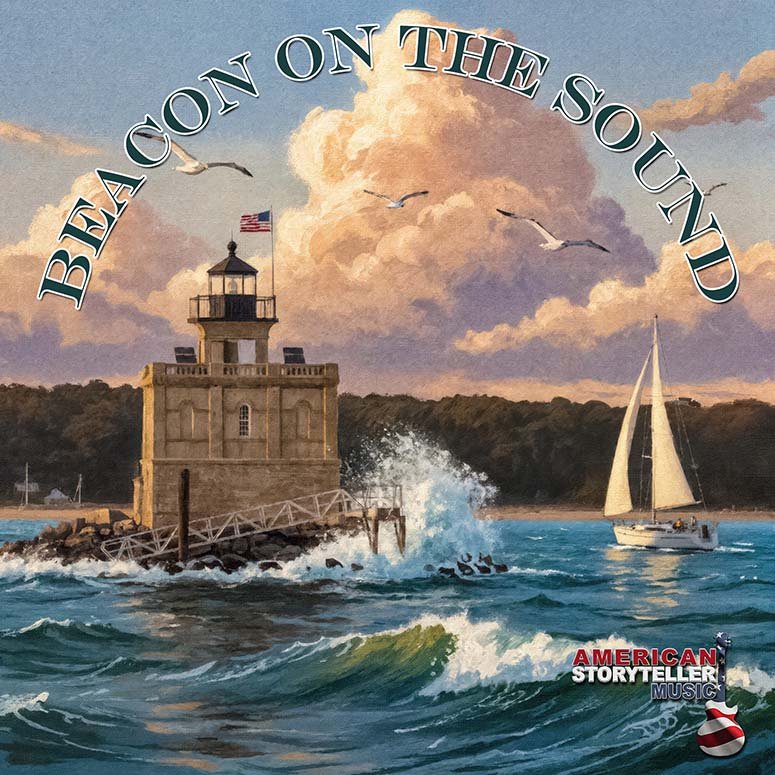
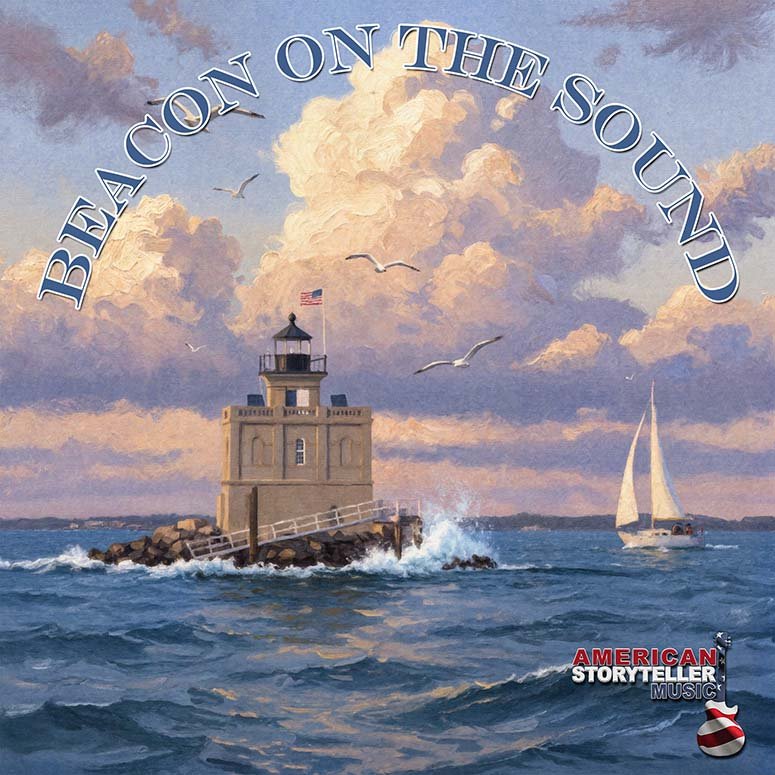
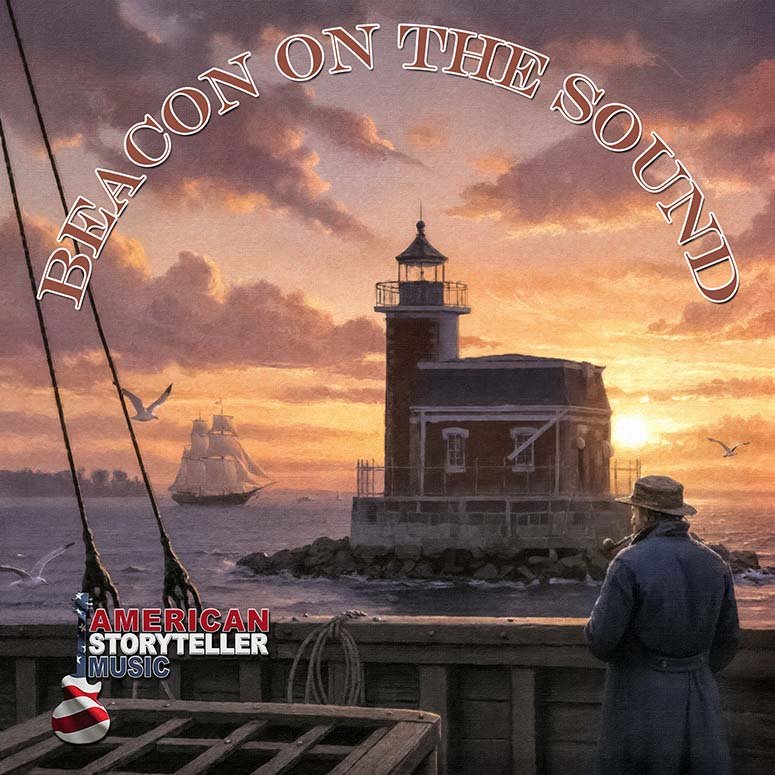
I wrote "Beacon on The Sound" about the difference between a light that guides you home and a light that exists for someone else entirely. Every lighthouse and buoy along Connecticut's coast was built with the same original purpose, to bring a specific sailor home safely, and I wanted to write about the people who eventually learn to flip that purpose around, standing watch at Mystic and Saybrook and New London not for their own safe return but for strangers they will never meet coming in from the fog. That shift, from being guided to being the guide, is the whole engine of the song.
The story behind the song lives in the pre-choruses, because that's where the narrator's understanding actually changes across the verses. I used to think a light was just a sign to bring me home becomes, by the second verse, now I lift it high for strangers, drifting out of sight. I wanted that evolution to be gradual and earned rather than stated outright, the way real growth into a life of service actually happens, mile by mile, watch by watch, until one day you realize the light was never really about you at all.
The bridge is where I let the whole state walk into the song, Charter Oak roots in a gale-torn ground, Nathan Hale's words still circling round, Twain's lightning from a Hartford cloud. I wanted the crew's courage to be understood as something inherited rather than invented, a specific Connecticut lineage of steady defiance that runs from colonial history straight through to a Coast Guard watch on a foggy night. Our courage isn't thunder or a shouted vow, it's steady hands and it's here-and-now, is the line I built the whole character of this crew around. Not dramatic heroism, but reliability, showing up at full speed the moment the radio calls, mile after invisible mile. Songs Across America is full of people doing quiet, essential work that rarely gets its own song, and I wanted this one to be for the crews who turn their own hearts into lanterns for people they will never see again after the rescue is over.
There is a quiet undertone in this song that might get missed, a spiritual undertone that is often echoed in Christian music "Be like a Beacon on The Sound" holds an immense weight beyond the physical act of holding a lantern in the dark. The song is about being a shining light on a hill, standing out against the darkness. "When the waves come crashing down" and "I've got you now" are lines that draw a connection between actual, historical buildings to a person we need to become, a beacon, guiding others to those safe, quiet harbors that others often miss and sail right past.
Driving, anthemic maritime rock with a chantable, drum-and-clap bridge built for a crew to shout together. Verses grounded in specific Connecticut coastal geography and local history, building through a rising pre-chorus into a wide, communal chorus, with a final key-lift chorus and gang vocal "whoa-oh" break.
Service and quiet heroism, the transformation from being guided to becoming the guide, inherited courage and regional history as a source of character, maritime rescue and vigilance, and reliability over spectacle.
Primary Subject:
A Coast Guard or maritime rescue crew stationed along the Connecticut shoreline, and their evolving understanding of what it means to be the beacon rather than the one seeking it.
Mood:
Steady, resolute, and inspiring. Grounded and disciplined through the verses, swelling into communal, anthemic pride at the chorus and bridge, closing on triumphant resolve.
Real courage is rarely loud. It is steady hands showing up at full speed the moment someone else needs them, mile after invisible mile. And the deepest maturity comes when we stop needing the light to guide us home and start holding it up instead for the people still lost in the dark.





















.jpg)