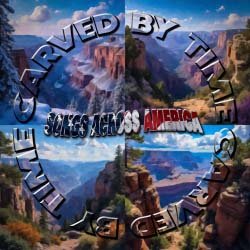
"Carved by Time©"
Lyrics by M. S. McKenzie | Performed by Songs Across America ©
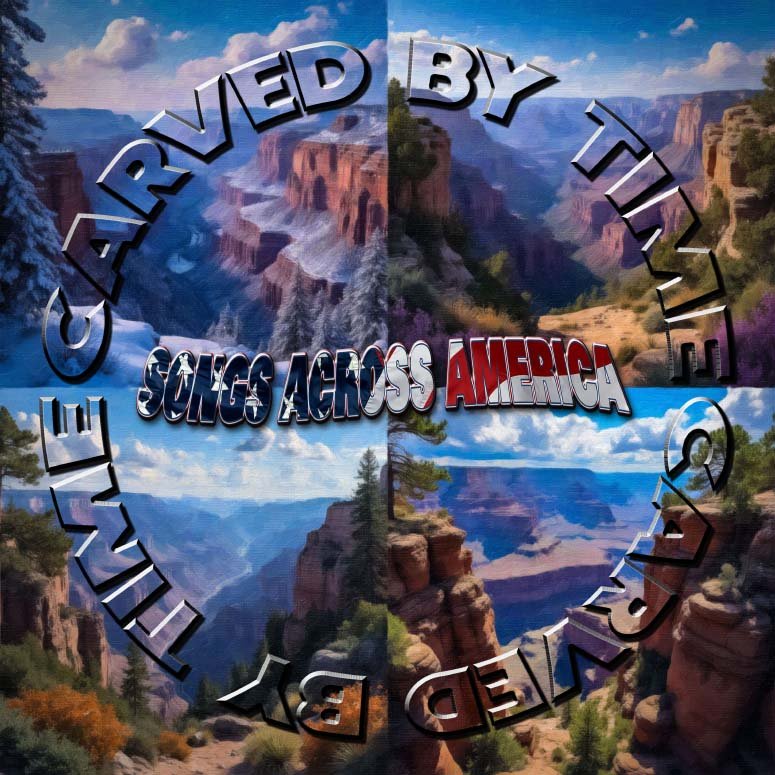
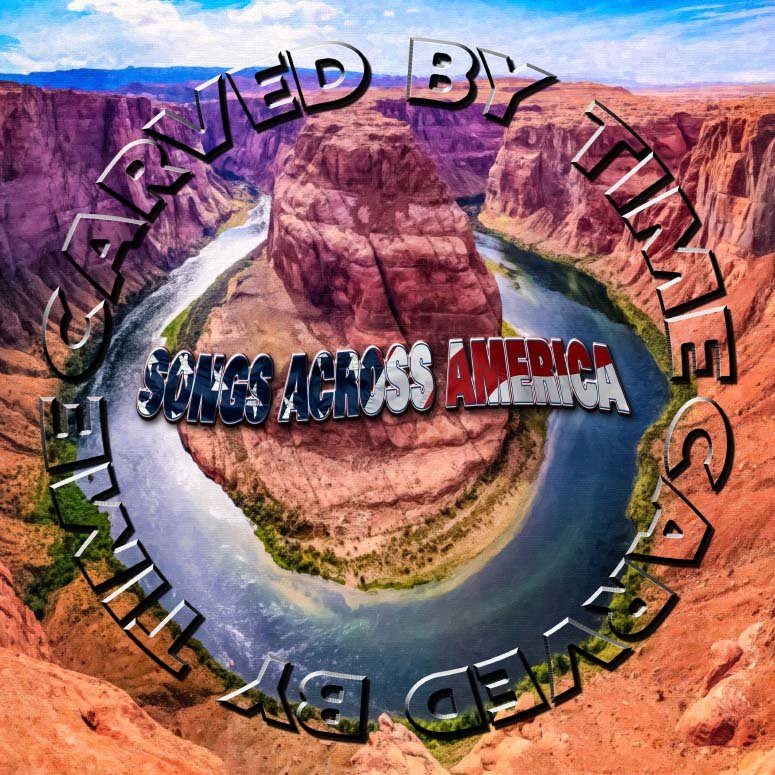

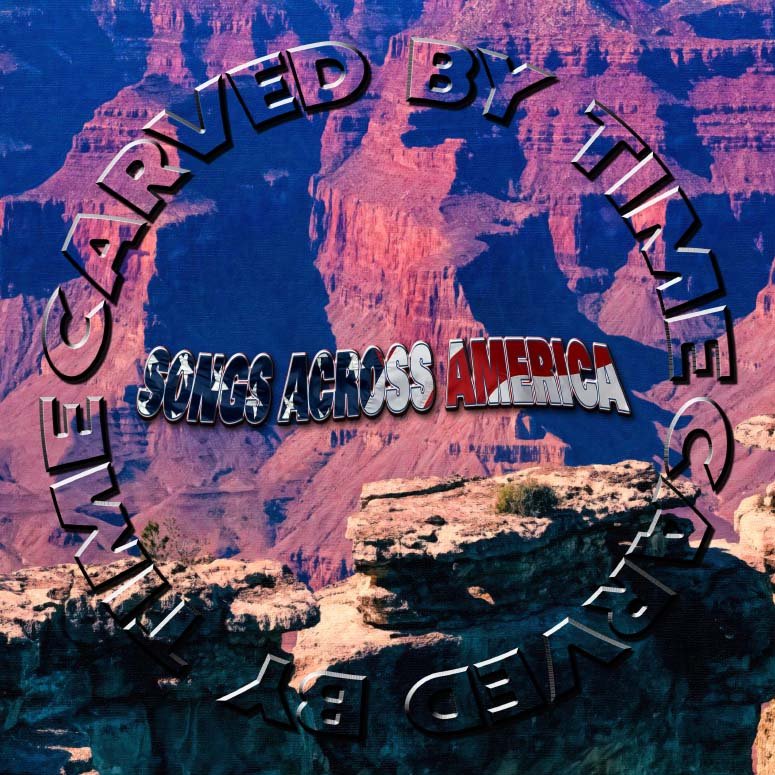
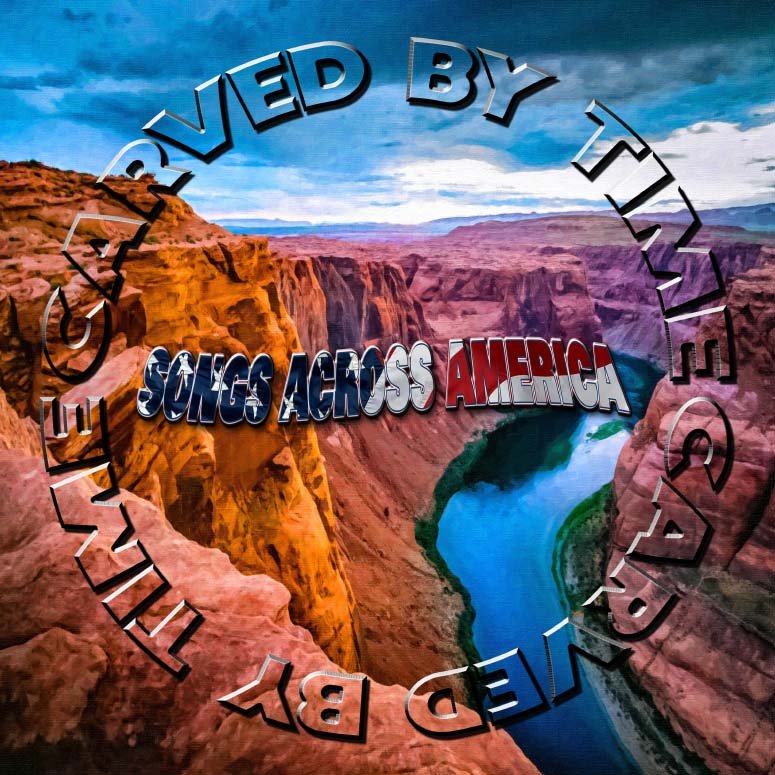
~ Associated Arizona Links ~
"Carved by Time"
I wrote "Carved by Time" because the Grand Canyon is one of those places words almost embarrass themselves trying to describe, and I wanted the song to lean into that scale rather than shy away from it. A billion years of Earth's own story, silent witness to Earth's past glory, felt like the only honest way to open, because nothing about this canyon operates on human time. The Colorado River carved this in an almost unimaginable stretch of centuries, and I wanted every verse to keep returning to that fact.
The story behind the song is how much specific geography I let carry the reverence, Desert View's watchtower, Bright Angel Trail, Vishnu Temple's golden pinnacle, Havasu Falls' turquoise dream, Powell Point's sunsets. I wanted the canyon to feel less like a single view and more like an entire layered world, because that's genuinely what it is, millions of visitors each finding their own private corner of something too vast for any one person to take in completely.
What I care about most is the phrase your silence speaks throughout the ages, because I think that's the real experience of standing at the rim. The canyon doesn't perform for you. It simply continues being exactly what it's always been, and that silence carries more weight than almost anything a person could say about it. Songs Across America keeps returning to landscapes that dwarf human time, and the Grand Canyon might be the single clearest example of that in the whole catalog.
Dramatic, cinematic folk-rock built on soaring strings, acoustic rhythm, and powerful percussion, rising to epic, sweeping choruses that mirror the canyon's grandeur.
The immensity of geologic time, the Grand Canyon's layered natural history, human smallness before ancient scale, and reverence found in silence rather than spectacle.
Primary Subject:
The Grand Canyon itself, from Desert View and Bright Angel Trail to Havasu Falls and Lake Powell.
Mood:
Awestruck, reverent, and majestic throughout.
Some landscapes are too vast and too old to be captured by a single view, and standing before them reminds us that their silence, carrying a billion years of history, speaks louder than anything we could say about them.
A dramatic folk-rock with soaring strings, acoustic rhythm, powerful percussion, atmospheric harmonies, and rich instrumentation wich all build to epic choruses complementing the famous canyon's timeless grandeur.
[Instrumental Intro: ]
[Verse 1:]
Ancient walls of layered stone
Carved by rivers, wind, and snow
A billion years of Earth's own story
Silent witness to Earth’s past glory
The mighty Colorado lies far below
As eagles ride the thermals' flow
[Chorus:]
A Grand Canyon, carved by time
A majestic wonder, that’s so sublime
Your painted walls that reach for the skies
Where the record of Earth’s history lies
Your silence speaks throughout the ages
As the ever-present Colorado rages
[Verse 2:]
Desert View, a stone watchtower stands
Legendary Guardian of these sacred lands
Bright Angel Trail winds down walls so steep
Where buried treasures of the ages sleep
Vishnu Temple, a layered pinnacle in gold
Where thunder clouds begin to unfold
[Verse 3:]
Havasu Falls, a mighty turquoise dream
An oasis where crystal blue waters gleam
Through Kaibab Forest, shadows dance
As the celestial display begins its advance
At Powell Point, sunsets paint the canyons
A breathtaking display of nature’s mansions
[Verse 4:]
Glen Canyon Dam holds back the flow
While Lake Powell’s waters grow far below
Over five million footsteps every year
As buses, planes, and helicopters appear
Forever changed by human hand
Yet still defies what man has planned
[Chorus:]
A Grand Canyon, carved by time
A majestic wonder, that’s so sublime
Your painted walls that reach for the skies
Where the record of Earth’s history lies
Your silence speaks throughout the ages
As the ever-present Colorado rages
[Instrumental Outro:]
"Carved by Time" is a sweeping, cinematic tribute to the Grand Canyon, built around the idea that the canyon is not simply a spectacular landscape but an immense record of Earth history exposed layer by layer. The song moves from the canyon's ancient rocks and the Colorado River to Desert View, Bright Angel Trail, Vishnu Temple, Havasu Falls, the Kaibab Plateau, Powell Point, and eventually the human alteration of the Colorado River through Glen Canyon Dam. Throughout the song, the narrator repeatedly places the brief human experience of the canyon against geological processes that have unfolded across millions and even billions of years. The result is both a scenic anthem and a meditation on time, permanence, erosion, and humanity's comparatively small place within the natural world.
The title, "Carved by Time," is especially effective because it deliberately gives time a physical role. Time cannot literally carve rock, but over immense spans it allows water, gravity, weathering, frost, erosion, uplift, and changing climate to do their work. The Colorado River has been cutting through the region for roughly five to six million years, while some of the oldest rocks exposed within Grand Canyon are about 1.8 billion years old. This distinction is important because the canyon itself is far younger than many of the rocks visible in its walls, making the landscape a place where extraordinarily ancient geology has been opened and exposed by a comparatively younger river system.
The instrumental introduction could establish that sense of scale before the lyrics begin. Low strings, piano, acoustic guitar, and a distant sustained electric-guitar tone would work well, gradually building as though the canyon itself were being revealed at sunrise. A deep drum or timpani pulse could suggest geological force without making the arrangement excessively dramatic. The music should initially feel spacious and patient, allowing the listener to sense that this is a landscape whose story cannot be measured on an ordinary human clock.
The first verse immediately enters deep time through "Ancient walls of layered stone." This is the foundation of the entire song, because the Grand Canyon's visual power comes not only from its size but from the extraordinary exposure of successive rock layers. Those layers preserve evidence of environments that existed long before the present canyon, including ancient seas, coastal settings, deserts, and other vanished landscapes. The oldest exposed rocks lie deep within the canyon, while progressively younger sedimentary layers rise toward the rims, creating something resembling an enormous geological archive. The canyon therefore allows visitors to look across distance and downward through time at the same moment.
The line "Carved by rivers, wind, and snow" captures the combined influence of erosional forces, although the Colorado River and water moving through tributaries have been especially important in cutting and widening the canyon. Snowmelt, rain, flash floods, freezing and thawing, gravity, and weathering continue breaking down exposed rock, while tributaries carry sediment toward the main river. The National Park Service describes the canyon as an actively changing landscape in which erosion continues today. This makes the word "carved" particularly appropriate because the sculpture is unfinished.
"A billion years of Earth's own story" actually understates the oldest visible geological history, which may be useful poetically because the phrase remains concise and memorable. Some Grand Canyon rocks are approximately 1.8 billion years old, almost twice the billion-year figure in the lyric. If you ever wanted greater scientific precision without disrupting the meter, something like "Nearly two billion years of Earth's own story" would be an accurate alternative, although the existing line works perfectly well as poetic shorthand.
The description of the canyon as a "silent witness to Earth's past glory" gives stone a form of memory. The rocks cannot speak, yet they preserve evidence of worlds that disappeared before human beings existed. This idea becomes central to the chorus as well, where silence itself seems capable of communicating across the ages. The canyon is therefore presented almost as an ancient library whose records are stored not in books but in mineral layers, fossils, faults, unconformities, and exposed stone.
The Colorado River lying far below provides the verse with both motion and scale. From many South Rim overlooks, the river appears surprisingly small relative to the canyon it helped create, even though within the canyon it is a powerful moving force. Grand Canyon National Park encompasses roughly 278 miles of the Colorado River, and the canyon averages about a mile in depth. The contrast is striking: the river may look like a narrow ribbon from above, yet over geological time it has helped expose one of the largest and most dramatic canyon systems on Earth.
The eagles riding thermals above the canyon then provide the opposite movement. The Colorado flows downward and westward through the canyon while birds rise on columns of warm air. This creates a beautiful vertical composition in which water occupies the depths, birds occupy the sky, and the human observer stands somewhere between them. The image also introduces freedom into a song otherwise dominated by immense stone and geological inevitability.
The chorus transforms the canyon into something almost ceremonial. "A Grand Canyon, carved by time" treats the landscape as the singular result of countless interacting forces, while "A majestic wonder, that's so sublime" captures the mixture of beauty and intimidation that the canyon can produce. The sublime is an especially appropriate concept here because it refers to beauty so immense or overwhelming that it exceeds ordinary comfort. The Grand Canyon can inspire admiration precisely because its scale makes the observer feel very small.
The line "Your painted walls that reach for the skies / Where the record of Earth's history lies" combines visual beauty with geological meaning. The canyon's walls appear painted because different rock formations produce reds, creams, browns, grays, blacks, and other colors that change dramatically under different angles of sunlight. Yet those colors are not merely decorative. They reveal different rock types and depositional histories, so the painted appearance and the geological record are actually connected. The canyon looks like art because its history is physically visible.
The phrase "Your silence speaks throughout the ages" is one of the song's strongest ideas. Silence becomes a language through which the canyon communicates age, endurance, and perspective. Standing before such a vast landscape can make human concerns feel temporarily quieter because the canyon represents processes operating across timescales that dwarf an individual lifetime. The silence is therefore not empty. It is filled with geological evidence, natural sound, memory, and the awareness of time.
The final line of the chorus, "As the ever-present Colorado rages," gives the river a dramatic personality. Historically, the Colorado River through Grand Canyon experienced much larger seasonal fluctuations than it does today, particularly during spring runoff. Since Glen Canyon Dam began regulating the river upstream, the canyon's flow regime has been profoundly altered and those enormous natural seasonal changes have been reduced. The word "rages" therefore works best as an emotional description of the river's power rather than a literal statement that the modern regulated Colorado is continuously raging.
The second verse moves from geology toward recognizable South Rim landmarks. Desert View Watchtower is described as a guardian of sacred land, which gives the structure an almost timeless appearance even though it was built in 1932. The 70-foot tower is now a National Historic Landmark and was designed as part of the South Rim visitor experience, overlooking a broad section of canyon and river. Its stone construction allows it to appear visually connected with the canyon, making the "guardian" metaphor effective even though it is a human-made structure.
Calling the land sacred adds another layer of meaning because Grand Canyon lies within ancestral homelands connected to numerous present-day Tribal communities. The National Park Service explicitly recognizes the canyon as ancestral homeland of eleven associated Tribal communities. This makes the canyon far more than a geological monument or recreational destination. It is also a living cultural landscape with continuing Indigenous relationships, stories, histories, and spiritual significance.
Bright Angel Trail then draws the listener physically into the canyon. The trail descends steeply from the South Rim through a dramatic sequence of rock layers, allowing hikers to experience geological change directly rather than merely viewing it from above. The phrase "Where buried treasures of the ages sleep" works metaphorically because the trail passes through strata that preserve vast spans of Earth history. It also conveys the sense that every downward step takes the traveler deeper into time.
Vishnu Temple introduces one of the canyon's most dramatic named formations. From certain viewpoints, it rises like an isolated architectural monument surrounded by enormous space. The word "Temple" naturally reinforces the song's language of sacredness and grandeur, while the "layered pinnacle in gold" captures the way sunset or storm light can transform exposed rock. The National Park Service regularly uses Vishnu Temple as one of the canyon's notable visual features, particularly under changing sunset and storm conditions.
The thunderclouds beginning to unfold above Vishnu Temple introduce sudden atmospheric drama. Grand Canyon weather can transform a scene rapidly, especially during the summer monsoon period, when distant storms, lightning, rain shafts, and shifting shadows can move across the enormous landscape. Musically, this would be an ideal place for the arrangement to darken temporarily, perhaps through tom drums, low strings, or a swelling electric-guitar line before returning to the broader chorus.
The third verse becomes more colorful and almost dreamlike through Havasu Falls. Its famous blue-green water provides an extraordinary contrast with surrounding red canyon walls, which makes "a mighty turquoise dream" a vivid and fitting description. Havasu Falls lies on the Havasupai Indian Reservation rather than within Grand Canyon National Park itself, and access is managed by the Havasupai Tribe. It absolutely belongs within the broader Grand Canyon cultural and geographical world, but that distinction is worth preserving if the description accompanies the song on an educational webpage.
The description of Havasu as an oasis is particularly effective because water changes the entire character of the desert canyon. Brilliant pools, vegetation, travertine formations, and waterfalls create a landscape that appears almost impossible beside the surrounding dry rock. The Havasupai people's name is closely associated with these blue-green waters, and Havasu Creek remains both a current and ancestral homeland. That cultural connection gives the location far greater meaning than its popularity as a scenic destination.
The verse then returns toward the rim through the Kaibab Forest. The contrast between the inner canyon and the forested high plateau shows how dramatically elevation affects the Grand Canyon environment. A visitor can look down into exposed desert-like terrain while standing among ponderosa pine and other forest vegetation at higher elevations. Shadows moving through that forest create a calmer transition toward the evening imagery that follows.
The "celestial display" advancing overhead gives the song another scale entirely. After exploring geological time beneath the feet, the narrator now looks upward toward the night sky. The canyon's darkness allows stars to become part of the experience, creating an enormous visual relationship between canyon depths below and the universe above. The song therefore moves between three scales repeatedly: human travel, geological time, and cosmic space.
Powell Point at sunset brings the verse toward one of the canyon's celebrated overlooks along the South Rim. The phrase "sunsets paint the canyons" continues the song's artistic language, with light becoming the painter and the canyon walls becoming the canvas. The plural "canyons" works poetically because the view contains countless tributary gorges, cliffs, buttes, temples, and side canyons nested within the larger Grand Canyon system. "Nature's mansions" then turns those formations into monumental architecture, reinforcing the sense that the canyon contains entire stone cities created without human design.
The fourth verse changes the song significantly because it introduces human intervention. "Glen Canyon Dam holds back the flow" places the modern history of the Colorado River against everything the previous verses have celebrated. The dam was completed in 1963 and created Lake Powell upstream of Grand Canyon. It altered the river's temperature, sediment movement, seasonal flow, and ecology downstream through the canyon. This makes the verse much more than another scenic description. It introduces the question of what happens when human engineering modifies a river that spent millions of years shaping its own course.
The following line, "While Lake Powell's waters grow far below," is the one I would most strongly consider revising. Lake Powell lies upstream behind Glen Canyon Dam, while the Colorado River flows downstream from the dam toward and through Grand Canyon. The reservoir also no longer simply "grows"; its water level fluctuates considerably and has experienced major declines since the early 2000s. A geographically clearer alternative could be "While Lake Powell spreads behind its wall" or "While Lake Powell lies beyond the wall." Either would preserve the image without suggesting the reservoir lies below Grand Canyon.
The line about "Over five million footsteps every year" effectively conveys the enormous scale of tourism, although annual visitation changes considerably from year to year. Grand Canyon remains one of the most heavily visited protected landscapes in the United States, so the broader idea is sound, but I would treat "five million" as a representative poetic figure rather than a permanent statistic. The buses, airplanes, and helicopters that follow in the lyric create an intentional contrast between the canyon's ancient silence and the infrastructure required to move modern visitors around it.
This tension gives "Carved by Time" more sophistication than a purely celebratory travel song. Human beings are drawn to the canyon because of its wilderness, silence, and scale, yet the act of bringing millions of people to experience those qualities inevitably changes the environment around them. Roads, viewpoints, hotels, aircraft, dams, trails, buses, and other infrastructure make access possible while also altering the experience. The song does not condemn tourism outright, but it asks the listener to recognize that even something as immense as Grand Canyon exists within a modern human system.
The line "Forever changed by human hand / Yet still defies what man has planned" is therefore one of the most important conclusions in the song. Humanity has undeniably changed the Colorado River system, especially through dams and water management, but the canyon remains vastly beyond complete human control. Rockfalls continue, storms reshape side canyons, tributaries flood, erosion proceeds, and the Colorado continues flowing through the landscape. Even Glen Canyon Dam has not frozen the system in place; it has merely changed the conditions under which the river continues operating.
When the chorus returns after this verse, "carved by time" carries a different meaning. Earlier, time referred primarily to natural geological history. Now it includes human history as well. The canyon contains not only the record of ancient seas and rivers but also watchtowers, trails, Indigenous homelands, dams, aircraft, tourism, and modern debates about conservation and water. The canyon's story is still being written.
Musically, "Carved by Time" would work especially well as cinematic Americana, orchestral folk-rock, or a broad adult contemporary landscape anthem. The arrangement should feel patient and monumental rather than fast. Low piano, acoustic guitar, cello, restrained percussion, and clean electric guitar could carry the verses, while the chorus could expand into strings, fuller drums, layered vocals, and a soaring melodic line that reflects the canyon's scale.
The first verse should remain spacious enough for the geological imagery to register. A low drone beneath "A billion years of Earth's own story" could give the line weight, while a rising violin or guitar phrase could represent the eagles riding thermals. The chorus could then open dramatically on "A Grand Canyon, carved by time," perhaps with broad harmony vocals and a melodic ascent on "reach for the skies." The Colorado River line could be accompanied by a descending or rolling instrumental figure, suggesting the river moving through canyon depths.
The second verse might become slightly more adventurous around Bright Angel Trail, with steady percussion suggesting descent. The thundercloud imagery near Vishnu Temple could introduce darker strings and tom drums before the arrangement releases into the next section. The Havasu Falls verse should brighten considerably through piano, acoustic guitar, or shimmering upper strings, giving the turquoise-water imagery a luminous contrast with the darker canyon material.
The fourth verse should sound distinctly different because it introduces modern machinery and human alteration. A deeper bass pulse, more insistent drums, or subtle electronic texture could enter around Glen Canyon Dam, creating a sense that a new force has entered the landscape. When the lyric reaches "Forever changed by human hand," the arrangement could briefly strip down, allowing the line to carry its full weight before rebuilding into the final chorus.
The final chorus should be the broadest and most emotionally layered version. It should still celebrate the canyon, but after the fourth verse it should also carry a sense of responsibility and humility. Layered vocals could make "Your silence speaks throughout the ages" especially powerful, with sustained harmonies giving the impression of sound echoing across enormous distances.
The instrumental outro could return to the opening theme but in a more reflective form. Piano, guitar, or violin might restate the chorus melody while the larger arrangement gradually fades away. A low rushing-water texture or distant wind could remain beneath the final notes, leaving the impression that the Colorado River continues its journey long after the human music has ended.
At its heart, "Carved by Time" is about perspective. The Grand Canyon forces the observer to consider a scale of time almost impossible to comprehend. Human beings measure life in decades and civilizations in centuries, while the rocks exposed in the canyon preserve histories extending back well over a billion years. The Colorado River itself has been shaping the present canyon for millions of years, and erosion continues today.
The song also recognizes that the canyon is not simply geological. It is cultural, spiritual, ecological, and historical. Its landscapes are ancestral homelands, places of continuing Tribal connection, destinations for millions of visitors, scientific laboratories, recreational spaces, and sources of artistic inspiration. Those meanings overlap rather than replacing one another.
Most importantly, the song avoids presenting the Grand Canyon as something finished. The phrase "carved by time" implies continuing action. Water still moves, rock still fractures, tributaries still flood, and people continue changing their relationship with the river. The canyon visible today is only one moment in an immensely longer process.
"Carved by Time" is therefore both a Grand Canyon anthem and a meditation on deep time, natural power, and human humility. It celebrates recognizable landmarks while continually returning to the larger forces responsible for their existence. The watchtower, trail, waterfall, forest, dam, tourist, eagle, and river all occupy the same story, but not the same timescale.
Its deepest message is that the Grand Canyon does not belong to one generation. Human beings arrive, admire it, alter parts of it, tell stories about it, and eventually leave. The river continues below, the walls continue weathering, and the geological record remains open for those who come next. In that sense, the canyon is not merely carved by time. It is still being carved.










.jpg)