"Rom-Com Reality©"
Lyrics by M. S. McKenzie (Unless Otherwise Noted) | Music Performed by Songs Across America or American Storyteller Music, All Songs Are Protected by Copyright
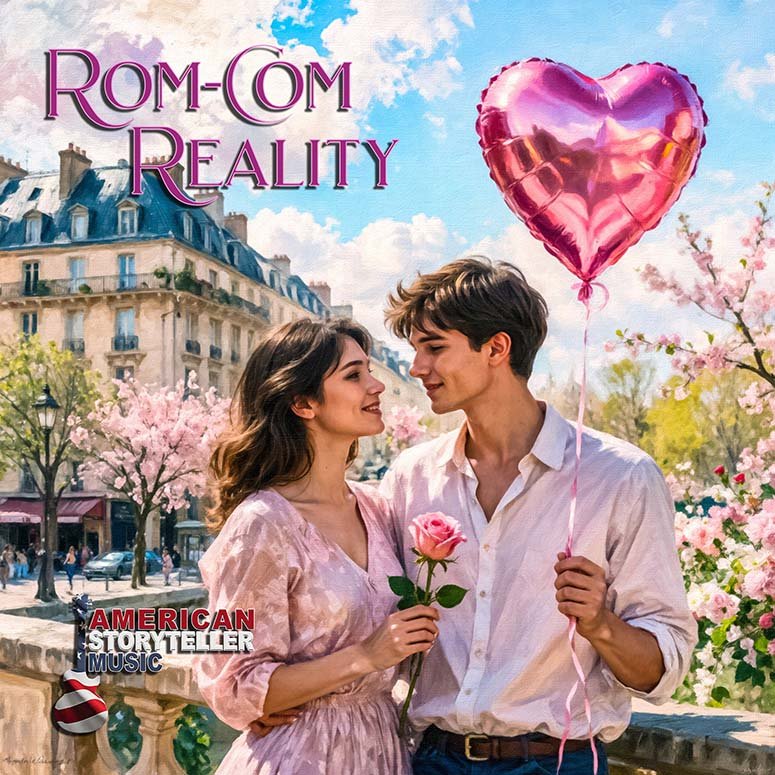
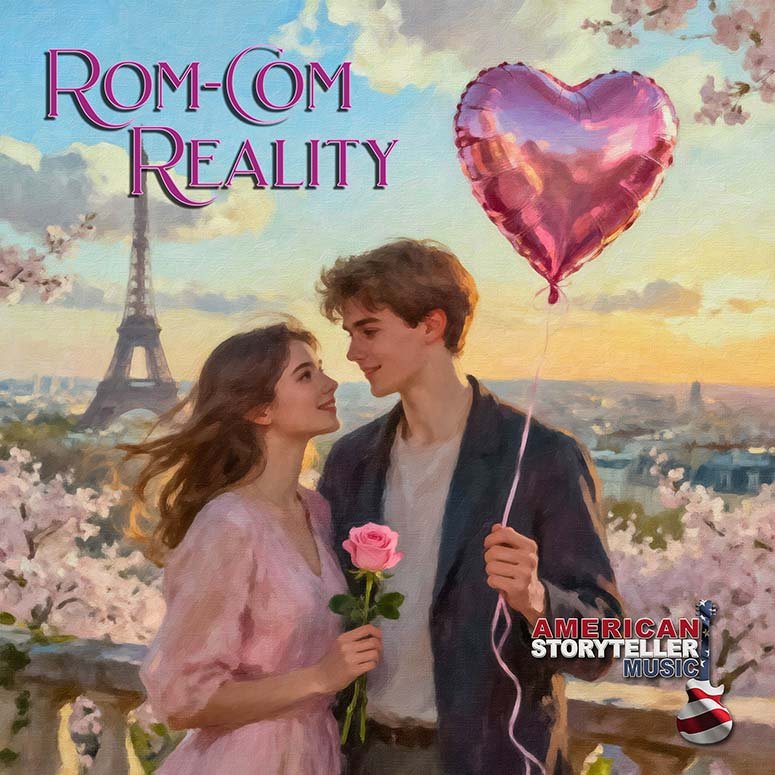
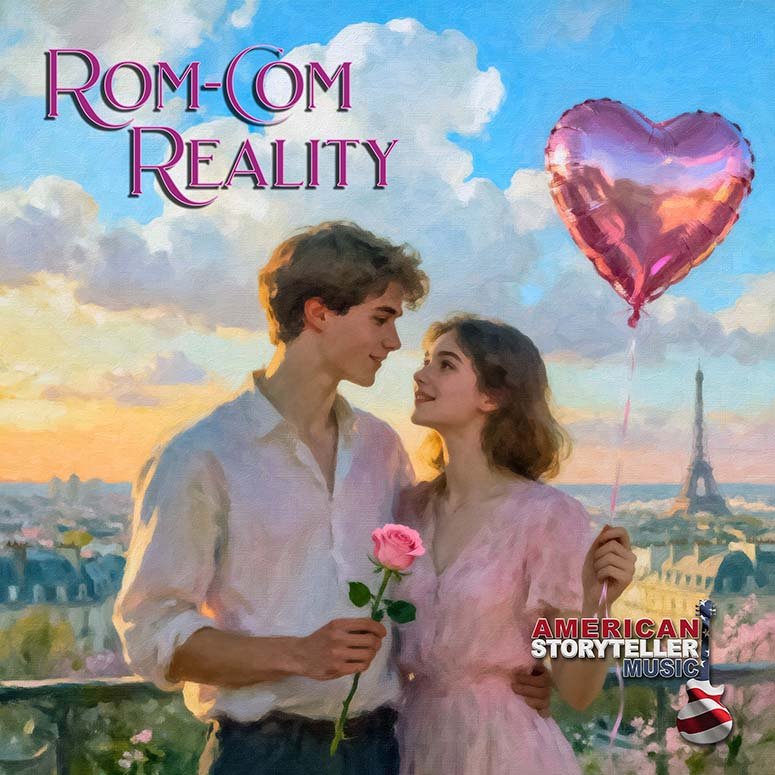
"Rom-Com Reality"
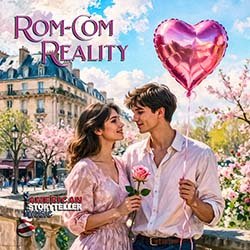
I wrote "Rom-Com Reality" because I've watched enough romantic comedies to know every single beat by heart before it happens, and I wanted a song that called out the formula with real affection rather than pure mockery. Girl next door is reading books, guy walks by with dreamy looks, she trips and falls so gracefully, spills coffee on his pressed marquee, how original, can't you see, another meet-cute destiny, is meant to be sung with a knowing grin, not contempt.
The story behind the song is the parenthetical asides, who wrote this screenplay, seriously, because I wanted the narrator to be simultaneously charmed and exasperated by exactly how predictable it all is, running through airports desperately, making speeches in the rain, every ending's just the same, predictably insane. That's not really a complaint. It's closer to a confession that we keep watching anyway because some formulas work precisely because we already know how they end.
Songs Across America mostly takes its subjects seriously. This one is a wink at an entire genre, and I hope it makes people laugh at their own soft spot for the workaholic boss, the free spirit, the best friend who's always wise, and the ex who always shows up at exactly the wrong moment.
Playful, up-tempo pop built on a catchy, list-driven chorus, structured as a tongue-in-cheek rundown of every romantic comedy cliché.
Affectionate satire of romantic comedy tropes, the comfort of predictable storytelling, genre convention as shared cultural joke, and humor built from familiarity rather than mockery.
Primary Subject:
The predictable tropes of romantic comedy films, the meet-cute, the opposites-attract setup, the airport chase, and the rain-soaked declaration.
Mood:
Playful, knowing, and warmly comedic throughout.
Some formulas keep working precisely because we already know how they end, and there's nothing wrong with loving something predictable when it's this much fun to watch unfold.
[Intro-instrumental]
[Verse 1]
Girl next door is reading books
Guy walks by with dreamy looks
She trips and falls (so gracefully!)
Spills coffee on his pressed marquee
How original, can't you see?
Another meet-cute destiny!
[Chorus]
Rom-com reality
Where love comes with a guarantee
Running through airports desperately
Making speeches in the rain
Every ending's just the same
Predictably insane!
[Verse 2]
She's a workaholic boss
He's a free spirit across
The hall, they're opposites you see
Fighting feelings endlessly
Till Christmas magic sets them free
(Who wrote this screenplay? Seriously!)
[Chorus]
Rom-com reality
Where love comes with a guarantee
Running through airports desperately
Making speeches in the rain
Every ending's just the same
Predictably insane!
[Bridge]
Oh, the best friend's always wise
The ex shows up - what a surprise!
There's bound to be a makeover scene
And someone's hiding what they mean
Three acts of misunderstandings
Before our perfect happy ending!
[Verse 3]
Fake dating leads to real romance
Small town girl gets second chance
Big city guy learns to slow down
Trading briefcase for small town
Clichés spinning round and round
(I think I'm gonna drown!)
[Verse 4]
Romantic gestures in the street
Flash mobs dancing to the beat
Grand declarations way too loud
Drawing in the random crowd
Every rom-com trick allowed
Making cynics cringe so proud!
[Final Chorus]
Rom-com reality
Where love comes with a guarantee
Running through airports desperately
Making speeches in the rain
Every ending's just the same
Predictably insane!
(But we love em' anyway!)
[Outro - fade with ironic sweeping strings]
"Rom-com Reality" is a witty, self-aware pop-rock satire of romantic comedy clichés, poking fun at the formulas audiences have seen countless times while also admitting that those same formulas remain strangely irresistible. The song runs through an entire catalog of familiar rom-com devices: the clumsy meet-cute, the opposites-attract pairing, the workaholic protagonist, the carefree neighbor, the wise best friend, the inconvenient ex, fake dating, airport chases, rain-soaked declarations, makeover scenes, small-town reinvention, and the inevitable happy ending. Rather than attacking the genre with genuine hostility, the lyrics tease it with affection, as though the narrator has watched far too many romantic comedies, knows exactly what is coming next, complains about every predictable turn, and still stays until the credits roll. That balance between mockery and fondness is what makes the song work.
The title, "Rom-com Reality," immediately establishes the joke because romantic-comedy "reality" is anything but realistic. It is a parallel universe where spilling coffee on an attractive stranger may launch a lifelong romance, misunderstandings last precisely long enough to fill a second act, and major emotional crises can often be solved by running through an airport or shouting a declaration of love in public. The title suggests that if romantic comedies governed everyday life, love would operate according to a dependable set of rules, complete with guaranteed chemistry, conveniently timed obstacles, and carefully scheduled reconciliation. The song enjoys exposing those rules while simultaneously celebrating how comforting they can be.
The instrumental introduction could establish the satire before the first lyric appears. A bright, polished pop arrangement with slightly exaggerated romantic strings would be ideal, almost as though the listener has just entered the opening credits of a glossy romantic comedy. Piano, acoustic guitar, handclaps, and a cheerful rhythm section could create a deliberately upbeat atmosphere, while occasional orchestral flourishes could hint that the song knows exactly what kind of movie it is parodying. The music should sound genuinely catchy rather than purely comedic, because the humor becomes stronger when the arrangement commits seriously to the romantic style being mocked.
The first verse immediately begins dismantling the classic meet-cute. The "girl next door" is reading books, instantly establishing her as intelligent, approachable, and conveniently unattached, while the handsome stranger passes by with dreamy looks. She then trips "so gracefully," which is one of the song's funniest details because romantic-comedy clumsiness almost always manages to make a character more attractive rather than genuinely awkward. The spilled coffee is another familiar device, functioning as the collision that forces two strangers into one another's orbit. By ending the verse with "How original, can't you see? / Another meet-cute destiny!", the narrator openly acknowledges that everyone already understands exactly where the story is headed.
The parenthetical commentary is especially important to the song's personality. Phrases such as "so gracefully!", "Who wrote this screenplay? Seriously!", and "I think I'm gonna drown!" make the narrator feel like someone watching the movie alongside the audience and providing sarcastic commentary in real time. This gives the song a conversational, almost fourth-wall-breaking quality. Instead of simply listing clichés, it creates a character who is increasingly exasperated by them. That narrator becomes part critic, part fan, and part unwilling participant in the entire rom-com machine.
The chorus broadens the joke into a definition of the genre itself. "Rom-com reality / Where love comes with a guarantee" summarizes the central fantasy behind many romantic comedies: however impossible the relationship may seem halfway through the story, the audience can usually trust that everything will work out. That predictability is part of the pleasure. Viewers often watch these stories not to discover whether the couple will end up together, but to enjoy the increasingly elaborate obstacles placed between them before the inevitable reunion.
The airport chase and rain speech are perfect examples of the kind of heightened behavior that romantic comedies treat as normal. In everyday life, sprinting through airport security to stop someone from boarding a flight would be chaotic and potentially disastrous, while delivering an elaborate confession during a downpour would leave everyone soaked and uncomfortable. In the rom-com universe, however, these moments become proof of sincerity. The bigger and less practical the gesture, the more convincing it is supposed to be. The chorus captures that absurdity with "Every ending's just the same / Predictably insane!", recognizing that the genre's emotional logic often becomes ridiculous precisely when it is trying hardest to be romantic.
The second verse shifts from the meet-cute into another classic structure: the pairing of two people whose personalities have been engineered to clash. She is a driven workaholic boss, while he is the carefree spirit conveniently living nearby. Their differences create friction, witty arguments, and denial until the audience inevitably learns that beneath the hostility lies attraction. The phrase "they're opposites you see" sounds deliberately explanatory, as though the screenwriter is making sure nobody misses the setup. The Christmas magic that finally releases their feelings adds another layer of parody, since holiday romantic comedies have developed their own highly recognizable collection of tropes involving small towns, family traditions, snowfall, and emotional transformation.
The parenthetical "Who wrote this screenplay? Seriously!" is particularly effective because by this point the narrator is no longer pretending to be surprised. The clichés have become so obvious that the song imagines confronting the unseen writer responsible for assembling them. This creates a playful tension between the fictional world and the person consuming it. The narrator knows the story is manufactured, but the characters continue behaving as though every familiar development is unprecedented. That gap between audience awareness and character sincerity fuels much of the humor.
The bridge functions almost like a rapid-fire checklist of mandatory romantic-comedy ingredients. The wise best friend always seems to understand the relationship before the protagonists do, functioning simultaneously as therapist, comic relief, and audience surrogate. The ex arrives at exactly the wrong moment, rarely because the plot genuinely needs them, but because the story requires one final obstacle before reconciliation. Makeovers provide visual transformation, secrets create misunderstandings, and the entire middle of the story becomes a machine designed to delay the ending everyone already expects. The phrase "Three acts of misunderstandings / Before our perfect happy ending!" is a clever summary of classical screenplay structure filtered through rom-com frustration.
The makeover reference also points to one of the genre's stranger conventions. Characters who are supposedly already attractive are frequently presented as needing a cosmetic transformation before their romantic worth becomes fully visible. The song does not dwell on that contradiction, but simply including the trope is enough to expose how artificial it can be. Likewise, the hidden feelings or concealed truth usually exist because straightforward communication would end the movie far too early. In rom-com reality, two adults can often solve their entire conflict with a ten-minute conversation, so naturally that conversation must be postponed for nearly two hours.
Verse three turns toward two especially popular modern formulas: fake dating and the small-town-versus-big-city transformation story. Fake dating inevitably becomes real romance because the characters spend so much time pretending to behave affectionately that their supposedly false intimacy reveals genuine feelings. The audience recognizes the trajectory almost immediately, which makes the characters' continued denial part of the joke. The small-town heroine and big-city professional add another familiar pattern in which urban ambition is portrayed as emotionally incomplete until someone rediscovers community, simplicity, and love away from metropolitan life.
The line "Big city guy learns to slow down / Trading briefcase for small town" condenses an entire subgenre into two lines. He begins as a symbol of corporate urgency and ends transformed by homemade pie, local festivals, friendly neighbors, and perhaps an inherited family business that suddenly seems more meaningful than his previous career. The briefcase becomes a shorthand for stress, ambition, and emotional disconnection, while the small town represents authenticity and belonging. The narrator's "Clichés spinning round and round / I think I'm gonna drown!" suggests that the sheer accumulation of formulas has become overwhelming.
Verse four escalates into the grand public gesture, one of the genre's most extravagant traditions. Romantic feelings that could be expressed privately are instead announced in streets, train stations, restaurants, weddings, sports arenas, or other public spaces. Flash mobs, dancing strangers, huge signs, amplified speeches, and spontaneous crowds become mechanisms for proving the magnitude of love. The more people who witness the declaration, the more emotionally significant it is supposed to become. The song recognizes how absurd this can look to anyone not participating in the romance.
The line "Drawing in the random crowd" is particularly funny because romantic comedies often rely on complete strangers becoming emotionally invested in someone else's relationship almost instantly. A crowd gathers, listens attentively, smiles approvingly, and sometimes applauds when the couple kisses. In real life, most people would probably continue walking or wonder what was happening. In rom-com reality, however, the entire city apparently pauses to support true love. The phrase "Every rom-com trick allowed / Making cynics cringe so proud!" captures the enjoyment of watching even while recognizing how manipulative the scene is.
The final chorus delivers the song's most important twist with "But we love um' anyway!" That line changes the entire piece from outright parody into affectionate satire. The narrator has spent the whole song exposing predictable plots, impossible coincidences, manufactured misunderstandings, and ridiculous gestures, yet finally admits that none of those criticisms prevent enjoyment. In fact, the predictability may be exactly what makes the genre comforting. Romantic comedies offer a world in which emotional risk is ultimately rewarded, misunderstandings are resolved, people change for the better, and love usually survives the obstacles placed in its path.
That final admission gives the song warmth. It recognizes that audiences often criticize clichés not because they genuinely want them eliminated, but because they enjoy seeing familiar structures reinvented. The pleasure comes from anticipation: everyone knows the airport chase is coming, but the fun lies in seeing how this particular movie gets there. The song therefore laughs both at romantic comedies and at the audience, including the narrator himself. We roll our eyes at the rain speech, complain about the obvious misunderstanding, and then feel disappointed if the movie does not provide one.
Musically, "Rom-com Reality" would work particularly well as upbeat pop-rock, power pop, pop-punk-lite, or a deliberately polished adult contemporary comedy song. The verses could have a brisk, conversational rhythm that allows the jokes to land clearly, while the chorus should become broad, catchy, and almost excessively romantic. Layered backing vocals on "Rom-com reality" could make the hook sound like the theme song to the very movie the narrator is mocking. Bright piano, electric guitar, punchy drums, and handclaps would support the playful pacing.
The arrangement could also use the parenthetical lines as production opportunities. "So gracefully!" might receive a mock-angelic backing vocal, while "Seriously!" could momentarily strip the music down so the narrator sounds like he has stepped outside the song to complain. "I think I'm gonna drown!" could be followed by an exaggerated orchestral swell or melodramatic guitar fill. These small production jokes would enhance the satire without turning the track into novelty music. The song should remain musically strong enough that someone could enjoy it even without focusing closely on every punchline.
The final chorus could become intentionally oversized, with sweeping strings, stacked harmonies, crashing drums, and perhaps a temporary key change worthy of the biggest romantic-comedy climax imaginable. The narrator could deliver "But we love um' anyway!" almost as an aside before the music explodes into the instrumental outro. The specified ironic sweeping strings are an ideal ending because they allow the song to become exactly what it has spent several minutes mocking. The strings can soar dramatically as though two characters are finally kissing in the rain while the camera pulls away toward a glittering city skyline.
At its heart, "Rom-com Reality" is about the strange bargain audiences make with familiar stories. We know the characters will probably end up together, recognize the obstacles as artificial, anticipate the dramatic confession, and can often identify the ending within the first ten minutes. Yet we continue watching because predictability can be comforting when it leads toward hope. The genre promises that despite mistakes, bad timing, difficult exes, missed flights, ridiculous misunderstandings, and incompatible personalities, love will eventually find a way through.
That is why the song's sarcasm never becomes cruel. The narrator may laugh at every cliché, but underneath the mockery is an acknowledgment that romantic comedies provide something people genuinely want: reassurance that relationships can survive confusion and that second chances remain possible. Their world may be unrealistic, but the emotional desire behind it is not. People want to believe that someone might run through an airport for them, that an old friendship might become love, or that one brave confession could change everything.
"Rom-com Reality" is therefore both a parody of romantic-comedy conventions and an affectionate celebration of why those conventions endure. It makes fun of the meet-cutes, airport chases, rain speeches, small-town transformations, wise best friends, unwanted exes, fake relationships, flash mobs, and inevitable happy endings, but it ultimately admits that audiences are willingly participating in the fantasy. We know exactly what the movie is doing, and usually we let it do it anyway.
Its deepest joke is that the narrator may be the biggest romantic of all. Someone who truly hated rom-coms would simply stop watching. Instead, he knows every trope, remembers every formula, anticipates every ending, and remains there long enough to complain about all of them. Beneath the sarcasm is a reluctant believer, still waiting for the next ridiculously predictable story to make him smile.























.jpg)