"We Will Rise Above©"
Lyrics by M. S. McKenzie (Unless Otherwise Noted) | Music Performed by Songs Across America or American Storyteller Music, All Songs Are Protected by Copyright
~ Associated State Links ~
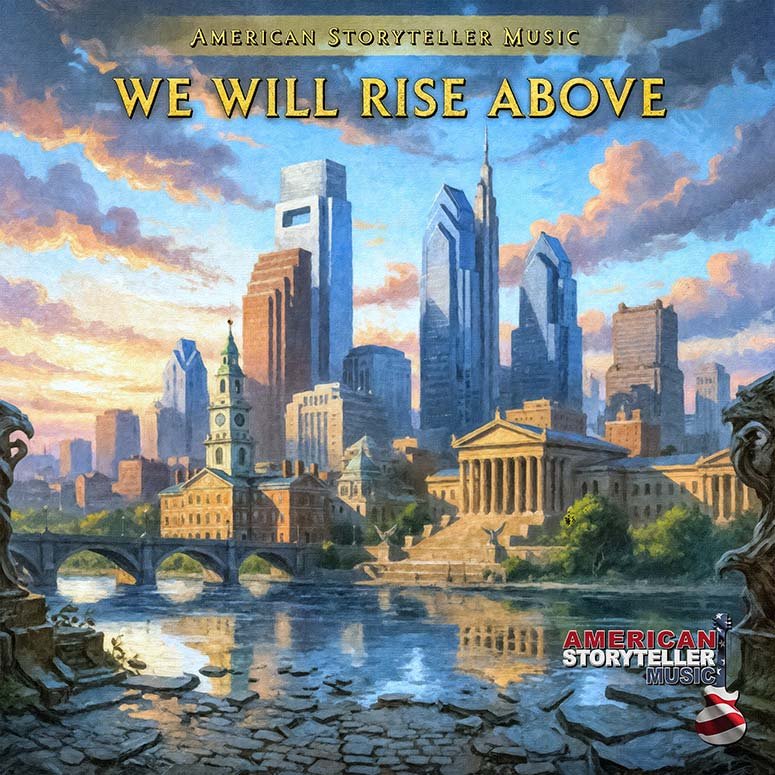
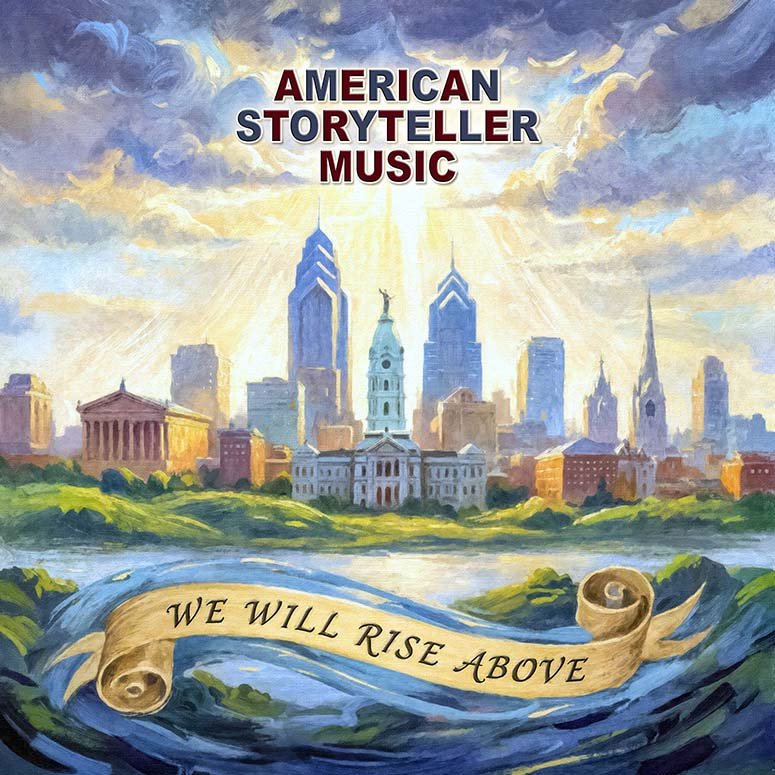
The story behind the song is Philadelphia in quick flashes, told the way the city actually hits you. Instead of one long narrative I wanted rapid images, the cobblestones and the Liberty Bell, the Rocky steps, cheesesteaks and murals, Broad Street, Chinatown, the stoops of West Philly and the lights of South Street. I built it as rap and chant on purpose, because that rhythm carries the energy and the swagger of the place better than a ballad ever could.
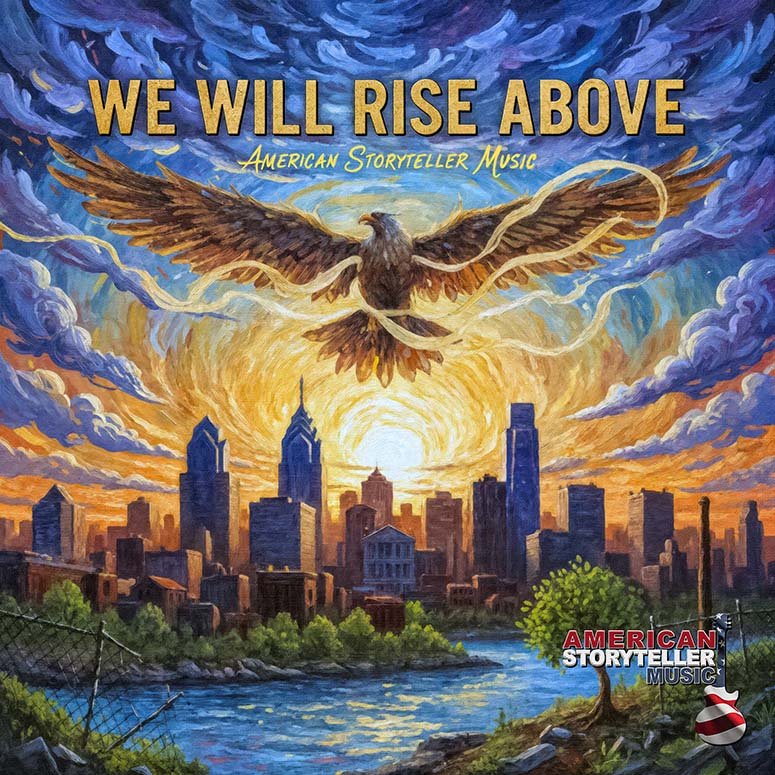
The emotional center is right there in the title. "We will rise above" is bigger than ordinary civic pride. It's about resilience, the way a city carries its people through hard times, division, and struggle and keeps standing. That's why the whole thing is sung in a "we." This isn't an outsider describing Philadelphia. It's the city speaking with one voice, and its people answering back together in the chant.
I leaned into the contradictions I love about the place, the history and the present, the toughness and the tenderness, all those different tongues and faces coming together in the same shared streets. Cultures collide, but the love runs deep, and the Philly fight shows up on every block. By the last chorus I wanted it to feel like a crowd with arms around each other, holding one another up through the darkest nights and wearing that Liberty crown with pride.
High-energy hip-hop / rap-and-chant city pride anthem.
Civic pride and resilience, collective identity and unity, multicultural community, and history meeting the present.
Primary Subject:
Philadelphia, its landmarks, neighborhoods, culture, and fighting spirit.
Mood:
Energetic, proud, defiant, and unifying.
Philadelphia's strength is its people rising together, a tough, proud, multicultural city that carries one another through hardship and keeps reinventing itself.
[Verse 1 (Rap):]
History lives in the cobblestone ways
Liberty Bell still rings true to this day
Rocky on the steps where the crowd gets loud
Philly's heartbeat's strong, and forever proud
[Chorus (Chant):]
"Philly, Philly — city of love!
Philly, Philly —we will rise above!"
[Verse 2 (Rap):]
Cheesesteaks sizzle, murals tell tales
Broad Street runs with unbroken trails
Sixers, Eagles, and Flyers light up the night
Every block shines with that Philly fight
[Verse 3 (Rap):]
Multicultural, every tongue, every face
All come together in the same shared place
From Chinatown glow to the Italian beat
Cultures collide, but the love runs deep
[Bridge (Rap):]
City of struggle, city of dreams
United we rise with unshakable teams
From West Philly stoops to South Street lights
We hold each other up through the darkest nights
[Verse 4 (Rap):]
Past meets present where the skyline climbs
Future's written in the people's rhymes
Philly forever, we'll never back down
City of love, wear that Liberty crown
[Chorus (Chant):]
"Philly, Philly — city of love!
Philly, Philly —we will rise above!"
[Chorus (Chant):]
"Philly, Philly — city of love!
Philly, Philly —we will rise above!"
Outro (Spoken with Groove Fade):
Philly's in the heart, Philly's in the beat…
City of brotherly love — can't be beat
"We Will Rise Above" is an energetic Philadelphia pride anthem that blends rap, chant, sports energy, neighborhood identity, cultural diversity, and revolutionary history into a short, direct celebration of the city. Rather than presenting Philadelphia through a long narrative, the song works in quick flashes: cobblestones, the Liberty Bell, the Rocky steps, cheesesteaks, murals, Broad Street, Chinatown, West Philly stoops, South Street lights, sports teams, and the modern skyline. Each image contributes another layer to a city portrayed as tough, proud, multicultural, historically important, and constantly reinventing itself.
The title, "We Will Rise Above," gives the song its emotional center. The phrase is larger than civic pride alone because it suggests resilience in the face of hardship, division, disappointment, economic struggle, violence, or any of the pressures that a major American city can endure. The repeated use of "we" is especially important because the song is not about one narrator describing Philadelphia from the outside. It speaks collectively, as though the city itself has a voice and its residents are answering together.
The rap structure suits Philadelphia well because the city has a deep musical identity that includes soul, R&B, hip-hop, jazz, gospel, rock, and countless neighborhood traditions. The verses move quickly, almost like snapshots seen while traveling through the city, while the chant chorus gives listeners something immediate to repeat. This combination makes the song feel designed not just to be heard but to be shouted at a concert, sports event, festival, parade, or civic celebration.
The first verse begins with Philadelphia's historical identity. "History lives in the cobblestone ways" turns the streets themselves into carriers of memory. The phrase suggests that the past is not sealed away inside museums but remains present in street patterns, old buildings, public squares, churches, meeting halls, and neighborhoods where major events in American history unfolded. Philadelphia's colonial and revolutionary history becomes the foundation beneath everything that follows.
The Liberty Bell appears next as a symbol of freedom and national memory. Saying it "still rings true to this day" works metaphorically, since the bell itself is no longer rung in ordinary use, but its symbolic meaning remains powerful. The line connects the city's revolutionary history with the modern themes of unity and perseverance that dominate the chorus. It suggests that ideals associated with liberty continue to echo even when the city faces contemporary challenges.
The reference to Rocky on the steps immediately shifts from formal history into popular culture. The Philadelphia Museum of Art steps have become inseparable from the Rocky films, and the image of someone running upward with arms raised has become a symbol of determination far beyond the movies themselves. In the song, Rocky represents grit, effort, and the refusal to stay down, which fits perfectly with the larger message of rising above adversity.
The final line of the first verse, "Philly's heartbeat's strong, and forever proud," gathers history and popular culture into a single emotional statement. The city is presented as something alive, with a heartbeat created by its people, streets, traditions, sports, music, food, and history. Pride is not treated as quiet admiration but as something physical and persistent.
The chorus is intentionally simple:
"Philly, Philly — city of love!
Philly, Philly — we will rise above!"
That simplicity is one of its strengths. A chant must be instantly memorable, and these lines are built for crowd participation. Repeating the city's name creates identity and momentum, while "city of love" plays upon Philadelphia's traditional association with brotherly love.
The phrase "we will rise above" also provides a natural upward melodic or rhythmic lift. The chant could begin almost percussively on "Philly, Philly" and then open into a broader group vocal on the final words. That contrast would make the chorus feel communal and triumphant without requiring complicated melody.
Verse two moves into everyday Philadelphia culture. Cheesesteaks provide an immediate food reference, but the line quickly shifts toward murals, Broad Street, and sports. This is effective because the city's identity is not reduced to one famous sandwich; food becomes one piece of a much larger urban culture.
The murals are particularly important because Philadelphia has developed one of the most recognizable public-art identities in the country. Murals turn walls into historical, political, social, and neighborhood storytelling spaces, so "murals tell tales" fits the song's broader theme that the city's history is written directly into its streets. The phrase also connects visual art with rap, since both forms tell stories publicly and often emerge from specific communities.
Broad Street becomes a natural spine through the city. The line "Broad Street runs with unbroken trails" conveys movement and continuity, even if "trails" is more poetic than literal. Broad Street links neighborhoods, cultural institutions, sports venues, parades, and major public events, so it works well as a symbol of Philadelphia's north-south urban rhythm.
The references to the Sixers, Eagles, and Flyers add sports loyalty to the song's civic identity. Philadelphia sports culture is famously intense, and the phrase "Every block shines with that Philly fight" turns athletic competitiveness into a citywide character trait. The "fight" is not limited to teams. It becomes shorthand for toughness, loyalty, determination, and the expectation that people keep going even when circumstances are difficult.
Verse three broadens the song beyond traditional Philadelphia iconography and focuses on cultural diversity. "Multicultural, every tongue, every face" makes inclusion an explicit part of the city's identity. The lyric recognizes that Philadelphia has been shaped by generations of immigration and migration, with communities bringing different languages, foods, religions, music, businesses, and traditions into the same urban landscape.
The phrase "All come together in the same shared place" expresses an ideal of coexistence and common belonging. It does not suggest that every cultural difference disappears. Instead, the following line emphasizes distinct identities through Chinatown and Italian traditions, showing that unity can exist alongside difference.
"From Chinatown glow to the Italian beat" uses light and rhythm to represent two cultural districts or traditions within the city. The wording is intentionally broad and celebratory rather than historically detailed. What matters is the sense that Philadelphia contains many overlapping cultural worlds within a relatively compact urban space.
The line "Cultures collide, but the love runs deep" is one of the song's most interesting phrases because "collide" introduces tension rather than pretending diversity is always effortless. Cities are complicated places where cultures meet, influence one another, compete for space, misunderstand each other, and also build relationships. The second half of the line insists that beneath those tensions there is still shared attachment to place.
The bridge becomes more serious and emotionally grounded. "City of struggle, city of dreams" acknowledges that Philadelphia cannot be reduced to either triumph or hardship. It contains both. Economic inequality, neighborhood change, social conflict, crime, opportunity, education, culture, and creativity can all exist side by side.
The phrase "United we rise" directly connects to the title and gives the song its most explicit message of solidarity. The narrator suggests that resilience is not an individual act but something communities achieve by supporting one another. This idea becomes even stronger in the line "We hold each other up through the darkest nights," which shifts the anthem away from abstract civic pride and toward mutual care.
The references to West Philly stoops and South Street lights give the bridge a lived-in neighborhood quality. Stoops suggest conversation, neighbors, families, and informal community life, while South Street brings nightlife, music, restaurants, shops, crowds, and urban energy. Together they show Philadelphia in both residential and public modes.
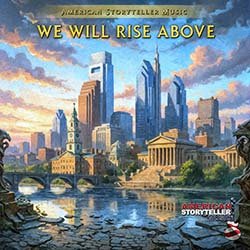
Verse four brings the song's timeline full circle by connecting past and present. "Past meets present where the skyline climbs" is a concise description of Philadelphia's visual identity, where colonial and nineteenth-century architecture coexist with modern towers. The city's history is not replaced by the future; the two stand beside one another.
The line "Future's written in the people's rhymes" is particularly well suited to a rap-based song. It suggests that the city's future will not be defined only by buildings, corporations, or official institutions, but by the voices of the people living there. Rap itself becomes a form of civic authorship.
"Philly forever, we'll never back down" returns to the theme of resilience, while "City of love, wear that Liberty crown" combines Philadelphia's familiar nickname with its historical role in the founding era of the United States. The "Liberty crown" is metaphorical, presenting the city as wearing its revolutionary heritage proudly.
The repeated choruses at the end are effective because they allow the song to become more communal as it progresses. By the first chorus, the listener knows the hook. By the second and third repetitions, it can feel like an entire crowd has joined in. This is exactly the kind of song where repetition is not redundant because the repetition is part of the performance concept.
Musically, "We Will Rise Above" would work especially well as upbeat rap-rock, hip-hop with live-band instrumentation, or a modern stadium-style civic anthem. A strong kick and snare pattern should drive the verses, while bass, brass stabs, guitar, or keyboard accents could give the track a muscular Philadelphia feel. The rap delivery should be rhythmic and confident but clear enough that the city references remain understandable.
The chorus should shift from solo rap into layered group chanting. Multiple voices could shout "Philly, Philly" in unison, with a broader harmony or crowd vocal entering on "city of love" and "we will rise above." Handclaps, stomps, or arena-style percussion would strengthen the communal feel.
The first verse could use a relatively stripped-down beat, allowing the historical references to land clearly. A bell-like sound could subtly echo the Liberty Bell line, though it should remain understated rather than literal. The Rocky reference could be accompanied by a rising brass or drum figure, suggesting upward movement without directly imitating film music.
The second verse could become more rhythmically active around Broad Street and the sports references. Crowd noise, chant textures, or a heavier drum pattern could briefly enter when the Sixers, Eagles, and Flyers are named. The goal should be to evoke stadium energy while keeping the song unified.
The third verse could introduce warmer instrumental colors, perhaps piano, horn, percussion, or melodic bass, reflecting the multicultural neighborhood imagery. It would be best to avoid stereotyped musical shorthand for any particular culture. The lyrics already communicate diversity clearly, so the arrangement can remain modern and urban without resorting to caricature.
The bridge should drop some of the celebratory energy and become heavier or more spacious. The line "City of struggle, city of dreams" deserves room, perhaps with a lower bass note and reduced percussion. As the bridge moves toward "We hold each other up through the darkest nights," the music could rebuild gradually, making the return to the final chorus feel earned.
The final choruses should be the largest sections in the track. Layered crowd vocals, heavier drums, brass, guitar, and perhaps a rising background harmony could turn the hook into a full anthem. The final repetition could extend "rise above" while the instrumentation continues beneath it, creating a natural transition into the spoken outro.
The spoken ending is a good choice because it allows the song to relax after the repeated chants. "Philly's in the heart, Philly's in the beat…" summarizes the idea that the city is both emotional and rhythmic. The final phrase, "City of brotherly love — can't be beat," ends on a playful double meaning because "beat" refers both to music and to the idea that Philadelphia cannot be defeated or surpassed.
At its heart, "We Will Rise Above" is about collective identity. The song celebrates Philadelphia's landmarks and traditions, but its real subject is the people who continue carrying the city forward. History matters, sports matter, food matters, neighborhoods matter, and music matters, but they become meaningful because generations of residents continue interpreting and reshaping them.
The song also avoids portraying Philadelphia as perfect. The bridge acknowledges struggle directly, and the title itself assumes there is something to rise above. That gives the pride more credibility because resilience only has meaning when adversity exists. The city's strength comes not from pretending problems are absent, but from the belief that people can face them together.
"We Will Rise Above" is therefore both a Philadelphia city anthem and a song about solidarity. Its history, sports culture, neighborhoods, art, immigration, popular culture, and modern skyline all contribute to the same message: Philadelphia is a city that has repeatedly endured change and continues creating new versions of itself.
Its deepest message is contained in the repeated word "we." The song is not saying that one hero, one landmark, or one generation defines Philadelphia. The city rises because its people rise together. That is what gives the chant its power: "Philly, Philly — we will rise above."









.jpg)